
How to Clean Trainers: A UK Guide by Material
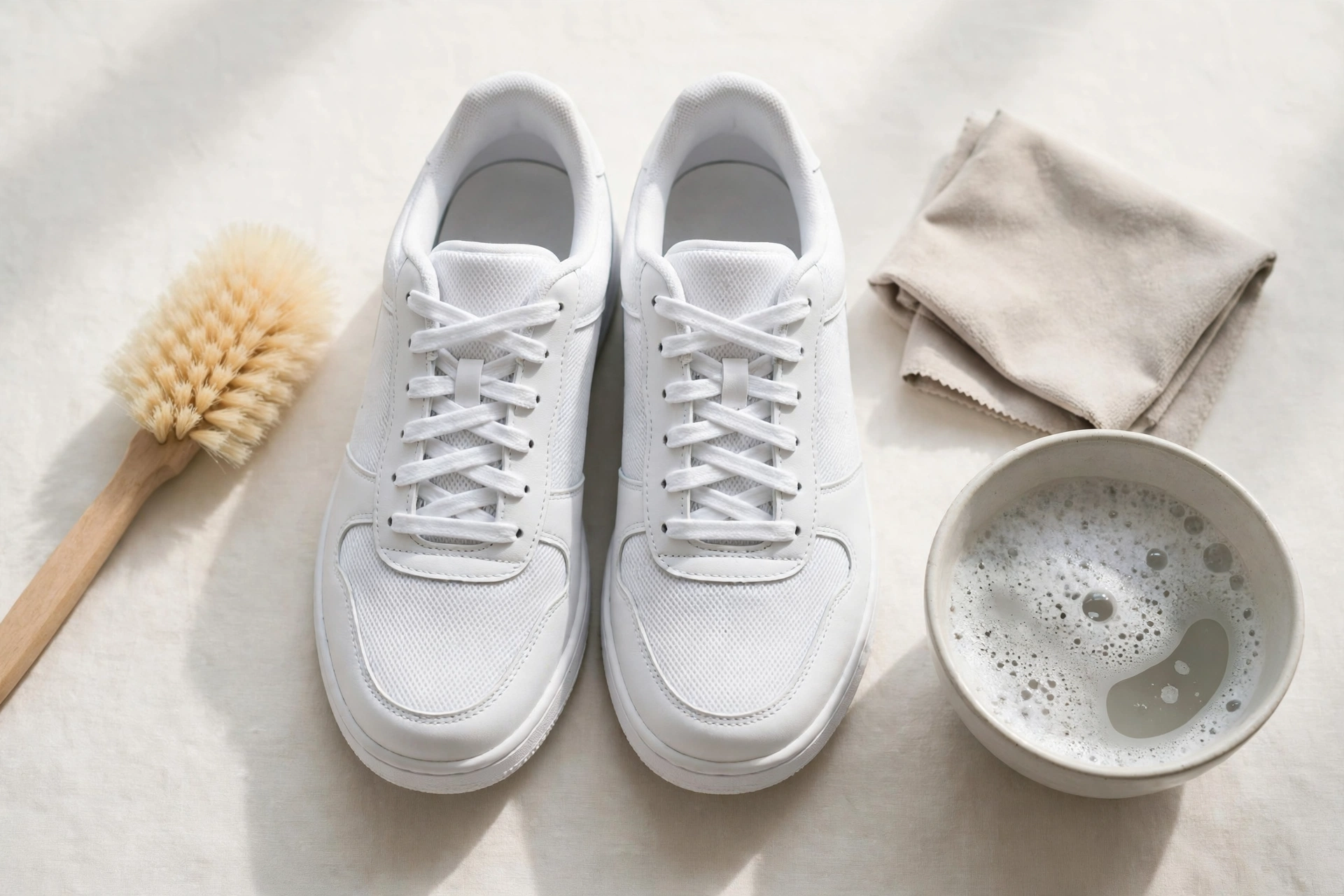
Most trainers clean up well with warm water, a drop of mild washing up liquid, and a soft brush. Match the method to the material. Leather wipes clean. Mesh and canvas need a gentle scrub. Suede needs a dry brush, not water. Always air dry your trainers, and never use a radiator or a tumble dryer.
Trainers take more wear than any other shoe most of us own. They carry us through wet pavements, muddy parks, gym sessions, and long days on our feet. That wear shows fast, especially on pale colours. The good news is that most marks come off with a simple routine, as long as you know what your trainers are made of.
Before you reach for the sink, check the label inside the tongue or heel. It tells you whether the pair can go in the washing machine and what to avoid. If the label is worn away, treat the pair as hand wash only. That one rule prevents most cleaning damage. A pair of comfortable walking shoes deserves the same gentle care, because the cushioning and glues inside them suffer when they are scrubbed too hard or soaked for too long.
Before you start: what you need
You do not need a special kit. Most of what you need is already in a kitchen or bathroom cupboard. Gather it before you start, so wet trainers are not left sitting while you search for a brush.
- A soft brush, such as an old toothbrush or a soft nail brush
- A clean cloth or a sponge
- A bowl of warm water
- Mild washing up liquid or a small amount of liquid laundry detergent
- Bicarbonate of soda for smells and stubborn marks
- White vinegar for canvas stains, used sparingly
- Old newspaper or white tissue paper for stuffing
- A laundry bag or pillowcase, if you plan to machine wash
Start by taking the laces out and pulling the insoles out if they come out easily. Then brush off loose dirt and mud while the trainers are dry. Dry mud brushes off in seconds, while wet mud smears into the fabric. Knock the soles together outside to shake off grit, and pick small stones from the tread with an old toothbrush.
Test any cleaner on a small hidden spot first, such as the inside of the tongue. Wait a few minutes and check for colour change. This matters most on bright colours, where a strong cleaner can leave a pale patch. If you do buy a brush or a trainer cleaner, shopping in the sales is a good way to pick one up for less.
| Material | Best method | Avoid |
|---|---|---|
| Leather | Damp cloth and mild soap, then wipe dry | Soaking, bleach, and harsh solvents |
| Mesh | Soft brush and soapy water, rinse lightly | Stiff brushes, hot water, and machine drying |
| Canvas | Scrub with soapy water or a bicarbonate paste | Bleach on colours, and tumble drying |
| Suede | Dry brush and a suede eraser | Water, soap, and machine washing |
| White trainers | Gentle soap wash, thorough rinse, shade drying | Bleach, direct sun, and radiators |
How to clean leather trainers
Leather trainers are the easiest to keep clean, because dirt sits on the surface instead of soaking in. Wipe the uppers with a soft cloth dipped in warm water with a drop of mild washing up liquid, working in small circles. Rinse the cloth often, so you are not spreading dirty water back over the leather.
For marks that will not shift, make a paste from bicarbonate of soda and a little water. Rub it gently over the mark with a soft cloth, then wipe it away with a clean damp cloth. This works well on scuffs. Do not use a scouring pad or a stiff brush. Leather scratches easily, and a scratch shows far more than the mark you were trying to remove.
Clean the stitching and the edge of the sole with an old toothbrush and soapy water. The midsole is usually white or pale, and it picks up grey marks from pavements. A toothbrush reaches into grooves that a cloth cannot. Wipe the whole trainer down with a clean damp cloth when you finish, then dry it with a towel.
Let leather air dry at room temperature, stuffed with paper to hold the shape. Once dry, a thin layer of leather conditioner keeps the surface soft and helps it resist water. Rub a small amount in with a soft cloth. Conditioner is optional, but it makes the next clean easier, because dirt has less grip on a conditioned surface.
Never soak leather trainers. Water seeps into the seams, loosens glue, and can leave tide marks as it dries. Never use bleach, nail polish remover, or window cleaner on leather. These strip the finish and can change the colour. If your leather trainers are smart enough for the office, our guide to the best work shoes for women in the UK explains where trainers fit at work, and the smart casual dress code guide shows how to style them.
How to clean mesh trainers
Mesh trainers are light and breathable, which is why they are popular for running and for the gym. The same open weave that lets air in also lets dirt in, so mesh needs a gentler touch than leather or canvas.
Brush the mesh lightly to lift surface dirt, then work a soft brush dipped in warm soapy water over the fabric in small circles. Use very little pressure. A stiff brush can snag the threads and leave the mesh looking fluffy or torn. An old soft toothbrush is ideal, because the bristles reach into the weave without pulling at it.
Rinse by wiping with a clean cloth dipped in plain warm water. Do not hold mesh trainers under a running tap or soak them in a bowl. Mesh dries slowly once it is soaked through, and trapped water can leave a musty smell. If the mesh is still marked after one wash, repeat the soapy brush step rather than scrubbing harder.
For sweat smells, sprinkle bicarbonate of soda inside the trainers and leave it overnight before you clean them. Tip the powder out the next day, then wash as normal. If you train in your trainers, our gym wear guide has more on keeping workout kit fresh between washes.
Mesh trainers rarely belong in a washing machine. The spin cycle can stretch the mesh and pull it away from the sole. Hand washing takes ten minutes and keeps the shape intact. If the care label does allow machine washing, use a laundry bag and a cold gentle cycle, and check the machine vs hand section below before you decide.
How to clean canvas trainers
Canvas is a tough cotton fabric, and it can take more scrubbing than mesh. It also stains more easily, because the fibres absorb whatever they touch. Grass, mud, and food marks all sink in fast, so clean canvas trainers as soon as you can.
Brush off dry dirt first, then work warm soapy water into the canvas with a soft brush or a nail brush. Cover the whole upper, not just the marked spots, so the colour dries evenly. For stubborn marks, spread a paste of bicarbonate of soda and water over the stain and leave it for 15 minutes before scrubbing it off.
White vinegar mixed with an equal amount of water can help with yellowing or grey marks on light canvas. Dab it onto the mark with a cloth, leave it for a few minutes, then wipe it away with clean water. Do not use vinegar on dark canvas without a spot test, because it can lighten some dyes.
Rinse canvas by wiping it down with a clean damp cloth, changing the water when it turns cloudy. Canvas holds soap easily, and leftover detergent dries into pale streaks. Rinse twice if you are unsure, then stuff the trainers with white tissue paper and leave them to air dry away from direct heat.
Canvas trainers are the most machine friendly of all trainer materials, but hand washing still gives a better result on coloured pairs. A machine cycle can fade bright canvas and fray the edges where the fabric meets the sole. If you do machine wash them, use a cold cycle and a laundry bag.
How to clean white trainers (and stop them yellowing)
White trainers look sharp when they are new and tired within weeks if they are not cleaned the right way. The yellowing that creeps across white leather and canvas has a few common causes: detergent left in the fabric, drying in strong sun, heat from a radiator, and bleach.
Clean white trainers with warm water and a small amount of mild washing up liquid or liquid laundry detergent. Use less soap than you think you need. Extra soap does not clean better, and the residue it leaves behind is one of the main reasons white trainers turn yellow as they dry. Work the soapy water over the uppers with a soft brush, then wipe them down twice with a clean cloth dipped in plain water to remove the last traces of soap.
For the white rubber sole and midsole, a paste of bicarbonate of soda and water works well. Spread it over the rubber, leave it for ten minutes, then scrub with an old toothbrush and wipe clean. A white pencil eraser also lifts scuffs from smooth white rubber.
Do not use bleach on white trainers. Bleach can whiten cotton laces, but on trainers it often leaves a yellow tint on the fabric and weakens the glue that holds the sole. If a stain will not shift with soap and bicarbonate of soda, accept a faint mark rather than reaching for bleach.
Dry white trainers in the shade, stuffed with white tissue paper or plain white cloth. Never stuff them with newspaper, because the ink can transfer onto damp white fabric. Keep them away from radiators and out of direct sunlight. Strong sun can yellow the rubber and the glue. If you want extra protection, wrap the damp uppers loosely in white tissue paper while they dry. The paper draws out moisture and shields the surface from light.
Machine vs hand washing: when each is safe
Hand washing is the safe default for every trainer. It takes a little longer, but it protects the glue, the shape, and the fabric. Machine washing is faster and works well for some pairs, but it is rough on trainers. The drum knocks them around, the spin stretches them, and the heat of a warm cycle can soften glue.
The care label is the deciding factor. If it says machine washable, you can use the machine. If it says hand wash only, or if there is no label at all, wash by hand. Leather, suede, and trainers with glued details, reflective panels, or metal eyelets should never go in the machine. Trainers with a leather trim or a suede panel count as leather or suede for this decision, even if the rest of the shoe is canvas.
| Factor | Hand washing | Machine washing |
|---|---|---|
| Best for | Leather, mesh, suede, and any favourite pair | Sturdy canvas trainers with a machine wash label |
| Risk | Low, if you use mild soap and a soft brush | Shape loss, loose glue, and faded colour |
| Time | About ten to fifteen minutes per pair | About thirty minutes for a cold gentle cycle |
| Water temperature | Warm, comfortable to touch | Cold, on a gentle or delicates cycle |
| Drying | Air dry, stuffed with paper | Air dry only, never tumble dry |
If you do machine wash trainers, remove the laces and insoles first and put the trainers in a laundry bag or a tied pillowcase. This stops them banging around the drum and protects the machine as well as the shoes. Use a small amount of liquid detergent, choose a cold gentle cycle, and set the spin to low. When the cycle ends, take the trainers out straight away and stuff them with paper before they start to dry in a crumpled shape.
Never put trainers in the tumble dryer. The heat warps the shape, melts glue, and can crack the sole. The same applies to drying them on a radiator or with a hair dryer. Air drying takes longer, usually overnight, but it is the only method that keeps the pair in good shape.
Laces, insoles, and soles
Laces, insoles, and soles need their own attention, because they collect the most dirt and smell. Cleaning them separately also lets you clean the upper properly, without laces in the way.
Soak laces in a bowl of warm water with a drop of washing up liquid for about 30 minutes. White laces can soak in a bowl of warm water with a spoonful of bicarbonate of soda instead, which brightens them without bleach. Rub them between your hands, rinse well, and hang them to dry. If the plastic ends are cracked or the laces are frayed, replace them. New laces cost very little and make old trainers look almost new.
Pull insoles out and brush off loose dirt. Wipe them with a damp cloth and a little soapy water, then leave them to air dry fully before you put them back. Damp insoles left inside a trainer are the main cause of lingering smells. If insoles smell after cleaning, sprinkle them with bicarbonate of soda, leave them overnight, and brush the powder off in the morning. Replace insoles that are worn flat or torn.
Scrub the soles with an old toothbrush and soapy water, paying attention to the tread grooves where mud and grit collect. A blunt knife can lift small stones out of deep tread. Wipe the midsole with a cloth to remove grey marks.
Drying and storage
How you dry trainers matters as much as how you wash them. Bad drying causes most of the damage that people blame on washing: warped shape, yellow stains, stiff leather, and smells that will not go away.
Stuff clean trainers with white tissue paper, old white cloths, or a shoe tree if you own one. Stuffing holds the shape while the fabric dries and soaks up water from inside. Leave the trainers in a warm room with good air flow, away from radiators and direct sunlight, with the tongue open so air reaches inside. Most pairs dry overnight. Thick canvas and padded mesh can take a full day.
Do not wear trainers until they are fully dry inside. Damp trainers stretch out of shape as you walk, and they develop a smell that is hard to remove. If you need the pair the next morning, clean them early in the evening.
Store trainers in a dry place with air around them, not sealed in a plastic bag or a closed box while they are still damp. A shoe rack or an open shelf works well. Rotate your pairs if you own more than one. Resting a pair for a day between wears lets the cushioning recover and the inside dry out fully. The same habit helps every shoe you wear often. If your heels ache after a long day, our guide to how to make heels more comfortable explains how small changes in fit and care make a real difference.
Frequently asked questions
Can I put trainers in the washing machine?
Only if the care label says you can. Sturdy canvas trainers usually cope with a cold gentle cycle in a laundry bag. Leather, mesh, and suede trainers should be hand washed. Never tumble dry trainers after a machine wash. Air dry them stuffed with paper.
How do I clean white trainers without turning them yellow?
Use a small amount of mild soap, rinse twice with clean water, and dry them in the shade stuffed with white tissue paper. Do not use bleach, and keep them away from radiators and direct sun. Most yellowing comes from leftover detergent, heat, or sun, not from dirt.
What is the fastest way to clean trainers?
Brush off dry dirt, wipe the uppers with a damp cloth and a drop of washing up liquid, scrub the soles with an old toothbrush, and wipe everything down with a clean cloth. The whole job takes about ten minutes. It will not remove deep stains, but it makes trainers look tidy for the day.
How do I get rid of smells in trainers?
Remove the insoles and let the trainers air out fully. Sprinkle bicarbonate of soda inside, leave it overnight, and tip it out in the morning. Wash the insoles separately and replace them if they are worn. Airing trainers out between wears prevents most smells from building up.
Can I use bleach on white trainers?
No. Bleach can leave a yellow tint on white fabric and white leather, weaken glue, and create pale patches. Use bicarbonate of soda paste on the rubber sole and mild soap on the uppers instead. White laces are the one part that can cope with a gentle soak in bicarbonate of soda water.
How often should I clean my trainers?
Brush off dirt after muddy or wet days, and give the uppers a proper wash every two to four weeks if you wear them daily. Trainers worn for running or the gym need cleaning more often, because sweat builds up inside. Regular light cleaning is easier than rescuing a pair that has been ignored for months.
Conclusion
Cleaning trainers is a simple job once you match the method to the material. Leather wipes clean. Mesh needs a soft touch. Canvas takes a good scrub. White trainers need a gentle wash, a thorough rinse, and shade drying. Wash by hand when you are unsure, air dry every pair, and clean little and often. Your trainers will look better, smell fresher, and last longer for it. If your trainers are suede, follow our separate guide to how to clean suede shoes instead, because suede needs a dry method and water can mark it.