Best Work Shoes for Women in the UK: A Complete Guide
The best work shoes for women in the UK are smart, comfortable shoes that suit your office dress code and survive a full working day. For most women, that means leather loafers for everyday wear, a low block heel for smarter days, and clean, plain trainers for a smart casual office. Choose cushioned insoles, a stable heel under 5cm, and leather or good quality synthetic that keeps its shape. This guide explains each shoe type, matches them to corporate, smart casual, and creative dress codes, and shows how to buy well on a budget under £40 or under £70.
What makes a good work shoe?
A good work shoe does three jobs at once. It looks right for your workplace. It feels comfortable after eight hours. And it lasts long enough to justify the money you spent on it. Most women buy work shoes for looks first and regret it by lunchtime. Start with comfort and fit, then check the style.
Fit comes first. Your heel should stay in place without slipping. Your toes need room to spread a little. The widest part of your foot should sit on the widest part of the shoe. If a shoe pinches in the shop, it will pinch at your desk too.
Look for cushioning under the ball of your foot. That is where most of your weight lands when you walk. A padded insole, a slightly raised arch, and a flexible sole all help. A stiff, flat sole sends every step up through your knees and lower back. Try shoes on at the end of the day if you can. Feet swell slightly as the day goes on, so a pair that fits in the evening will fit all day.
Heel height matters more than heel style. A heel of 2 to 5cm is comfortable for most women for a full day. Higher heels shift your weight forward and put pressure on the balls of your feet. A block heel spreads your weight over a wider base than a stiletto, so it feels steadier and kinder on your feet.
Material affects both comfort and lifespan. Leather moulds to your foot over time, lets your feet breathe, and can be polished and repaired. Good quality synthetic leather looks smart and costs less, but it can feel hot and it rarely lasts as long.
Loafers: the office workhorse
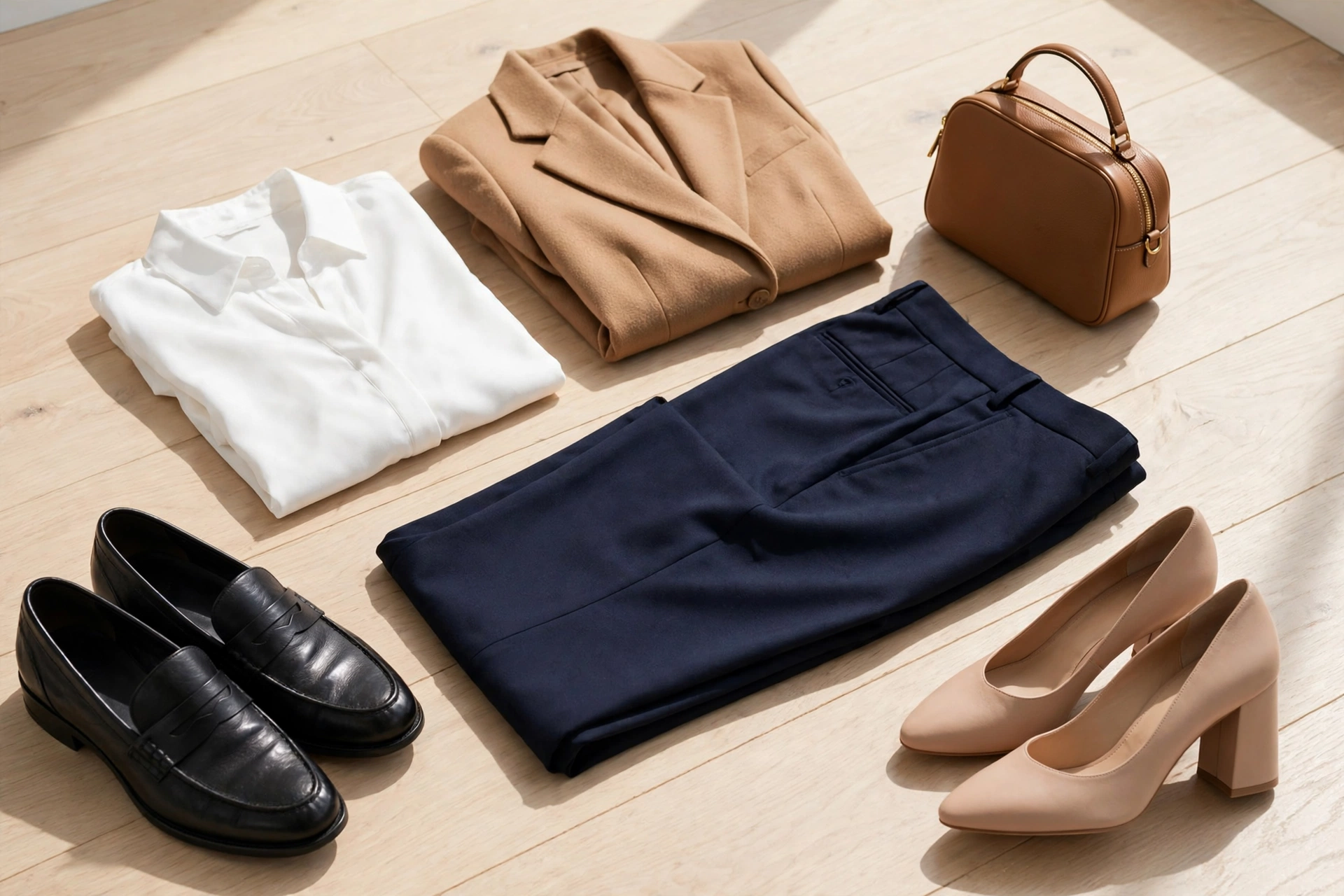
Loafers are the hardest working shoes in most British offices. They are flat, smart, and easy to slip on. They work with tailored trousers, midi skirts, and dresses. They suit corporate offices, smart casual workplaces, and creative studios. If you buy only one pair of work shoes this year, make it a pair of loafers.
Choose a classic shape first. A plain leather loafer with a low vamp and a small heel looks smart without trying too hard. A penny loafer adds a traditional touch. A chunky soled loafer looks more modern and works well with wide leg trousers. Avoid heavy buckles, studs, and tassels for a corporate office. Those details suit a creative workplace better.
Fit is the tricky part with loafers. They have no laces or straps, so the fit depends entirely on the shape of the shoe. The heel should grip without rubbing. If your heel lifts as you walk, the loafer is too big or too wide for your foot. Try loafers with the socks or tights you will wear to work, because bare feet and tights change the fit.
Block heels and court shoes
A block heel is the smartest comfortable heel you can buy. The wide heel gives you height without the wobble of a stiletto. A heel of 3 to 5cm lifts your posture and lengthens your legs, and it still feels stable on stairs, station platforms, and office floors. For interviews, presentations, and client meetings, a block heel is often the right choice.
Choose a court shoe shape for the most formal offices. A plain court in black leather with a rounded or slightly pointed toe works with tailored suits and shift dresses. A slingback court feels lighter in summer. An ankle strap court holds your foot more securely if you walk a lot. Avoid very pointed toes for all day wear. They squeeze your toes and make long days miserable.
Comfort tricks make a real difference with heels. A gel pad under the ball of your foot takes pressure off the front of the shoe. A heel grip stops your heel slipping. Insoles with arch support stop your feet aching by mid afternoon. Keep a pair of flat shoes at your desk or in your bag for the commute, then change into heels at the office. For more detail, read our guide on how to make heels more comfortable, which covers breaking in new heels and simple fixes for common heel problems.
Flats and ballet pumps
Flats are the most comfortable work shoes for many women, but not all flats are equal. A good work flat has a cushioned insole, a small heel or wedge of about 1cm, and a structured upper that holds its shape. A flimsy ballet pump with a paper thin sole will leave your feet aching by lunchtime and will wear out in weeks.
Ballet pumps suit smart casual and creative offices best. In a corporate office, choose a structured flat with a pointed or almond toe and a leather upper. A plain black or navy flat looks far smarter than a brightly coloured or heavily decorated one. A flat with a small bow or a metal trim adds interest without looking casual.
The main problem with flats is lack of support. Flat shoes give your arch nothing to work with, so your feet tire faster than in a shoe with a small heel. Look for flats with built in arch support or add a thin insole. A cushioned insole changes a basic flat into a shoe you can wear all day. Avoid flats with no heel at all if you walk long distances on hard floors.
Trainers at work: when they pass and when they do not
Trainers at work divide opinion, and the answer depends on your office. In a creative studio, a tech company, or a casual workplace, clean, plain trainers are normal work shoes. In a corporate office, a bank, or a law firm, trainers rarely pass, even on a dress down day. Check your dress code before you rely on trainers as work shoes.
When trainers do pass, keep them plain and clean. A white or black leather trainer with a slim sole looks smart. A chunky running trainer with bright colours and mesh panels looks like gym wear, and most managers will notice. Leather trainers age better than canvas ones, and they wipe clean after a rainy commute. Avoid logos, neon colours, and reflective panels.
Wear trainers with tailored trousers, a midi skirt, or a smart dress. The contrast between a tailored outfit and a clean trainer looks deliberate and modern. Avoid wearing trainers with jeans and a hoodie to work unless your office dress code is fully casual. The outfit around the trainer decides whether the look reads as smart or sloppy.
Comfort is the real reason trainers have entered the office. They cushion every step, they support your arch, and they cope with a long commute.
Shoes for standing all day
Some jobs keep you on your feet all day. Teachers, nurses, retail staff, hairdressers, and hospitality workers all need work shoes that protect their feet hour after hour. The right shoe for standing all day is not always the smartest looking shoe, but the gap is smaller than it used to be.
Cushioning matters most. Look for a thick, soft midsole that absorbs impact. Memory foam insoles help, but they wear flat over time, so replace them every few months if you stand all day. A rocker sole, where the toe curves up slightly, helps your foot roll forward as you walk and reduces strain on your calves.
Arch support is the second priority. Shoes with a shaped footbed support the arch and spread your weight evenly. Flat shoes with no arch support force your feet to work harder, and that tiredness travels up to your knees and lower back. If you have flat feet or high arches, a supportive insole matters even more. Many pharmacies and shoe shops sell insoles you can trim to fit. Our guide to comfortable walking shoes for women covers similar comfort features in more depth, including arch support and cushioning.
Fit for standing work is different from fit for desk work. Your feet swell more when you stand all day, so buy shoes with a little extra room in the toe box. Laces or a strap help, because you can loosen the shoe as the day goes on. Slip on shoes are convenient, but they can slip and rub when your feet swell. A loafer with an elastic insert or a Mary Jane style with a strap is a good middle ground.
Work shoes by dress code: corporate, smart casual, creative
Dress code is the fastest way to narrow down your choice. A shoe that looks perfect in a creative studio can look wrong in a corporate office. Start with your dress code, then pick the shoe type that fits inside it.
Corporate offices expect polish. Shoes should be leather or leather look, in black, navy, or dark brown. Closed toes are the rule in most corporate workplaces. Heels should be low to mid height and stable. Loafers, court shoes, and smart flats all pass. Trainers, open toe sandals, and chunky boots usually do not. Keep your shoes polished and your heels in good repair, because scuffed shoes stand out in a formal office.
Smart casual offices give you more room. Loafers, ballet flats, low block heels, and clean leather trainers all work. You can wear suede, tan leather, and a little colour. Open toe shoes may pass in summer, but check how your colleagues dress first. Smart casual is the most common dress code in UK offices now, and it rewards shoes that look polished without looking stiff.
Creative offices are the most relaxed. Trainers, chunky boots, colourful flats, and statement heels all fit. The rule is still to look deliberate rather than careless. A clean pair of white trainers with tailored trousers looks intentional. A muddy pair of running shoes does not.
If you are unsure about your dress code, our guide on smart casual dress code for women in the UK explains the code in detail, with outfit formulas for work, interviews, and events. Pair it with our office wear guide for women to build outfits around the shoes you choose.
| Shoe type | Corporate | Smart casual | Creative | Comfort for long days |
|---|---|---|---|---|
| Leather loafers | Yes, a top choice | Yes, a top choice | Yes | High, flat and stable |
| Block heel courts | Yes, in black or navy | Yes | Yes | Good, if the heel is under 5cm |
| Stiletto heels | Yes, for meetings only | Yes, for evenings | Yes | Low, not for all day wear |
| Ballet flats | Yes, structured leather pairs | Yes | Yes | Medium, add an insole |
| Plain leather trainers | No, in most offices | Yes, clean and plain | Yes | High, the most comfortable option |
| Ankle boots | Yes, in winter | Yes | Yes | Good, with a low heel |
What to buy on a budget: picks under £40 and under £70
You do not need to spend a lot to get good work shoes, but you do need to shop with a plan. A budget of under £40 buys a smart pair for one season. A budget of under £70 buys a pair that can last for years. The difference is usually the material, the sole, and the construction.
Under £40, focus on high street and supermarket ranges. Look for leather look loafers and flats with a cushioned insole and a rubber sole. Check the stitching and the heel. A neat finish at this price is a good sign. Avoid very cheap shoes with cardboard feeling soles, because they wear out in weeks and cost more in the long run. Buy in the sale if you can. End of season sales often cut smart shoes to half price, and a classic black loafer does not go out of fashion.
Under £70, you can buy real leather. Leather loafers, block heel courts, and smart ankle boots all appear in this band on the high street, especially in the sale. Real leather moulds to your foot, breathes better, and can be repaired. A £60 pair of leather loafers that lasts three years costs less per wear than a £30 pair that lasts one season. That cost per wear thinking is the same approach we explain in our guide on how to shop sales in the UK.
| Budget band | What to expect | Best buys | What to check before you pay |
|---|---|---|---|
| Under £40 | Leather look, one season of regular wear | Loafers, ballet flats, plain trainers | Cushioned insole, rubber sole, neat stitching |
| Under £70 | Real leather, stitched soles, longer lifespan | Leather loafers, block heel courts, ankle boots | Leather upper, stitched sole, firm heel counter |
Care and rotation: making work shoes last
Work shoes last longer when you care for them, and the care is simple. Rotate your shoes so no pair is worn two days in a row. Shoes need a day to dry out and recover their shape. Two pairs in rotation last far longer than one pair worn every day.
Polish leather shoes regularly. A quick polish once a week keeps leather supple and hides scuffs. Use a cream polish for smooth leather and a protector spray for suede. Replace heel tips before they wear down to the metal pin, because a worn heel tip damages floors and makes the shoe unstable.
Know when to repair and when to replace. A cobbler can replace soles, heel tips, and insoles for far less than a new pair costs. Replace shoes when the upper cracks, the sole splits, or the shoe no longer supports your foot. Worn out shoes cause foot pain and look untidy, and no amount of polish fixes a shoe that has lost its shape.
For interviews and first days in a new job, wear shoes you have already broken in. See our interview outfit ideas guide for the full outfit.
Frequently asked questions
What are the best work shoes for women in the UK?
The best work shoes for women in the UK are leather loafers for everyday wear, low block heels for smarter days, and plain leather trainers for smart casual offices. Choose a pair that fits well, has a cushioned insole, and suits your office dress code.
What shoes are best for standing all day at work?
Shoes with thick cushioning, arch support, and a roomy toe box are best for standing all day. Look for a lightweight shoe with a rubber sole and a low heel. Laces or a strap help because you can loosen the shoe as your feet swell.
Are trainers acceptable as work shoes in the UK?
Trainers are acceptable in smart casual and creative offices, but rarely in corporate offices. Choose plain leather trainers in white, black, or navy, with a slim sole and no bright colours or large logos. Keep them clean, and wear them with tailored clothes so the outfit still looks smart.
What heel height is best for work?
A heel of 2 to 5cm is best for most women for a full working day. Block heels feel more stable than stilettos at the same height. Higher heels are fine for short periods, such as meetings or evenings, but they put pressure on the balls of your feet over a long day.
How many pairs of work shoes do I need?
Two pairs are enough to start. A pair of black leather loafers and a pair of low block heels cover most offices and outfits. Rotate them so each pair rests between wears.
How can I buy good work shoes on a budget?
Shop the sales, check outlet stores, and buy classic styles that do not date. Under £40, look for leather look loafers and flats with a cushioned insole. Under £70, look for real leather shoes, ideally in the sale. A well made pair that lasts three years costs less per wear than a cheap pair that lasts one season.
Final thoughts
The best work shoes are the ones you forget you are wearing. They fit well, they suit your office, and they go with the clothes you already own. Start with leather loafers, add a low block heel, and check your dress code before you buy trainers for work. Spend a little more on real leather if you can, rotate two pairs, and look after them with basic care.