
Best Budget Winter Coat UK Women
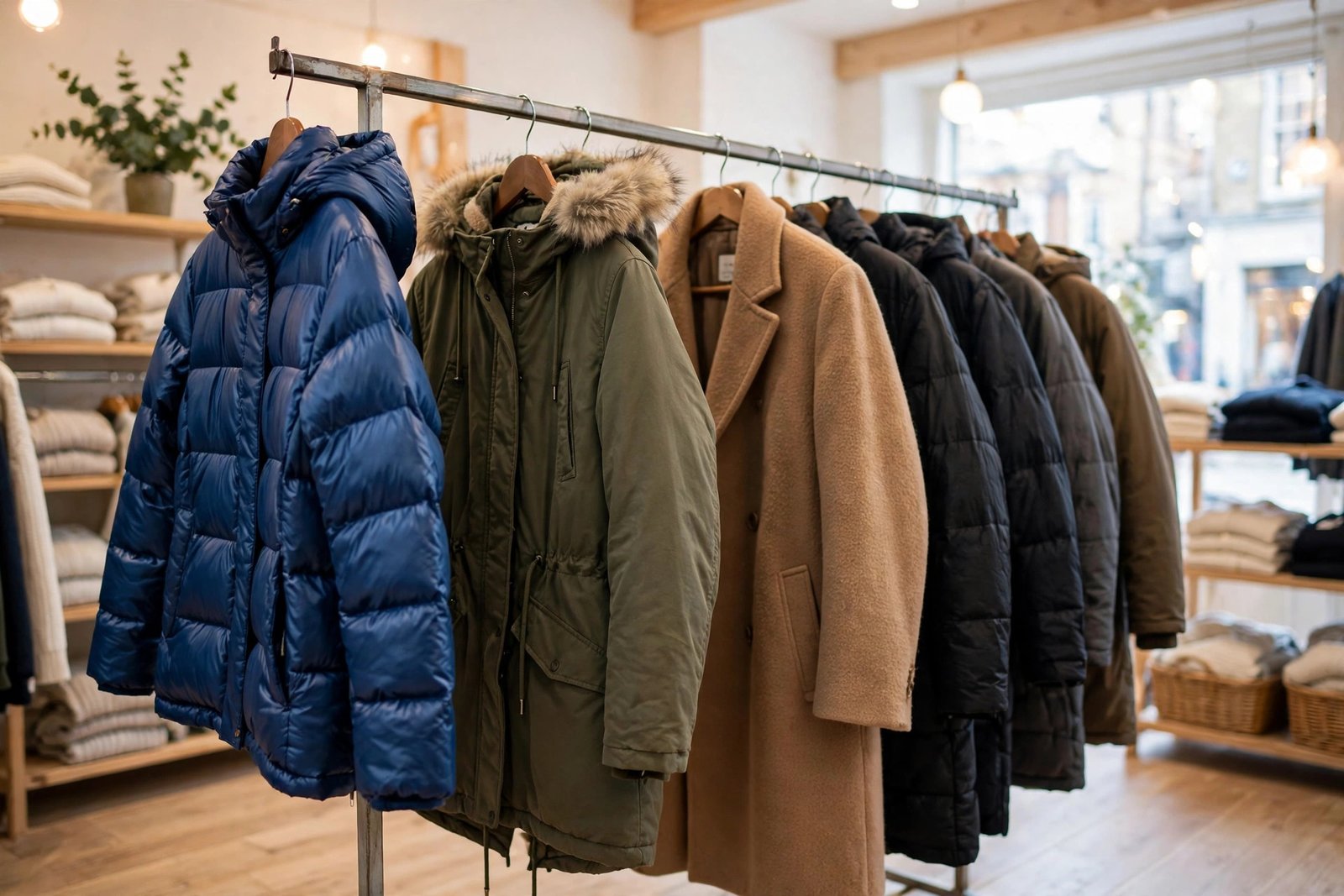
A good winter coat is the most expensive thing most of us buy each year, and the hardest to get right on a budget. It has to keep you warm, keep you dry, fit over a jumper, and last more than one winter. In the UK, it also has to cope with rain, wind, and the school run, often all in the same week.
This guide is organised by scenario, because the best winter coat depends on how you spend your winter. A wet commute needs a different coat from a dry cold snap, and the school run needs a different coat from a weekend walk. Every coat type below can be found under £75 on the UK high street or online, and the guide includes petite and plus-size notes, because a coat that does not fit properly will never keep you warm.
How to choose a winter coat: the five questions
Before you look at any coat, answer five questions. They will narrow hundreds of coats down to a handful.
First, what is your winter like? A wet commute in Manchester needs waterproofing. A dry cold snap in the South East needs insulation. A school run needs a coat you can move in, with big pockets and a hood. Be honest about your real winter, not the winter you imagine.
Second, what will you wear under it? If you wear thick jumpers, you need a coat with room in the shoulders and chest. A coat that fits over a T-shirt but not over a jumper is useless in January. Try every coat on over your thickest jumper.
Third, how long should it be? A hip length coat is easy to move in and good for driving. A knee length coat is warmer, because it covers more of you. A long coat is the warmest of all, but it can be awkward on stairs and in cars. For most UK winters, knee length is the best balance.
Fourth, what is it filled with? Down is the warmest filling, but it is expensive and it loses warmth when wet. Synthetic filling is cheaper, it stays warm when damp, and it is easier to wash. Wool is warm and smart, but it is heavy and it needs dry cleaning. For a budget coat under £75, synthetic filling is usually the best value.
Fifth, what is your real budget? Set it before you shop. A £75 budget is generous if you shop in the sales, and it is enough for a good puffer, parka, or wool blend coat. Do not stretch the budget for a brand name. A £60 coat that fits well will keep you warmer than a £120 coat that does not.
Wet commute: the coat for rain and wind
If your winter means a walk to the station, a wait on a platform, and a walk to the office in the rain, you need a coat that is waterproof, not just water resistant. Water resistant means it will cope with light rain for a short time. Waterproof means it will keep you dry in proper rain.
The best budget choice for a wet commute is a waterproof parka or a long waterproof jacket with a hood. Look for a hood that adjusts, because a hood that blows off in the wind is useless. Look for a storm flap over the zip, because rain gets in through zips. Look for sealed seams if you can find them at this price, because seams are where water gets in first.
Length matters on a wet commute. A knee length coat keeps your legs drier than a hip length one, and it keeps the rain off the top of your boots. If you walk a long way, a longer coat is worth the extra weight.
Petite note: a long waterproof parka can swamp a petite frame. Look for a parka with a drawstring waist, which lets you pull the shape in, and check the sleeve length before you buy. Some high street shops sell petite parkas with shorter bodies and sleeves. Plus-size note: check that the coat fastens comfortably over a jumper, and that the hood fits over a hat. Some waterproof coats are cut narrow at the hips, so try the coat on over your thickest jumper before you buy.
For more on rain protection and waterproof ratings, see our best budget waterproof jacket guide, which explains mm ratings in plain English.
Dry cold: the coat for frost and still air
Some UK winters are cold and dry, with frost in the morning and clear skies. In dry cold, insulation matters more than waterproofing. You need a coat that traps warm air, not a coat that keeps rain out.
The best budget choice for dry cold is a puffer coat with synthetic filling, or a wool blend coat. A puffer is light, warm, and easy to pack away. A wool blend coat is smarter, and it looks better for work. Both can be found under £75 in the sales.
Check the filling before you buy. A puffer with thin filling will not keep you warm in a frost. Squeeze the coat: a good puffer feels plump and springs back. A flat puffer has thin filling and will not insulate well. For a wool blend coat, check the wool percentage on the label. A coat that is mostly polyester with a little wool will not be as warm as one with a higher wool content.
Layering matters in dry cold. A good coat plus a warm jumper is warmer than a very thick coat on its own, because the layers trap air between them. Wear a thermal base layer on the coldest days, and you will be warm in a mid-weight coat.
Petite note: a long puffer can make a petite frame look shorter. Choose a puffer that ends at the knee or above, and avoid very bulky styles. A belted puffer, or one with a drawstring waist, will give you shape. Plus-size note: look for a puffer with a two way zip, which lets you open the bottom for sitting and walking, and check that the coat does not pull across the chest when fastened.
School run: the coat for running around
The school run is the hardest test for a winter coat. You need to move fast, carry bags, open gates, and stand in the playground in the rain, often with a child in one hand. A coat that is warm but stiff will slow you down. A coat that is smart but short will leave you cold.
The best budget choice for the school run is a parka with big pockets, a hood, and a length that covers your hips at least. Big pockets matter, because you will carry gloves, tissues, and a phone. A hood matters, because you will not have a free hand for an umbrella. A zip that works with gloves on matters too, so test the zip before you buy.
Choose a dark colour for the school run. A light coat will show every mark from the playground, the car, and the pushchair. Navy, black, dark green, and dark grey all hide dirt well, and they go with everything.
Petite note: a parka with a drawstring waist and adjustable cuffs will fit better and keep the cold out. Avoid parkas with very long bodies, which can trip you up on stairs. Plus-size note: look for a parka with side zips or a two way zip, which makes it easier to move and sit, and check the pocket size before you buy.
Weekend walks: the coat for the countryside
Weekend walks need a coat that is warm, waterproof, and tough. You will be out for an hour or more, in wind and rain, and you may sit on a wet bench or lean on a fence. A smart wool coat is the wrong choice here. You need something practical.
The best budget choice for weekend walks is a long waterproof parka, or a three in one coat with a removable inner layer. A three in one coat is good value, because you get a waterproof shell and a warm inner layer, and you can wear them together or separately. In autumn, wear the shell alone. In winter, wear both together.
Look for a coat with a hood that fits over a hat, and with cuffs that adjust, so the rain does not run up your sleeves. Look for a coat with a chin guard, so the zip does not rub your chin in the wind. These small details make a big difference on a long walk.
Petite note: a long walking coat can be heavy. Choose the lightest coat you can find that still keeps you warm, and check the weight before you buy. Plus-size note: check that the coat allows you to raise your arms fully, because you will be reaching and climbing on a walk, and a coat that pulls across the back will restrict you.
Coat types compared: puffer, parka, wool, and teddy
Four coat types dominate the UK high street each winter. Here is how they compare on a budget.
| Coat type | Best for | Warmth | Rain | Budget note |
|---|---|---|---|---|
| Puffer | Dry cold, everyday wear | Very warm for the weight | Poor unless waterproof coated | Best value under £75, often on sale |
| Parka | Wet commutes, school run, walks | Warm, especially with a fur trim hood | Good, often waterproof | Good value, look for sealed seams |
| Wool blend | Work, smart occasions, dry cold | Warm, but heavy | Poor, wool absorbs water | Best bought in the January sales |
| Teddy (fleece) | Weekends, casual days, layering | Warm, but bulky | Poor, not waterproof | Cheapest option, often under £50 |
A puffer is the best all rounder for most UK winters, because it is warm, light, and cheap. A parka is the best choice if you spend a lot of time in the rain. A wool blend coat is the smartest choice, but it is not practical in wet weather. A teddy coat is the most comfortable, but it is not waterproof and it can look bulky.
If you can only buy one coat, buy a waterproof parka. It will cope with rain, wind, and cold, and it will work for the commute, the school run, and weekend walks. If you already have a waterproof coat, add a puffer for dry cold days, or a wool blend coat for work.
Petite and plus-size fit notes
Fit is the difference between a coat that keeps you warm and a coat that hangs in the wardrobe. These notes apply to every coat type.
Petite women should look for coats with a shorter body length, a higher waist, and sleeves that do not cover the hands. A coat that is too long will swamp you and make you look shorter. A belted coat, or a coat with a drawstring waist, will give you shape and stop the coat looking like a tent. Avoid very long coats unless they are specifically cut for petite frames.
Plus-size women should look for coats with a two way zip, which lets you open the bottom for sitting and walking, and with room in the shoulders and chest. A coat that pulls across the chest when fastened is too small, even if it fits everywhere else. Look for coats with adjustable waists, because a fixed waist rarely sits in the right place. Avoid coats with very narrow hips if you have wider hips, because they will ride up when you sit.
Everyone should try a coat on over their thickest jumper, with the coat fastened, and walk around the shop in it. Sit down in it, raise your arms, and check that it does not pull or ride up. A coat that feels tight in the shop will feel worse in January.
Where to buy a budget winter coat in the UK
You do not need to spend a lot to get a good winter coat. The UK high street and online shops have good coats under £75, especially in the sales.
High street shops are best for trying coats on. You can check the fit, the weight, and the quality before you buy. Look for coats in the sale rail, and check the coat carefully for loose threads, broken zips, and thin filling. A sale coat is only a bargain if it is in good condition.
Online shops are best for choice and for petite and plus-size ranges, which are often wider online than in store. Check the size guide carefully, and read reviews from buyers with a similar body shape. Check the returns policy before you buy, because you may need to try two sizes.
Supermarkets and budget shops often have good winter coats under £50, and they are worth checking. The quality varies, so check the filling, the seams, and the zip before you buy. A cheap coat with a broken zip is not a bargain.
Buy early if you can. The best budget coats sell out in November, and the best sizes go first. If you see a good coat in October or November, buy it then. It will not be there in January, and the January sales mostly have the sizes nobody wanted.
How to make a budget coat last
A budget coat can last three or four winters if you look after it. A neglected coat will look tired after one winter.
Spray a new coat with a waterproofer before you first wear it, and top it up every few weeks in winter. This is especially important for parkas and puffers, which lose their water resistance over time.
Clean your coat regularly. Brush off mud and dirt when it is dry, and follow the care label for washing. Most synthetic coats can be machine washed on a cold gentle cycle, but wool coats need dry cleaning. Never put a down coat in a tumble dryer unless the label says you can.
Store your coat properly in spring. Clean it, hang it on a proper hanger, and store it in a dry place, away from direct sunlight. Do not squash it into a drawer, because the filling will go flat and the coat will lose its shape.
Fix small problems quickly. A loose button, a broken zip pull, or a small tear will get worse if you ignore it. A tailor can fix most small problems for a few pounds, and it is cheaper than buying a new coat.
What never to do when buying a winter coat
Some common mistakes waste money and leave you cold. Avoid these, and your £75 will go much further.
Never buy a coat without trying it on over your thickest jumper. A coat that fits over a T-shirt but not over a jumper is useless in winter.
Never buy a coat just because it is cheap. A £30 coat that does not keep you warm is a waste of £30. A £70 coat that keeps you warm for three winters costs less per winter than a £30 coat you replace every year.
Never buy a white or very light coloured coat for everyday winter wear. It will show every mark, and it will look dirty within a week. Dark colours hide dirt and go with everything.
Never ignore the care label. A coat that needs dry cleaning will cost you more over its life than a machine washable coat. Factor the cleaning cost into the price before you buy.
Never buy a coat that is too small because it is on sale. A coat that does not fit will never be comfortable, and you will not wear it. Buy the right size, even if it costs a little more.
Frequently asked questions
What is the best budget winter coat for UK women?
There is no single best coat. The best coat depends on your winter. A waterproof parka is the best all rounder for wet commutes and the school run. A puffer is the best choice for dry cold. A wool blend coat is the smartest choice for work. Choose by scenario, not by brand, and set a strict budget before you shop.
How much should I spend on a winter coat?
A budget of £75 is enough for a good winter coat on the UK high street or online, especially in the sales. A coat under £50 can be good value, but check the filling, the seams, and the zip carefully. A coat over £100 is not necessarily warmer. Fit and filling matter more than price.
Are puffer coats warm enough for UK winters?
Yes, for most UK winters. A good puffer with thick synthetic filling will keep you warm in frost and cold wind. In very wet weather, a puffer is not ideal unless it has a waterproof coating, so pair it with a waterproof layer or choose a parka for rainy days.
What coat should a petite woman buy for winter?
Look for a coat with a shorter body length, a higher waist, and sleeves that do not cover your hands. A belted puffer or a parka with a drawstring waist will give you shape. Avoid very long coats unless they are cut for petite frames, and try the coat on over your thickest jumper before you buy.
What coat should a plus-size woman buy for winter?
Look for a coat with a two way zip, room in the shoulders and chest, and an adjustable waist. A parka or a puffer with a drawstring waist will fit better than a fixed waist coat. Try the coat on over your thickest jumper, sit down in it, and check that it does not pull across the chest.
When is the best time to buy a winter coat in the UK?
October and November are the best months to buy, because the full range is in stock and the best sizes are available. January sales have the biggest discounts, but the best coats and sizes are often gone. If you see a good coat in November, buy it then rather than waiting for a sale.
Conclusion
The best budget winter coat is not the most expensive one, and it is not the one with the best-known brand. It is the coat that fits your winter, fits your body, and fits your budget. Choose by scenario: a waterproof parka for wet commutes and the school run, a puffer for dry cold, a wool blend coat for work, and a teddy coat for weekends.
Set a strict budget of £75, try every coat on over your thickest jumper, and check the filling, the seams, and the zip before you buy. Buy early, look after the coat, and it will keep you warm for three or four winters. For more on dressing for changeable weather, see our how to dress for unpredictable UK weather guide, which covers layering and what to keep in your bag.