
How to Remove Fake Tan Stains from Clothes UK
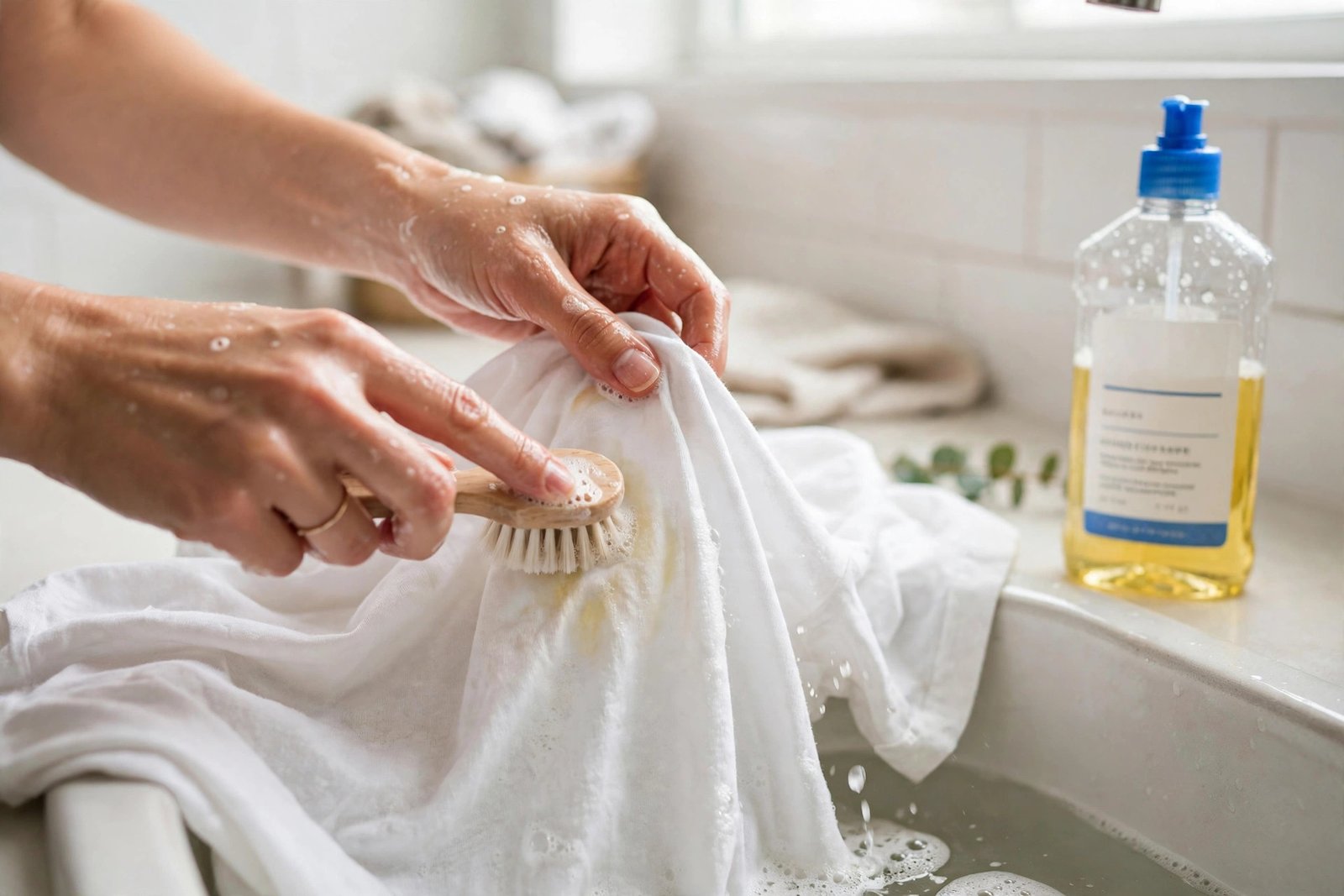
Fake tan stains clothes. It stains collars, cuffs, bedsheets, and white tops, usually on the night you need them most. The good news is that most fake tan stains come out, if you treat them the right way. The bad news is that the wrong treatment, especially heat, can set the stain for good.
This guide explains why fake tan stains, how to remove it fabric by fabric, what to do at each stage of the stain, and how to stop it happening again. It works for fresh stains and for stains you found the next morning.
Why fake tan stains: the DHA explainer
Fake tan works because of an ingredient called DHA, short for dihydroxyacetone. DHA reacts with the amino acids in the top layer of your skin, and the reaction turns the skin brown. It is the same reaction that turns bread brown in the oven, which is why it is called a Maillard reaction.
The same reaction happens on fabric. When fake tan touches clothes, the DHA reacts with the fibres, especially with cotton and other natural fibres, and it turns them brown. The stain is not a dye sitting on the surface. It is a chemical change in the fibre itself. That is why fake tan stains look brown or orange, and why they do not wash out like a splash of coffee.
Heat makes the reaction worse. When you put a stained item in a hot wash, or in a tumble dryer, or under an iron, the heat speeds up the DHA reaction and locks the colour into the fibre. This is why heat sets the stain. A stain that would have washed out in cold water can become permanent after one hot wash.
Time makes it worse too. A fresh stain, treated within a few hours, is much easier to remove than a stain that has sat for a day. The DHA keeps reacting while the stain sits, and the colour gets deeper. Treat fake tan stains as soon as you can, and never put a stained item in a hot wash before you have treated it.
One more thing to know: fake tan stains are not the same as deodorant stains. Deodorant stains are caused by aluminium salts and sweat, and they need a different treatment. If you are dealing with deodorant marks, see our how to remove deodorant stains from clothes guide, which covers that problem separately.
What to do first: the first ten minutes
The first ten minutes matter more than anything else. What you do now decides whether the stain comes out or stays.
First, do not rub the stain. Rubbing pushes the tan deeper into the fibres and spreads it wider. Blot it gently with a clean cloth or a paper towel, lifting the excess tan off the surface. Work from the outside of the stain towards the middle, so you do not spread it further.
Second, rinse the stain under cold water. Hold the stained area under a cold tap, with the water running through the back of the fabric, so it pushes the tan out rather than through. Cold water only. Hot water will set the stain, as explained above. Keep rinsing for a minute or two, until the water runs clear.
Third, treat the stain before you wash it. Do not put the item straight in the washing machine. A normal wash, especially a warm one, will set any tan that is left. Treat the stain first, using the fabric by fabric method below, and only wash the item once the stain has faded.
Fourth, check the care label. Silk, wool, and delicate fabrics need a gentler treatment than cotton. If the label says dry clean only, do not try to treat it at home. Take it to a dry cleaner and tell them it is a fake tan stain, so they use the right treatment.
If the stain is on a white item, keep it separate from coloured clothes while you treat it. Fake tan can transfer from one item to another in a wash, and a white item next to a stained item can pick up the colour.
Fabric by fabric: how to treat each material
Different fabrics need different treatments. The table below is the quick reference. The sections after it explain each fabric in detail.
| Fabric | First step | Treatment | What never to do |
|---|---|---|---|
| Cotton | Rinse under cold water | Soak in cold water with a stain remover or a little washing up liquid, then wash cold | Never use a hot wash or a tumble dryer before the stain is gone |
| Whites (cotton or linen) | Rinse under cold water | Soak in cold water with an oxygen based stain remover, then wash cold | Never use chlorine bleach on a fresh stain, and never use heat |
| Silk | Blot gently, do not rub | Dab with cold water and a little mild detergent, or take to a dry cleaner | Never rub, never use hot water, never use a strong stain remover |
| Wool | Blot gently, do not rub | Soak in cold water with a wool wash, then wash on a cold wool cycle | Never use hot water, never use a normal detergent, never tumble dry |
| Synthetics (polyester, nylon) | Rinse under cold water | Soak in cold water with a stain remover, then wash cold | Never use heat, and check the care label before using any stain remover |
| Denim | Rinse under cold water | Soak in cold water with a stain remover, then wash cold inside out | Never use a hot wash, and never use bleach on coloured denim |
Cotton: the easiest fabric to save
Cotton is the most forgiving fabric for fake tan stains. Rinse the stain under cold water first, then soak the item in cold water with a stain remover or a little washing up liquid for about thirty minutes. After soaking, wash the item on a cold cycle with your normal detergent. Check the stain before you dry it. If it is gone, dry the item as normal. If it is still there, soak it again and wash it again. Never put a cotton item in a hot wash or a tumble dryer while the stain is still visible.
Whites: oxygen based stain remover is your friend
White cotton and white linen can take a stronger treatment than coloured fabrics. After rinsing under cold water, soak the item in cold water with an oxygen based stain remover. Oxygen based stain removers are the ones sold as colour safe stain removers, and they work by releasing oxygen that breaks down the stain. Soak for an hour, or overnight for a stubborn stain, then wash on a cold cycle. Do not use chlorine bleach on a fresh fake tan stain. Chlorine bleach can react with the DHA and make the stain worse, and it can damage the fabric.
Silk: gentle hands, or a dry cleaner
Silk is delicate, and fake tan stains on silk need a gentle touch. Blot the stain gently, do not rub it, and dab it with cold water and a little mild detergent. Work slowly, and check the stain as you go. If the stain does not fade, stop and take the item to a dry cleaner. Tell them it is a fake tan stain, so they use the right treatment. Do not use a strong stain remover on silk, and never use hot water. A ruined silk item costs far more than a dry cleaning bill.
Wool: cold water and wool wash only
Wool needs cold water and a wool wash. Blot the stain gently, then soak the item in cold water with a wool wash detergent for about thirty minutes. After soaking, wash the item on a cold wool cycle, or by hand in cold water. Never use hot water on wool, because it will shrink and felt. Never use a normal detergent, because it can damage the fibres. Never tumble dry wool. Lay it flat to dry, away from direct heat.
Synthetics and denim
Synthetic fabrics like polyester and nylon are less absorbent than cotton, so fake tan stains often sit on the surface and come off more easily. Rinse under cold water, soak in cold water with a stain remover, then wash on a cold cycle. Check the care label before using any stain remover, because some synthetics react badly to certain products.
Denim is tougher. Rinse under cold water, soak in cold water with a stain remover, then wash on a cold cycle inside out. Washing inside out protects the colour of the denim. Never use a hot wash on denim with a fake tan stain, and never use bleach on coloured denim, because it will strip the colour.
Step by step by stain age: fresh, dried, and set
How old the stain is changes what you should do. A fresh stain, a dried stain, and a set stain need different approaches.
Fresh stains (under a few hours)
Fresh stains are the easiest to remove. Blot the excess tan, rinse under cold water, treat with a stain remover or washing up liquid, and wash on a cold cycle. Most fresh stains come out with one treatment. If the stain is still faintly visible after washing, repeat the treatment before you dry the item. Do not dry it until the stain is gone, because drying, especially in a tumble dryer, will set what is left.
Dried stains (a day or more)
Dried stains need soaking. Rinse the item under cold water first, then soak it in cold water with a stain remover for at least an hour, or overnight for a stubborn stain. After soaking, wash on a cold cycle. You may need to soak and wash twice. Be patient. A dried stain will not come out in one quick wash, but it will usually come out with soaking and a cold wash. Never use heat on a dried stain until it is gone.
Set stains (already washed hot or tumble dried)
A set stain is the hardest to remove, and sometimes it will not come out completely. If the item has already been through a hot wash or a tumble dryer, the DHA has reacted fully and the colour is locked into the fibre. Try soaking the item in cold water with an oxygen based stain remover overnight, then washing on a cold cycle. Repeat the soak and wash a few times. The stain may fade, even if it does not disappear completely. On white cotton, a careful bleach treatment, after the stain remover soak, may help, but only if the care label allows bleach. On coloured fabrics and delicates, a set stain may be permanent. If the item is valuable, take it to a dry cleaner and ask them honestly whether they think it can be saved.
Stains on sheets, towels, and other household items
Fake tan does not only stain clothes. It stains bedsheets, pillowcases, towels, and sofa covers, usually on the first night after applying tan.
For sheets and pillowcases, rinse the stain under cold water, then soak in cold water with an oxygen based stain remover, then wash on a cold cycle. White sheets can take a stronger treatment than coloured ones. Check the stain before you dry the sheets, and repeat the treatment if it is still visible.
For towels, the same method works. Towels are usually cotton, so they are forgiving. Soak, wash cold, and check before drying. A towel that has been tumble dried with a stain still in it may keep the stain, so always check first.
For sofa covers and other items that cannot go in the washing machine, blot the stain gently, dab it with cold water and a little mild detergent, and blot it dry. Do not rub, and do not use hot water. If the stain does not fade, ask a professional cleaner. Tell them it is a fake tan stain, so they use the right treatment.
For more on keeping your footwear and other items clean, see our how to clean trainers guide, which covers stain care for shoes and everyday items.
Prevention: how to stop fake tan transferring
Prevention is easier than removal. Most fake tan stains happen because the tan was still wet or still developing when it touched fabric. A few simple habits will stop most stains.
Let the tan dry fully before you dress. Wait at least ten to fifteen minutes after applying fake tan before you put clothes on, and longer if the instructions say so. The tan should feel dry to the touch, not tacky. If it still feels sticky, wait longer.
Wear loose, dark clothes while the tan develops. A loose dark T-shirt and dark bottoms will catch any transfer without showing it. Avoid tight clothes, white clothes, and anything you care about while the tan is developing. Many people keep an old dark T-shirt and a pair of old bottoms just for tan nights.
Use a barrier on your sheets. Sleep on dark sheets on tan nights, or put an old dark towel over your pillow. A dark towel is cheaper than a ruined white pillowcase. Some people use a special tan proof sheet, but a dark towel works just as well.
Apply tan in the evening, not in the morning. If you apply tan in the evening, it has all night to develop while you sleep in dark clothes and dark sheets. If you apply it in the morning, you will be dressing, sitting, and moving around while it is still developing, and it will transfer to everything you touch.
Wash your hands and your collar area after applying tan. Fake tan on your hands will transfer to everything you touch, including your clothes. Wash your hands thoroughly after applying tan, and wipe your neck and collar area with a damp cloth before you dress.
Choose a tan that suits your skin and your life. A gradual tan, which builds up slowly over a few days, transfers less than a dark instant tan. If you stain clothes often, try a gradual tan and see if it helps. It will not stop transfer completely, but it will reduce it.
What never to do with a fake tan stain
Some common mistakes make fake tan stains worse. Avoid these, and you will save more clothes.
Never use hot water on a fake tan stain. Hot water sets the stain, as explained above. Always use cold water, from the first rinse to the final wash.
Never put a stained item in a tumble dryer before the stain is gone. The heat of the dryer will set the stain, and once it is set, it may never come out. Always check the stain before you dry the item, and air dry it if you are not sure.
Never iron a stained item. The heat of the iron will set the stain in the same way as a tumble dryer. Do not iron an item until the stain is completely gone.
Never rub a stain. Rubbing pushes the tan deeper into the fibres and spreads it wider. Always blot, never rub.
Never use chlorine bleach on a fresh fake tan stain. Chlorine bleach can react with the DHA and make the stain worse. Use an oxygen based stain remover instead, and only use bleach on white cotton after the stain has been treated and only if the care label allows it.
Frequently asked questions
Does fake tan wash out of clothes?
Yes, in most cases, if you treat it quickly and with cold water. Fresh stains usually come out with a cold rinse, a stain remover soak, and a cold wash. Dried stains need longer soaking. Set stains, which have already been through a hot wash or a tumble dryer, are much harder to remove and may not come out completely.
Can you get fake tan out of white clothes?
Yes. Rinse under cold water, soak in cold water with an oxygen based stain remover for an hour or overnight, then wash on a cold cycle. Do not use chlorine bleach on a fresh stain, and never use heat until the stain is gone. Check the stain before you dry the item, and repeat the treatment if it is still visible.
Does fake tan stain silk?
Yes, and silk is one of the hardest fabrics to treat at home. Blot the stain gently, dab it with cold water and a little mild detergent, and do not rub it. If the stain does not fade, take the item to a dry cleaner and tell them it is a fake tan stain. Do not use a strong stain remover or hot water on silk.
How do I stop fake tan staining my sheets?
Let the tan dry fully before bed, wear loose dark clothes while it develops, and sleep on dark sheets or put a dark towel over your pillow. Apply tan in the evening, so it develops overnight while you are in dark clothes and dark sheets, rather than in the morning when you will be moving around and touching fabric all day.
Will a fake tan stain come out in a normal wash?
Sometimes, if the stain is fresh and the wash is cold. But a normal wash, especially a warm one, can set the stain if it has not been treated first. Always rinse under cold water and treat the stain with a stain remover before you wash the item, and always wash on a cold cycle until the stain is gone.
What is the best stain remover for fake tan?
An oxygen based stain remover, used in cold water, is the best choice for most fabrics. Washing up liquid also works well as a first treatment, because it breaks down the oils in the tan. For whites, an oxygen based stain remover is the safest and most effective option. Always check the care label before using any stain remover, and test it on a hidden area first.
Conclusion
Fake tan stains are a nuisance, but they are not a disaster. Treat them quickly, use cold water, and match the treatment to the fabric. Never use heat until the stain is gone, and never rub a stain. With a little patience, most fake tan stains come out, and the clothes you thought were ruined will be wearable again.
Start with the first ten minutes: blot, rinse cold, treat, and wash cold. Keep a stain remover in the cupboard, keep dark clothes for tan nights, and sleep on dark sheets. Prevention is easier than removal, and a few simple habits will save you from most fake tan stains in the future.