
How to Remove Deodorant Stains from Clothes UK
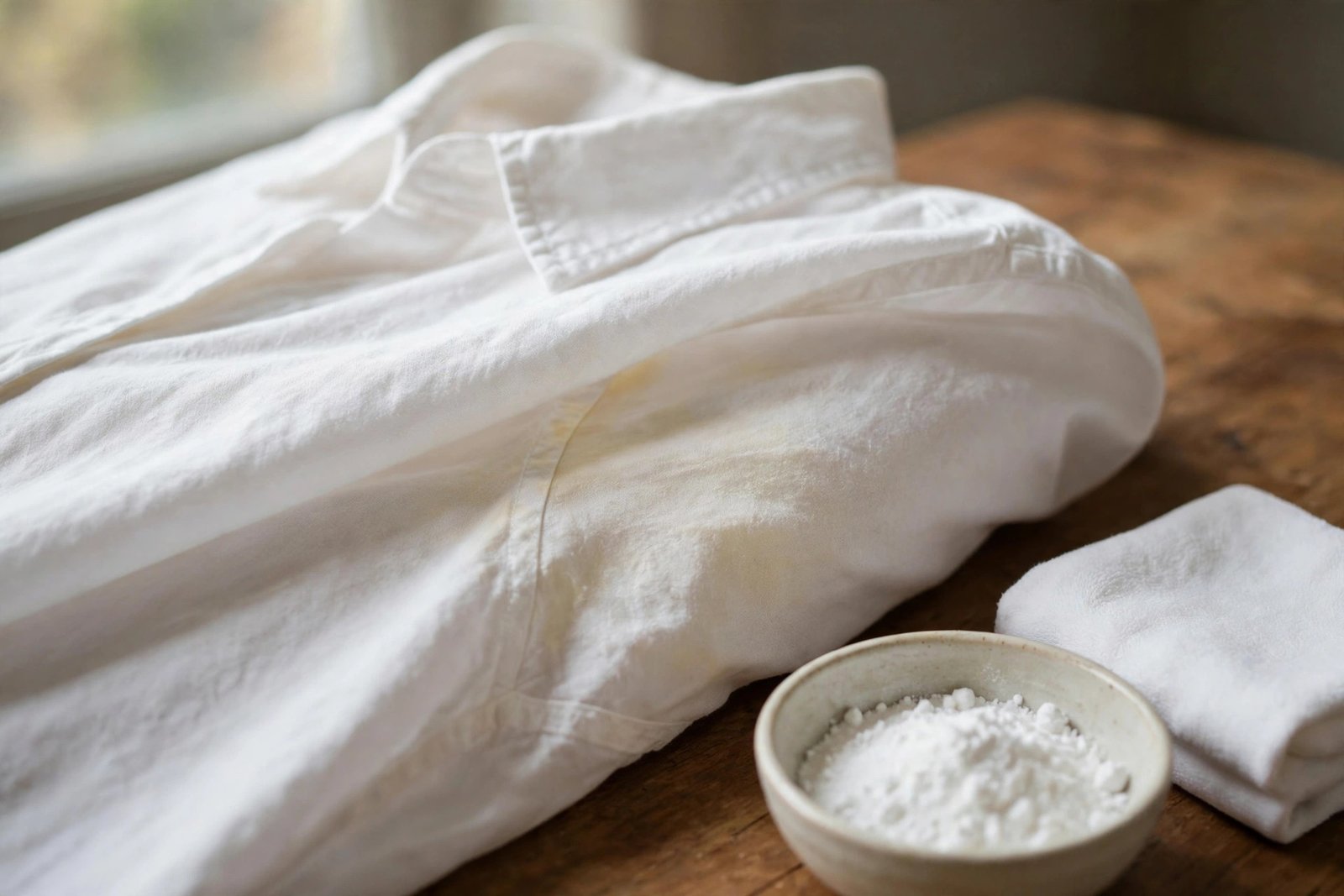
Quick answer: Treat a deodorant stain before you wash the garment, and never put it in a hot wash or a tumble dryer first. For most cotton and linen clothes, a paste of bicarbonate of soda and water, left for 30 minutes and then washed as normal, lifts fresh marks. For silk and wool, use cool water and a gentle liquid only, and take the item to a dry cleaner if the mark stays.
A yellow mark under the arm of a white shirt can ruin a favourite top. A white smear on a black dress can spoil an outfit five minutes before you leave the house. Deodorant stains are one of the most common laundry problems in the UK, and they are also one of the easiest to make worse. The wrong step, such as a hot wash or a hot iron, can set the mark for good.
This guide explains what causes deodorant stains, how to treat them fabric by fabric, and which methods work for white clothes and dark clothes. It also covers what never to do, and how to stop the stains from forming in the first place. Every method uses products from a UK supermarket or chemist.
What Causes Deodorant Stains on Clothes
Most deodorant stains come from the antiperspirant ingredient aluminium. Aluminium salts react with sweat, body oils and the fibres of your clothes. Over time, the reaction leaves a yellow mark on white and light clothes. On dark clothes, the same build up shows as a white or grey smear.
Fresh marks are usually just deodorant sitting on the surface of the fabric, and you can often wipe these away. Old marks are different. The aluminium and sweat have bonded with the fibres, so a shirt that looked clean in the wardrobe can show yellow underarm marks months later.
Heat makes the problem worse. A tumble dryer, a hot iron or a hot wash can fix the stain into the fibres. This is the single most important fact in this guide. Always treat the stain before you apply heat.
Some deodorants stain more than others. Roll on products can leave heavier marks than sprays, because more product reaches the fabric. Clear gel formulas tend to leave fewer visible marks, but they can still build up over time.
First Steps: What to Do the Moment You Spot a Mark
Act before the stain dries if you can. Fresh deodorant marks are far easier to remove than old ones. Follow these steps in order.
- Blot, do not rub. Use a clean, dry cloth or a piece of kitchen towel. Press it gently on the mark to lift surface product. Rubbing pushes the deodorant deeper into the fibres.
- Use cold water. Rinse the area under cold running water. Hot water can set a fresh stain. Keep the water cold until you know the mark has lifted.
- Check the care label. The label tells you the maximum wash temperature and whether the item can be machine washed at all. Follow it. If the label says dry clean only, do not try a home treatment.
- Test any treatment first. Dab a small amount on a hidden seam or inside hem. Wait five minutes, then rinse. If the colour or texture changes, stop and use a different method.
- Treat before washing. Apply your chosen treatment, leave it for the time stated, then wash the garment as normal. Check the stain before you dry the item. If the mark is still there, treat it again. Never tumble dry a stained garment.
A quick fix for a white mark on dark clothes is a clean pair of tights or a nylon stocking. Rub the fabric gently with the nylon, and the white residue often lifts straight off. This works best on fresh marks. It does not work on old yellow stains.
Fabric by Fabric Treatment Table
Different fabrics need different treatments. What is safe on cotton can damage silk. Use this table to pick the right method for your garment, and always check the care label first.
| Fabric | Safe treatments | Avoid | Notes |
|---|---|---|---|
| Cotton | Bicarbonate of soda paste, white vinegar soak, oxygen bleach soak | Hot wash before treating, chlorine bleach on colours | The easiest fabric to treat. Most stains lift with a paste and a normal wash. |
| Linen | Bicarbonate of soda paste, white vinegar soak | Scrubbing, hot water | Treat gently. Linen fibres weaken when wet, so do not scrub hard. |
| Silk | Cool water, mild washing up liquid, white vinegar solution | Bicarbonate of soda, bleach, rubbing, hot water | Handle with care. If the mark stays after one gentle attempt, use a dry cleaner. |
| Wool | Cool water, wool wash liquid, white vinegar solution | Bicarbonate of soda, bleach, hot water, agitation | Heat and agitation shrink wool. Keep the water cool and do not wring the garment. |
| Polyester and synthetics | Bicarbonate of soda paste, white vinegar soak, washing up liquid | Hot wash before treating | Synthetic fibres hold odour as well as stains. A vinegar soak helps with both. |
| Dark and black clothes | White vinegar solution, washing up liquid, bicarbonate of soda paste | Chlorine bleach, hot water | Use colour safe methods only. Test on a hidden seam first. |
Method 1: Bicarbonate of Soda Paste
Bicarbonate of soda is the most useful treatment for deodorant stains on cotton, linen and synthetics. It is cheap, easy to find in UK supermarkets, and gentle on most washable fabrics. Do not use it on silk or wool.
- Mix three parts bicarbonate of soda with one part cold water to form a thick paste.
- Spread the paste over the stain. Cover the whole mark.
- Leave it for 30 minutes. For an old stain, leave it for up to two hours.
- Rinse with cold water, then wash the garment as normal.
- Check the stain before drying. Repeat the treatment if the mark is still visible.
For a stubborn yellow stain on a white cotton shirt, add a squeeze of lemon juice to the paste. Lemon juice is a mild natural bleach, so use this only on white cotton and linen. Keep the garment out of direct sunlight while the paste is on, because sunlight plus lemon juice can weaken the fibres.
Method 2: White Vinegar Soak
White vinegar dissolves the aluminium residue that causes deodorant stains. It works well on cotton, linen and synthetics, and it also helps with lingering odour. Use plain white vinegar, not malt vinegar, which can stain.
- Mix one part white vinegar with two parts cold water in a bowl or basin.
- Soak the stained area for 30 minutes.
- Rinse with cold water, then wash as normal.
- For a whole garment, add a cup of white vinegar to the rinse cycle of your washing machine.
White vinegar is also useful for dark clothes, because it does not bleach colour.
Method 3: Washing Up Liquid
Washing up liquid cuts through the waxy, oily part of a deodorant stain. It is a good choice for fresh marks, and it is safe for most fabrics, including silk and wool, when used in a small amount.
- Apply a small drop of clear washing up liquid to the stain.
- Work it in gently with your fingers. Do not scrub.
- Leave it for 15 minutes.
- Rinse with cold water, then wash as normal.
Use a clear liquid rather than a coloured one, so no dye transfers to the fabric. On silk and wool, dilute the liquid with cold water before you apply it.
Method 4: Oxygen Bleach Soak
Oxygen bleach is the strongest home treatment for old yellow stains on white and colourfast clothes. UK products include Vanish Oxi Action, Astonish Oxy Plus and supermarket own brand oxygen bleach. Check the label for the fabrics it suits, and never use it on silk or wool unless the label says it is safe.
- Dissolve the oxygen bleach in warm water, following the pack instructions.
- Soak the garment for up to six hours. For a very old stain, an overnight soak can help.
- Wash as normal, then check the stain before drying.
Oxygen bleach is different from chlorine bleach. Chlorine bleach can damage coloured fabrics and weaken cotton, so use oxygen bleach for colours, and chlorine bleach only on white cotton where the label allows it.
Method 5: Lemon Juice and Salt
Lemon juice and salt work as a mild bleaching treatment for white cotton and linen. Use this method only on white fabrics. Do not use it on colours, silk or wool.
- Squeeze lemon juice over the stain.
- Sprinkle a little table salt on top.
- Leave it for 30 minutes, then rinse with cold water.
- Wash as normal and check the stain before drying.
This method is best for a light yellow mark that has not set. For a deep, old stain, use the bicarbonate of soda paste or an oxygen bleach soak instead.
How to Remove Deodorant Stains from White Clothes
White clothes show deodorant stains most clearly, because the yellow mark stands out against the white fabric. They are also the easiest clothes to treat, because you can use stronger methods without worrying about colour loss.
Start with the bicarbonate of soda paste. It lifts most fresh and moderate stains. If the mark is old or deep, follow with an oxygen bleach soak. Wash white cotton at the temperature on the care label, and check the stain in daylight before you dry the garment. Do not dry a stained garment in direct sun until the stain is gone, because heat can set it.
How to Remove Deodorant Stains from Black and Dark Clothes
Dark clothes show deodorant as a white or grey smear rather than a yellow stain. The mark is usually surface residue, so it is often easier to remove than a yellow stain on white clothes.
For a fresh white mark, try the nylon tights trick first. Rub the fabric gently with a clean pair of tights, and the residue should lift. For a mark that has been washed in, use a white vinegar solution or a small amount of washing up liquid. Rinse with cold water and wash as normal on a cool cycle.
Never use chlorine bleach on dark clothes. It strips the colour and leaves a pale patch that cannot be fixed. Wash dark clothes inside out to protect the colour, and avoid the tumble dryer until you are sure the mark is gone.
What Never to Do with a Deodorant Stain
A few common mistakes turn a small mark into a permanent stain. Avoid all of these.
- Do not tumble dry a stained garment. Heat sets the stain into the fibres. Always check the mark is gone before you dry the item.
- Do not iron over the stain. An iron is hot enough to fix the mark for good. Iron the garment only after the stain has lifted.
- Do not wash in hot water first. Start with cold water and a pre treatment. A hot wash can set a fresh stain before the treatment has a chance to work.
- Do not scrub silk or wool. Scrubbing damages delicate fibres and can leave a shiny patch or a hole. Dab gently, or use a dry cleaner.
- Do not use chlorine bleach on coloured clothes. It strips colour and weakens fibres. Use oxygen bleach for colours, and only where the label allows it.
- Do not mix cleaning products. Never mix bleach with vinegar or with other cleaners. The fumes can be harmful. Use one treatment at a time, and rinse well between treatments.
- Do not ignore the care label. The label is the final word on what a garment can take. If it says dry clean only, do not try a home treatment.
How to Prevent Deodorant Stains
Prevention is easier than removal. A few small changes to your routine can stop most deodorant stains from forming.
Let your deodorant dry before you dress. This is the single most effective step. Wait two to three minutes after you apply it, or use a hairdryer on a cool setting to speed up drying. Dressing while the product is still wet transfers it straight onto your clothes.
Apply less product. Most people use more deodorant than they need. A thin, even layer is enough. Extra product does not give extra protection, and it leaves more residue on your clothes.
Choose your deodorant with stains in mind. Clear gel and spray formulas tend to leave fewer visible marks than white sticks and roll ons. Antiperspirants with lower aluminium content may stain less, but they may also protect less. Try a different formula for a week and see how your clothes look.
Use underarm dress shields for delicate or expensive clothes. These small adhesive pads stick inside the underarm of a garment and absorb sweat and product before they reach the fabric. They suit silk blouses, tailored jackets and occasion wear that you cannot wash often.
Wash clothes soon after wearing them. Do not leave a worn shirt in the laundry basket for a week. The longer sweat and deodorant sit on the fabric, the harder the stain is to remove. A quick cold rinse of the underarm area before you put the garment in the wash can help too.
Keep your shoes and accessories clean as well. Stain care is not only about clothes. If your shoes need the same attention, our guides on how to clean trainers and how to clean suede shoes cover step by step methods for footwear.
When to Take the Garment to a Dry Cleaner
Some stains need professional help. Take the garment to a dry cleaner if the care label says dry clean only, if the fabric is silk or wool and the mark has not lifted after one gentle attempt, or if the stain is old and has survived two home treatments.
Tell the cleaner what the stain is and what you have already tried. This helps them choose the right solvent. Do not iron the garment before you take it in, because heat can set the stain and make the professional clean harder.
Save it for clothes that are worth it. A favourite silk blouse, a tailored jacket or a good quality wool jumper is worth the trip. A worn out gym top is not.
Frequently Asked Questions
Does white vinegar remove deodorant stains?
Yes. White vinegar dissolves the aluminium residue that causes most deodorant stains. Soak the stained area in a mix of one part white vinegar to two parts cold water for 30 minutes, then wash as normal. It works on cotton, linen and synthetics, and it is safe for dark clothes because it does not bleach colour.
Can you get old yellow deodorant stains out of white shirts?
Often, yes, but old stains need more work than fresh ones. Start with a bicarbonate of soda paste, left for up to two hours. If the mark stays, follow with an oxygen bleach soak of up to six hours. Check the stain before drying, and repeat the treatment if needed. If two full treatments do not lift it, a dry cleaner may help.
Does baking soda remove deodorant stains?
Yes. Bicarbonate of soda, sold as baking soda in some shops, is one of the best home treatments for deodorant stains. Mix it with cold water to form a paste, spread it over the stain, leave it for 30 minutes, then wash as normal. Do not use it on silk or wool.
Why do my white shirts turn yellow under the arms?
The yellow colour comes from a reaction between the aluminium salts in antiperspirant, your sweat and the fabric fibres. Heat from washing and drying makes the reaction worse, which is why the marks often appear after many washes. Treat the stain before you wash, and keep the garment out of the tumble dryer until the mark is gone.
Can I use bleach on deodorant stains?
Use oxygen bleach, not chlorine bleach, for most clothes. Oxygen bleach is safe for white and colourfast clothes, and it lifts old yellow stains well. Chlorine bleach, such as household bleach, should only be used on white cotton, and only if the care label allows it. Never use chlorine bleach on coloured or dark clothes.
How do I stop deodorant from marking black clothes?
Let the deodorant dry fully before you dress, and use a thin layer rather than a thick one. Clear gel or spray formulas leave fewer visible marks than white sticks. If a white mark does appear, rub it gently with a clean pair of tights, or dab it with a white vinegar solution and rinse with cold water.
Conclusion
Deodorant stains are common, but they are not permanent if you treat them the right way. Act fast, use cold water, pick a treatment that suits the fabric, and never apply heat until the mark is gone. Bicarbonate of soda paste handles most stains on cotton and linen. White vinegar works well on dark clothes and synthetics. Oxygen bleach is the strongest option for old yellow marks on white and colourfast clothes.
Prevention matters just as much as treatment. Let your deodorant dry before you dress, use less product, and wash clothes soon after wearing them. A few small changes can keep your favourite shirts and dresses free of stains for much longer.