
How to Layer Clothes for UK Rain
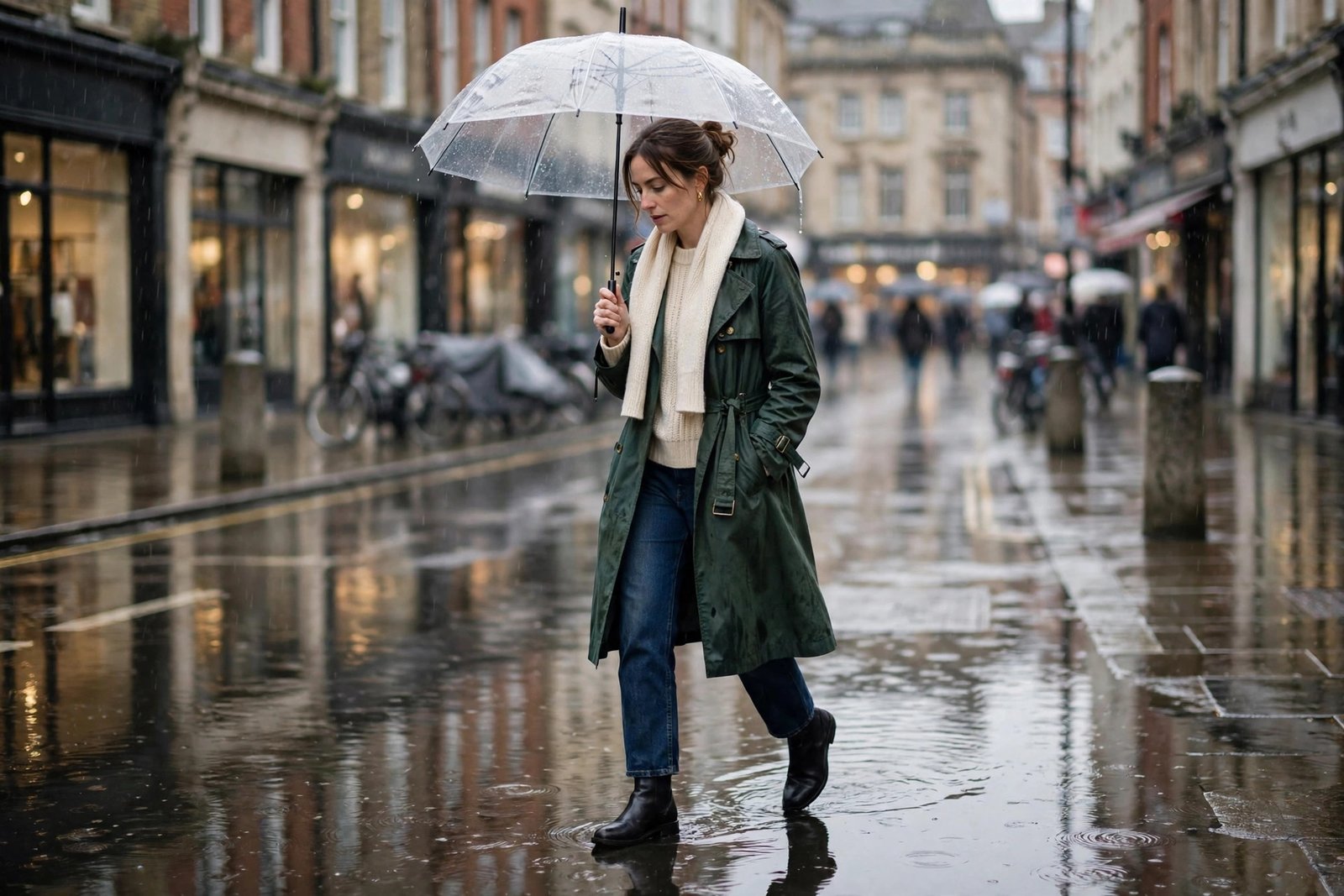
UK rain does not fall in a straight line. It starts, stops, turns to drizzle, then comes back sideways while you are halfway to the station. The answer is not a bigger coat. It is a layering system: three layers, each with a job, that you can add or remove as the weather changes. Get the system right and the same few pieces will carry you through a wet commute, the school run, and a rainy weekend.
This guide explains the three layers, which fabrics belong in each one, how to build outfits for different days, and what to carry in your bag so a shower never catches you out.
The three-layer system: what each layer does
Layering works because each layer has one job. When one layer tries to do everything, the system fails.
The base layer sits against your skin. Its job is to manage moisture. When you walk fast to the bus stop or hurry between shops, you sweat, and a damp base layer makes you cold. A good base layer moves moisture away from your skin and dries quickly. In cold rain, it also adds a little warmth. In mild rain, a simple cotton top can be the base layer, but cotton holds water and dries slowly, so it is the weakest choice on a wet day.
The middle layer is the warmth layer. Its job is to trap warm air. A knit jumper, a fleece, or a soft cardigan all work. This is the layer you adjust most. Too warm indoors? Take it off and carry it. Cold wind on the walk home? Put it back on. The middle layer should be easy to remove without undoing the whole outfit.
The outer layer is the weather layer. Its job is to keep rain and wind out. This is your waterproof jacket, raincoat, or trench. It does not need to be warm on its own. It needs to be waterproof, not just showerproof, with a hood or a collar you can turn up, and a length that covers your hips when you sit or bend.
The rule is simple: base for moisture, middle for warmth, outer for weather. If you feel cold and wet, one of the three layers is doing the wrong job. Work out which one, and change that layer, not the whole outfit.
Which fabrics go in which layer
Fabric choice matters more than brand or price. The wrong fabric in the wrong layer will undo the whole system, however good the coat is.
| Weather | Base layer | Middle layer | Outer layer |
|---|---|---|---|
| Light rain, mild (12 to 16 degrees) | Lightweight merino or a breathable synthetic top | Thin knit or a light cardigan, easy to remove | Packable rain jacket or a water resistant trench |
| Steady rain, cool (8 to 12 degrees) | Long sleeve merino or thermal top | Medium knit jumper or fleece | Waterproof raincoat with a hood, hip length or longer |
| Heavy rain, cold (below 8 degrees) | Thermal base layer, merino or synthetic | Thick knit or fleece, plus a gilet if you run cold | Waterproof coat with taped seams and a storm flap |
| Rain then sun, changeable | Breathable synthetic or light merino | A layer you can tie round your waist or fold into your bag | A packable jacket you can carry when the sun comes out |
| Windy rain | Close fitting base layer, no gaps at the waist | A windproof fleece or softshell under the coat | A coat with a storm collar and cuffs that close properly |
Merino wool deserves a special mention. It keeps you warm when it gets damp, it does not hold smells the way synthetics can, and a thin merino top works as a base layer in almost any weather. It costs more than cotton, but one good merino top will serve you for years.
Cotton is the fabric to be careful with in rain. A cotton T-shirt under a waterproof coat will stay damp once you sweat, and a cotton hoodie soaks up rain at the cuffs and hem. Save cotton for dry days. In rain, choose wool, fleece, or a breathable synthetic for the layers closest to your skin.
Denim is heavy when wet and slow to dry. Dark jeans under a long coat are fine in light rain, but in heavy rain they will be damp at the knees and hems by the time you arrive. On a day of steady rain, choose trousers in a quick drying fabric, or wear a longer coat that keeps your legs covered.
How to build a rain layering outfit, step by step
Build from the inside out, and check each layer as you go.
First, choose the base. Look at the temperature, not the rain. If it is mild, a light long sleeve top is enough. If it is cold, add a thermal layer. The base should fit close to the body without being tight. If it bunches under the next layer, it is too loose or too long.
Second, add the middle layer for the temperature you expect outside, not the temperature in your house. A knit that feels perfect in a warm hallway will feel thin in wind and rain. If you are unsure, take the warmer option. You can always remove a layer, but you cannot add one you left at home.
Third, add the outer layer and test it. Can you raise your arms without the coat riding up? Can you sit down without it gaping? Does the hood stay up in wind, or does it fall back? Do the cuffs close around your wrists? A coat that fails any of these tests will let rain in at exactly the wrong moment.
Fourth, check the joins. Rain gets in at the gaps: between coat and trousers, between sleeve and glove, between collar and neck. A scarf tucked into the coat closes the neck gap. Gloves that fit under the cuff close the wrist gap. A coat that covers your hips closes the waist gap when you bend or sit.
Finally, look at yourself in a mirror before you leave. Layers can add bulk, and bulk in the wrong places looks careless. A belt over a coat, a coat that fits at the shoulders, and a middle layer that is thinner than the coat all help the outfit look intentional rather than piled on.
Layering formulas for work
Work outfits need to look smart when the coat comes off, because the coat is not the outfit. Build the outfit first, then add the rain layers over it.
For a smart office day, start with a long sleeve top in a neutral colour, add a fine knit jumper or a blouse, then tailored trousers. The waterproof layer goes over the top: a trench or a smart raincoat in navy or black. At the office, hang the coat up and the outfit underneath is already work ready. Keep a pair of dry shoes at your desk if you can, and walk in waterproof ankle boots. For more on choosing work footwear, see our waterproof boots for women guide.
For a casual office or a working from home day with errands, use a merino crew neck as the base, dark jeans or smart joggers as the bottom, and a packable rain jacket as the outer layer. The jacket folds into your bag when the rain stops, and the outfit underneath still looks put together.
For a day with meetings and travel between buildings, choose layers that come off fast. A zip front fleece under a raincoat is quicker than a pullover. A scarf is faster than a high collar you have to adjust. Speed matters when you are going in and out of doors all day.
One mistake to avoid at work: wearing your warmest knit under a heavy coat and then sitting in a heated office all day. You will overheat, and you will spend the day damp with sweat. Dress for the indoor temperature, and let the coat do the outdoor work.
Layering formulas for the school run and errands
The school run is the hardest layering test. You are outside, you are moving, you are carrying bags, and you have no time to change. The system has to work while you walk.
Start with a thermal or merino base layer, because you will be out in the cold first thing. Add a warm middle layer you can unzip, such as a fleece or a zip front cardigan. The outer layer should be a waterproof coat with big pockets, because your hands will be full. A hood matters more than an umbrella here, because you need both hands free.
For the bottom half, choose trousers that dry quickly and shoes that grip wet pavements. Wet leaves and wet paving are slippery, and a fall on the school run is a real risk. Flat shoes with a good tread beat heels on a rainy morning, whatever the outfit.
For errands, pack light. A cross body bag keeps your hands free and stays under your coat. A tote bag on your shoulder gets wet and slides off. If you drive, keep a spare dry layer in the car: a dry pair of socks and a dry top can rescue a day that started with a downpour.
On the school run, the most common error is dressing for the walk there and forgetting the wait. Standing at the school gate in rain is colder than walking in it. Add one more layer than you think you need for the standing part, and take it off once you are moving again.
Layering formulas for weekends
Weekends give you more room. You can dress for comfort, and you can carry more, because you are not rushing between meetings.
For a rainy Saturday in town, start with a light base, add a chunky knit, and wear a long waterproof coat over the top. The long coat keeps your legs dry and looks good with jeans and boots. A cross body bag under the coat keeps your phone and wallet dry.
For a walk in the park or the countryside, use the full system properly. A moisture wicking base, a fleece middle, and a waterproof outer with a hood. Walking boots with a good tread are worth more than any jacket. If the walk is long, carry a spare base layer in your bag. Changing a damp base layer halfway through a walk makes the second half far more comfortable.
For a rainy evening out, the system still applies, but the layers get smarter. A silk feel top as the base, a fine knit or a blazer as the middle, and a smart trench as the outer. When you arrive, the coat comes off and the outfit underneath is evening ready. Avoid a bulky waterproof that crushes the outfit underneath. A trench in a dark colour is the safer choice.
For more rainy day outfit ideas by occasion, see our what to wear in UK rain guide.
Common layering mistakes (and how to fix them)
Most layering failures come from a short list of mistakes. Fix these and the system works.
Too many layers of the same thickness is the first. Three thick jumpers do not keep you warmer than one thick jumper and a coat. They trap sweat, restrict movement, and look bulky. Use one warmth layer and one weather layer, and let each do its job.
The wrong order is the second. A cotton hoodie under a waterproof coat will get damp and stay damp. A waterproof layer under a wool coat is useless, because the wool will soak up rain first. The waterproof layer always goes on the outside.
Forgetting the bottom half is the third. A perfect top half with soaked jeans and wet feet is not a layered outfit. The system covers your whole body: quick drying trousers, waterproof shoes, and a coat long enough to cover your hips.
Leaving gaps is the fourth. A short jacket over low rise jeans leaves your lower back exposed when you bend. A coat with open cuffs lets rain run down your sleeves. Check the joins before you leave the house.
Buying a coat that is too small to layer under is the fifth. If you cannot fit a knit under your raincoat, the coat is the wrong size for layering. When you try a raincoat on, wear the thickest jumper you own underneath. If it fits comfortably, the size is right.
What to carry in your bag: the rain kit
A small rain kit in your bag turns a surprise shower from a problem into a minor delay. Keep it packed and ready, so you never have to think about it.
A packable rain jacket is the most useful item. Modern packable jackets fold into a pouch the size of a fist and weigh almost nothing. Keep one in your bag from September to May, even on days that look dry. UK weather changes fast, and a forecast that says dry can still deliver a shower.
A compact umbrella is the second item. Choose one that opens and closes with one hand, and one that fits in your bag without poking through the lining. A large golf umbrella is better in heavy rain, but you will not carry it every day. The umbrella you actually carry is the one that helps.
Spare socks are the third item. Wet feet ruin a day faster than anything else. A dry pair of socks in a small bag takes up no space and changes everything after a downpour.
A small microfibre cloth is the fourth. It dries glasses, wipes a wet phone screen, and dabs rain off a bag. It costs very little and weighs nothing.
A waterproof pouch for your phone is the fifth. A zip lock bag works perfectly well. Rain and phones do not mix, and a wet phone is expensive to replace.
Finally, a hair tie. Rain flattens styled hair, and a quick tie back saves the style until you get indoors. Keep one on your wrist or in the bag.
Frequently asked questions
How many layers do I need for UK rain?
Three: a base layer for moisture, a middle layer for warmth, and an outer layer for weather. In mild rain you can drop the middle layer. In cold heavy rain you may add a thin extra middle layer, such as a gilet, but three layers is the right starting point.
Can I wear a waterproof jacket over a blazer?
Yes, if the jacket is big enough. Try the combination on before you buy. The jacket should fit over the blazer without pulling at the shoulders or crushing the lapels. A trench or a slightly oversized raincoat works better than a fitted waterproof for this.
What is the best base layer for rain?
Merino wool or a breathable synthetic. Both move moisture away from your skin and keep working when damp. Cotton is the weakest base layer in rain because it holds water and dries slowly.
How do I stop my layers looking bulky?
Use thin layers, not thick ones. A thin merino base, a fine knit middle, and a well cut coat will look slimmer than two chunky jumpers under a tight jacket. Keep the outer layer a little longer than the layers underneath, and use a belt or a fitted coat to define your shape.
Do I need a waterproof coat or is water resistant enough?
For steady UK rain, you need waterproof. Water resistant means the fabric resists light rain for a short time. Waterproof means it keeps rain out in steady rain, usually with taped seams. Check the label: if it does not say waterproof, assume it is not.
How do I dry layered clothes after getting caught in the rain?
Take the layers apart and hang each one separately with air around it. Do not leave wet layers in a pile or in a bag, because they will smell. Dry shoes with newspaper stuffed inside to hold their shape. Never dry wool on a radiator, because the heat can shrink it.
Conclusion
Layering for UK rain is a system, not a shopping list. A base layer that manages moisture, a middle layer that holds warmth, and an outer layer that keeps the weather out will carry you through work, the school run, and weekends. Choose fabrics by layer, check the joins, and keep a small rain kit in your bag. Once the system is in place, rain stops deciding what you wear.
Start with what you already own. Lay out your three layers for tomorrow, check they fit together, and walk out the door knowing you can add or remove a layer as the weather changes. That is the whole secret.