Dresses for Your Body Type: How to Choose Flattering Dresses in the UK
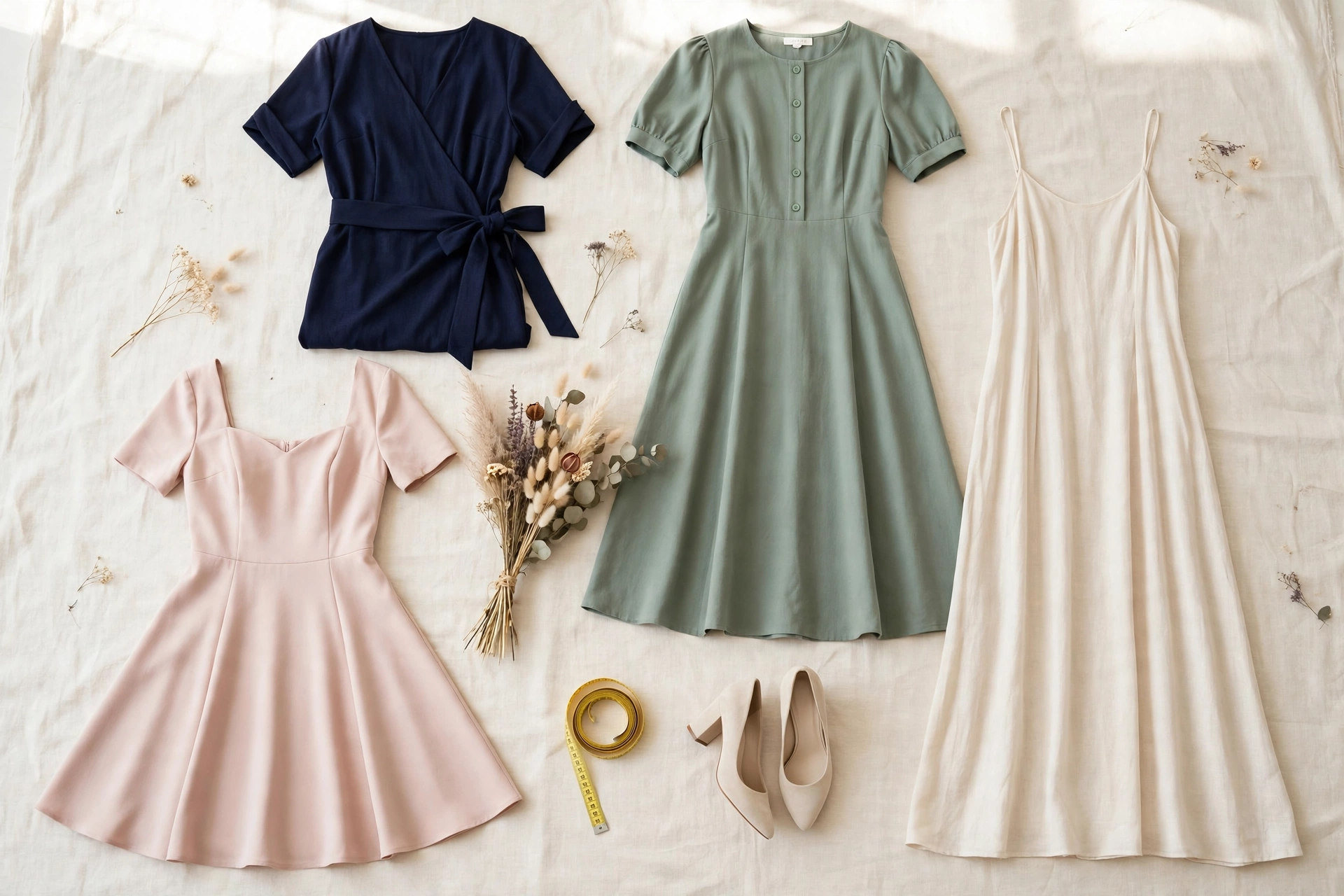
The best dress for your body type is the one that fits your shoulders, waist and hips without pulling, gaping or riding up. Petite frames suit shorter hemlines and defined waists. Plus-size frames suit structured fabrics and wrap or A-line shapes. Tall frames suit midi and maxi lengths. Apple shapes suit empire waists and V-necks. Pear shapes suit A-line skirts and detail at the shoulders. Hourglass shapes suit fitted waists. Rectangle shapes suit belts, ruffles and fit-and-flare cuts.
That sounds simple. The hard part is that most dresses are cut to one standard shape, and real bodies are not standard. This guide explains how to find your shape, what to look for in each case, which fabrics help, and where to shop in the UK without spending a fortune.
How to find your body type (and why it is only a starting point)
Body type labels describe where your body carries width. They are a shortcut, not a verdict. Most women sit between two labels, and your label can change with age, weight and life stage. Use it to narrow your search, then trust the mirror and the fit.
Stand in front of a mirror in fitted clothes. Look at three things. First, your shoulders compared with your hips. Second, your waist compared with both. Third, where your weight sits, around the middle or around the hips and thighs.
If your shoulders and hips are about the same width and your waist is clearly narrower, you are probably hourglass. If your waist is less defined, you are probably rectangle. Hips wider than shoulders suggests pear, shoulders wider than hips suggests an inverted triangle, and a middle wider than both suggests apple.
Height and size are separate questions. Petite means short in height, usually 5ft 3in and under. Plus-size means a larger dress size, usually UK 18 and above. Tall means 5ft 9in and above. You can be petite and plus-size, or tall and pear-shaped, so combine the advice in this guide to match your own mix.
Take three measurements before you shop online: bust, waist and hips. Compare them with the size guide on the shop website, not with the size you usually buy. High-street sizes vary between brands, so measurements remove the guesswork.
Finally, ignore any rule that makes you feel you must hide your body. The point of fit advice is comfort and confidence, not camouflage. If a dress fits well and you feel good in it, it is the right dress, whatever the label says.
Dresses for petite women
Petite dresses need shorter proportions, not just a smaller size. A regular dress on a petite frame often has a waistline that sits too low, sleeves that run long and a hem that lands in the wrong place. Petite ranges fix the proportions, so start there when you can.
Shorter hemlines work in your favour. Knee-length and above-the-knee dresses show more leg and make your legs look longer. Midi dresses can work too, but choose one that ends at the slimmest part of your calf, not at the widest part. Maxi dresses need a defined waist and a slim skirt, or the fabric can swamp a small frame.
A defined waist is your best friend. Wrap dresses, fit-and-flare styles and belted shifts all create a clear waistline. Avoid shapeless sack dresses and oversized smocks.
V-necks and scoop necks lengthen the torso. Vertical details help too, such as a row of buttons down the front or a long necklace.
Good petite ranges on the UK high street include ASOS Petite, New Look Petite, Next Petite, M&S Petite and Monsoon Petite. Many simple day dresses start under £25. If a petite range does not have the style you want, buy the regular size that fits your shoulders and have the hem shortened.
Best dresses for plus-size women
The best plus-size dresses are cut for curves, not scaled up from a straight-size pattern. Look for brands that design a separate plus-size block. The armholes, waist placement and bust shaping will fit better, and the dress will hang properly instead of pulling across the bust or hips.
Wrap dresses are a reliable choice. The tie waist adjusts to your shape, the V-neck flatters the bust, and the skirt skims the hips. A-line dresses work the same way. The fitted bodice and flared skirt balance the hips without adding bulk.
Structured fabrics beat flimsy ones. Ponte, crepe, scuba and good-quality cotton jersey hold their shape and smooth the line of the dress. Very thin jersey clings and shows every line underneath. If you love a soft fabric, choose a lined dress or wear smooth underwear underneath.
Fit-and-flare is the classic plus-size silhouette for a reason. It defines the waist and gives the skirt room to move. Empire-waist dresses also work well, especially if you carry weight around the middle. The high waistline sits just under the bust and the skirt falls freely from there.
Avoid dresses that are too tight in the bust and too loose at the waist, or vice versa. If a dress fits your bust but not your waist, buy for the bust and have the waist taken in. Tailoring is cheaper than a new dress and it transforms the fit.
UK shops with strong plus-size dress ranges include M&S, New Look Inspire, ASOS Curve, Simply Be and JD Williams. Many day dresses sit between £25 and £50. Check the size guide and the model height listed on the product page before you buy.
Dresses for tall women
Tall women face the opposite problem to petite women. Regular dresses are often too short in the body and the hem. The waistline sits too high, the sleeves end above the wrist, and a midi dress lands at the knee instead of mid-calf. Tall ranges fix the length, so they are worth seeking out.
Midi and maxi dresses are made for tall frames. A midi that ends mid-calf on a tall woman looks exactly as the designer intended. Maxi dresses that drag on the ground for most people fall at the ankle for you. Both lengths are easy wins.
A knee-length dress that looks smart on a shorter woman can look too short on you. Check the dress length in centimetres on the product page before you buy. Compare it with a dress you already own that fits well.
Belts and waist details break up a long torso. A wide belt, a tie waist or a colour-blocked bodice adds shape and stops a long dress looking like one straight column. Horizontal details, such as a bold stripe or a colour block at the hem, also work well on tall frames. They add width and balance your height.
UK tall ranges include ASOS Tall, New Look Tall, Next Tall, Long Tall Sally and M&S Tall. Prices are similar to regular ranges, with many day dresses between £25 and £50.
Dresses for apple body shape
Apple shapes carry weight around the middle, with slimmer legs and often a fuller bust. The goal is a dress that skims the waist without clinging to it, and shows off your legs.
Empire-waist dresses are the classic apple shape choice. The seam sits just under the bust, so the fabric falls away from the stomach instead of clinging to it. A-line dresses do similar work. The skirt flares gently from the shoulders and skims past the middle.
V-necks and scoop necks are flattering. They draw the eye up and lengthen the torso. A wrap dress with a V-neck combines both tricks at once. It defines the bust, skims the waist and shows the legs.
Look for dresses with ruching or draping around the waist. Gathered fabric hides a tummy far better than a flat, tight panel. A dress with a slight blouson or swing shape also works. The fabric moves away from the body instead of pressing against it.
Show your legs. Shorter hemlines, knee-length dresses and dresses with a side split all draw attention to slim legs. Pair them with heels or pointed flats.
Avoid clingy fabrics around the middle, such as thin jersey or silk without lining. Avoid belts at your natural waist, because they highlight the widest point. If you want a belt, wear it higher, just under the bust.
Dresses for pear body shape
Pear shapes have hips wider than shoulders, with a defined waist. The goal is to balance the shoulders with the hips and show off the waist.
A-line dresses are the natural choice. The fitted bodice and flared skirt follow your shape instead of fighting it. Fit-and-flare dresses do the same job with a more defined waist. Both styles skim the hips without adding bulk.
Add detail at the shoulders. A boat neck, a Bardot neckline, a ruffle at the shoulder or a bold print on the top half all draw the eye upward. Puff sleeves and capped sleeves add width to the shoulders and balance the hips. A bright or patterned top with a plain dark skirt works the same way.
Choose skirts in darker colours and simpler fabrics. A plain navy, black or dark green skirt recedes, while a bright or patterned bodice comes forward. This is the simplest balancing trick in the book, and it works every time.
Wrap dresses suit pear shapes well. The tie defines the waist, the V-neck adds width at the top, and the skirt skims the hips. Knee-length wrap dresses are a good starting point if you are unsure where to begin.
Knee-length frocks are a good length for pear shapes. They show the slimmest part of the leg and the skirt has room to swing. Pair them with a heel to lengthen the leg line.
Dresses for hourglass and rectangle shapes
Hourglass and rectangle shapes are often grouped together, but they need different things. Hourglass shapes have a defined waist and similar shoulder and hip widths. Rectangle shapes have similar shoulder, waist and hip widths with little waist definition. The same dress can suit both, for opposite reasons.
For hourglass shapes, the waist is the feature to show. Fitted dresses, wrap dresses and belted styles all highlight a narrow waist. Bodycon dresses in a good stretch fabric work well too, as long as the fabric is thick enough to smooth rather than cling. Avoid shapeless shifts and empire waists, because they hide the waist you want to show.
Choose necklines that suit a fuller bust. V-necks, scoop necks and sweetheart necklines all work. Avoid very high necklines if you have a full bust, because they can make the top half look heavy. A well-fitting bra matters more than the dress itself.
For rectangle shapes, the goal is to create the look of a waist. Fit-and-flare dresses do this instantly. The fitted bodice and flared skirt make the waist look narrower than it is. Belted dresses, peplum details, ruching at the waist and wrap styles all create the same effect.
Ruffles, pleats and embellishment add curves where there are none. A dress with a ruffled skirt, a pleated bodice or a bow at the waist adds shape and movement. Colour blocking helps too: a darker panel at the waist with lighter panels above and below makes the waist look smaller.
Fabrics and fits that flatter every shape
Fabric choice matters as much as cut. The same dress in two fabrics can fit completely differently.
Crepe is a good all-rounder. It drapes well, holds its shape and does not cling. Ponte is thicker and more structured, so it smooths the body and suits fitted dresses. Cotton jersey is soft and comfortable but can cling, so choose a heavier weight or a lined version. Linen looks smart in summer but creases fast, so it suits relaxed styles rather than fitted ones. Chiffon is light and floaty, and it works best as an overlay or a lined skirt.
Stretch is your friend in a fitted dress. A fabric with a little elastane moves with you and keeps its shape through the day. Even 3 to 5 percent elastane makes a real difference.
Check the fit details before you buy: the waist seam should sit at your natural waist, and bust darts should point at the fullest part of the bust. If the darts sit too high, the dress is cut for a shorter torso than yours.
| Fabric | Best for | Watch out for |
|---|---|---|
| Crepe | Most shapes, work and occasion dresses | Can be heavy in summer |
| Ponte | Fitted dresses, smoothing the line | Can feel warm in hot weather |
| Cotton jersey | Day dresses, casual styles | Thin jersey clings and shows lines |
| Linen | Summer dresses, relaxed fits | Creases quickly, little stretch |
| Chiffon | Occasion dresses, floaty skirts | Needs lining, can be sheer |
| Scuba | Structured fit-and-flare styles | Can feel stiff and warm |
Budget picks: where to shop in the UK
You do not need a big budget to find a dress that fits well. The UK high street has strong options at every price, and the best value often comes from knowing where to look rather than spending more.
For everyday dresses under £25, try Primark, New Look, H&M and George at Asda. These shops turn over styles quickly, so buy when you see your size.
For the £25 to £50 range, try M&S, Next, Monsoon and ASOS. This is the sweet spot for quality, with better fabric, proper lining and a more careful cut. M&S is a strong choice for work and occasion dresses, with petite, tall and plus-size ranges in the same styles.
For occasion dresses, TK Maxx is worth a regular visit. The stock changes constantly and the prices are lower than the original retail price. Charity shops are another good source, especially for vintage styles and one-off pieces. Our guide to affordable summer dresses for women in the UK has more ideas for finding good dresses at low prices.
| Budget | Where to look | What you get |
|---|---|---|
| Under £25 | Primark, New Look, H&M, George at Asda | Everyday and trend dresses, fast turnover |
| £25 to £50 | M&S, Next, Monsoon, ASOS | Better fabric, lining, petite, tall and plus ranges |
| £50 and above | John Lewis, Hobbs, Phase Eight, TK Maxx | Occasion dresses, better tailoring, quality fabric |
| Second-hand | Vinted, Depop, charity shops | Cheap trials, vintage finds, one-off pieces |
Frequently asked questions
What is the best dress style for my body type?
Start with your shape, then choose the silhouette that matches it. Wrap and A-line dresses suit most shapes. Fit-and-flare suits hourglass, pear and rectangle shapes. Empire waists suit apple shapes. Petite frames suit shorter hemlines and defined waists. Tall frames suit midi and maxi lengths. The best dress is the one that fits your shoulders, waist and hips without pulling or gaping.
How do I know my body type?
Measure your bust, waist and hips, then compare the three numbers. Similar shoulders and hips with a narrower waist suggests hourglass. Hips wider than shoulders suggests pear. Shoulders wider than hips suggests inverted triangle. A middle wider than shoulders and hips suggests apple. Similar measurements all round suggests rectangle. Use the label as a starting point, not a rule.
What dress suits a petite plus-size woman?
Combine petite and plus-size advice. Look for petite plus-size ranges, which fix both the proportions and the cut. Wrap dresses and fit-and-flare styles in a knee-length or just-above-the-knee hem work well. A defined waist, a V-neck and a structured fabric such as ponte or crepe all help. Avoid shapeless dresses and very long maxis that swamp a small frame.
Which dress hides a tummy?
Empire-waist dresses, A-line dresses and wrap dresses all skim the stomach instead of clinging to it. Ruching and draping around the waist help too. Choose a structured fabric such as crepe or ponte rather than thin jersey. Avoid belts at your natural waist and tight waistbands, which highlight the middle.
What is the most flattering dress for a wedding guest?
A fit-and-flare or A-line midi dress suits most body types and most wedding dress codes. Choose a colour that suits you and check the dress code on the invitation first. Avoid white, ivory and cream, which are reserved for the bride. A wrap dress in a jewel colour is a safe and flattering choice for most guests.
Should I buy a dress in my usual size?
Not always. Sizes vary between brands and between styles in the same shop. Measure your bust, waist and hips and compare them with the size guide on the product page. Buy for your largest measurement, then have the rest altered if needed. It is easier to take a dress in than to let it out.
Conclusion
Choosing a dress for your body type is not about following strict rules. It is about knowing your shape, understanding which cuts and fabrics work for it, and buying for fit rather than for the label size. Measure yourself, try the styles in this guide, and trust the mirror over the size tag.
Start with one silhouette that suits your shape. A wrap dress is the safest first choice for most women, because the tie waist adjusts to fit and the V-neck flatters the bust. Once you know your best silhouette, build from there with a fit-and-flare for occasions and an A-line for everyday wear.
Good fit does not need a big budget. The high street, the sales and a good local seamstress will take you further than an expensive dress in the wrong cut.