
Best Budget Hair Products in the UK: A Routine That Works for Less
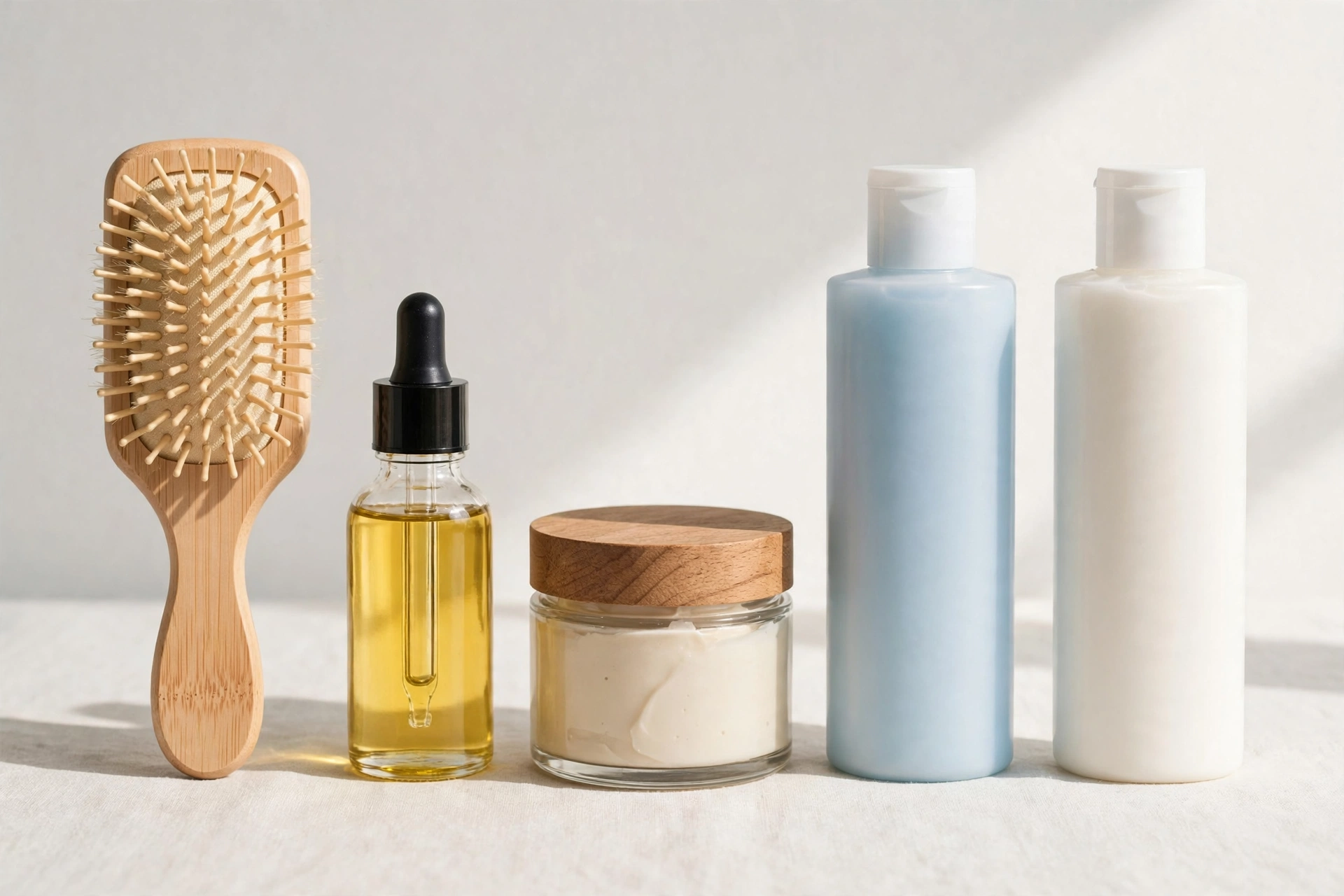
Yes, you can build a complete hair care routine in the UK for about £30. A basic routine needs four steps: cleanse, condition, treat, and protect. Shop high-street and supermarket own brands, and each step costs under £10. This guide shows which budget products to pick, how to match them to your hair type, and where to buy them.
Good hair does not need a luxury price tag. Most of what your hair needs comes from consistency, not cost. A gentle shampoo, a conditioner that suits your hair type, one weekly treatment, and a heat protectant cover almost every need. The rest is technique: how often you wash, how much product you use, and how you dry and style.
This guide builds a full routine for about £30, based on typical high-street prices for own-brand and budget ranges at Boots, Superdrug, and supermarkets. Prices vary by store and by size, so treat the total as an estimate, not a quote. The aim is a routine that works for real hair, on a real budget, without salon prices.
Hair care routine for beginners: the 4 steps
A hair care routine for beginners does not need ten products. It needs four steps, done in the right order, most days of the week. Start simple. Add a product only when you know what problem it solves.
Step 1: Cleanse. Shampoo removes oil, sweat, and product build-up from your scalp and hair. Focus the shampoo on your scalp, where oil builds up. Massage gently with your fingertips, not your nails. Rinse well. Most people need to shampoo two to three times a week, though very oily hair may need more frequent washing and very dry hair may need less.
Step 2: Condition. Conditioner adds moisture and makes hair easier to comb. Apply it from the mid-lengths to the ends, where hair is oldest and driest. Keep it off your roots if your hair goes flat quickly. Leave it in for two to three minutes, then rinse.
Step 3: Treat. Once a week, add a treatment such as a hair mask or a hair oil. Treatments give extra moisture or repair to hair that feels dry, rough, or damaged. Use them after shampooing, in place of your usual conditioner, or as an extra step before it.
Step 4: Protect. If you use heat to style your hair, apply a heat protectant first. Heat from straighteners, curling tongs, and hair dryers can dry hair out over time. A protectant will not make heat harmless, but it reduces the damage and helps hair stay smooth.
That is the whole routine. Everything else, from scalp scrubs to shine sprays, is optional. Learn the four steps first, then adjust for your hair type.
| Step | Product type | What it does | Typical price band |
|---|---|---|---|
| 1. Cleanse | Shampoo | Removes oil, sweat, and build-up from the scalp | Under £5 |
| 2. Condition | Conditioner | Adds moisture and makes hair easier to comb | Under £5 |
| 3. Treat | Hair mask or hair oil | Extra moisture or care for dry or damaged hair, once a week | Under £10 |
| 4. Protect | Heat protectant spray or cream | Reduces damage from straighteners, tongs, and dryers | Under £10 |
Four products, each under £10, give a routine total of about £30. Buy them one at a time if you prefer. Start with shampoo and conditioner, then add a treatment, then a heat protectant.
Best budget shampoo and conditioner
Shampoo and conditioner are the foundation of the routine. They are also the easiest place to save money, because budget ranges now cover most hair needs. You do not need to spend more to wash your hair well.
Choose a shampoo for your scalp first, and a conditioner for your hair lengths. Oily scalps suit a clarifying or balancing shampoo. Dry scalps suit a gentle, moisturising shampoo. If your hair is colour-treated, look for a shampoo labelled for coloured hair, since it is made to be gentler on colour.
Budget shampoo usually costs under £5 for a standard bottle at Boots, Superdrug, or a supermarket. Supermarket own-brand ranges are often the cheapest option, and they cover the basics well: gentle cleansing, moisture, volume, and colour care. Boots and Superdrug own brands sit in the same price range and offer more choice, including ranges for curly hair and sensitive scalps.
When you compare shampoo, read the label, not the marketing. A shampoo that promises volume helps fine hair look fuller. A shampoo that promises moisture helps dry hair feel softer. A shampoo that promises repair suits hair that has been bleached or heat styled often. Match the promise to your hair, not to the prettiest bottle.
Conditioner works the same way. Fine hair needs a light conditioner that will not weigh it down. Thick or coarse hair needs a richer conditioner with more moisture. Curly hair needs a conditioner with plenty of slip, so curls can be detangled without pulling. Colour-treated hair needs a conditioner that helps colour last, used with a matching shampoo.
Use less conditioner than you think. A coin-sized amount is enough for short hair. Medium-length hair needs about twice that. Long hair needs more, but only on the lengths and ends. Too much conditioner leaves hair limp and greasy, even when the product itself is good.
If your hair feels coated or heavy after washing, try two changes. First, use less conditioner. Second, wash with a clarifying shampoo once every two weeks to remove build-up. Clarifying shampoo is a normal budget buy, and one bottle lasts for months when used this way. Our guide to building a skincare routine for beginners follows the same idea: learn the order first, then pick products that fit.
Best budget treatments: masks, oils, and serums
Treatments are the step that makes the biggest visible difference to dry or damaged hair. They cost more per bottle than shampoo, but you use them once a week, so one jar or bottle lasts for months. A good budget hair mask costs under £10 at a high-street shop.
A hair mask is a thick conditioner that you leave on for five to ten minutes. Use it after shampooing, in place of your normal conditioner. It suits hair that feels dry, rough, or straw-like at the ends. Apply it from the mid-lengths to the ends, comb it through with a wide-tooth comb, and rinse well. If your hair is fine, use a smaller amount and rinse very well, or your hair may look flat.
Hair oil is a lighter option. A few drops smooth frizz, add shine, and make ends look neater. Use it on damp hair before drying, or on dry hair to smooth flyaways. Start with two or three drops, warm them between your palms, and smooth them over the lengths. Add more only if your hair still looks dry. Too much oil makes hair look greasy, and it is hard to remove without another wash.
Serums sit between masks and oils. A serum is usually a light liquid or cream that you apply to damp hair before styling. It helps with frizz and flyaways, and it can add shine without much weight. Serums suit fine hair better than heavy oils, because they are lighter. Look for a serum labelled for frizz control or shine if your hair goes frizzy in damp weather.
You do not need all three. Pick one treatment that matches your main problem. Dry and damaged hair benefits most from a mask. Frizz and flyaways respond best to oil or serum. Fine hair that feels dry at the ends does well with a light mask used every two weeks.
Read the instructions on the pack. Leave-on treatments and rinse-out treatments are different products. A mask that should be rinsed out will make your hair greasy if you leave it in. An oil made for the ends will make your roots look oily if you apply it to your scalp.
By hair type: fine, thick, curly, and colour-treated
Hair type changes which products work best. The four steps stay the same. What changes is the weight of the products and how often you use them. Use the table below as a starting point, then adjust for your own hair.
| Hair type | Shampoo and conditioner | Best treatment | What to avoid |
|---|---|---|---|
| Fine hair | Light, volumising formulas; conditioner on ends only | Light serum or a small amount of mask every two weeks | Heavy oils and rich masks on the roots |
| Thick hair | Moisturising formulas; a generous amount of conditioner | Rich hair mask once a week | Skipping conditioner, which leads to tangles |
| Curly hair | Moisturising, sulfate-free style formulas; plenty of conditioner | Leave-in conditioner or curl cream, plus a weekly mask | Brushing dry curls, which breaks the curl pattern |
| Colour-treated hair | Shampoo and conditioner made for coloured hair | Weekly mask to keep colour looking fresh | Hot water and frequent washing, which fade colour faster |
Fine hair. Fine hair goes flat easily, so light products work best. Choose a volumising shampoo and a light conditioner. Apply conditioner only to the ends. A volumising mousse or a light spray at the roots can add lift, but keep it off the lengths. Wash fine hair more often than thick hair, because oil shows faster on fine strands.
Thick hair. Thick hair needs more moisture and more product. Use a moisturising shampoo and a rich conditioner, and take time to work the conditioner through the lengths. A weekly hair mask helps thick hair stay soft and easy to manage. Thick hair can handle richer oils, and it usually needs a longer drying time, so plan for that on wash days.
Curly hair. Curly hair tends to be drier than straight hair, because natural oils travel more slowly down a curl. Use a moisturising shampoo and plenty of conditioner. Detangle curls while the conditioner is in, with your fingers or a wide-tooth comb, never with a brush on dry hair. A leave-in conditioner or curl cream helps curls hold their shape. Scrunching, rather than rubbing with a towel, reduces frizz. If you want more ideas for affordable beauty basics, our guide to the best affordable beauty dupes in the UK covers budget swaps across makeup and skincare too.
Colour-treated hair. Colour-treated hair needs gentle care to keep the colour looking fresh. Use a shampoo and conditioner made for coloured hair. Wash with lukewarm water, not hot water, because heat opens the hair cuticle and lets colour wash out faster. Wash less often if you can, and use dry shampoo between washes. A weekly mask helps colour-treated hair stay soft, because colouring can dry the lengths out.
If your hair fits two types, such as fine and colour-treated, or curly and thick, pick the products for the problem that bothers you most. Fine, colour-treated hair needs light products made for coloured hair. Thick, curly hair needs rich moisture and a weekly mask. There is no single right answer. Watch how your hair responds for two weeks, then change one product at a time.
Heat styling on a budget: protection that matters
Heat styling is the step where budget products matter most, because heat damage is hard to reverse. A heat protectant is one of the cheapest products in the routine, usually under £10, and it is the one product you should not skip if you use straighteners, curling tongs, or a hot hair dryer.
Apply heat protectant to damp hair before you dry it, or to dry hair before you use straighteners or tongs. Spray or smooth it evenly through the lengths and ends. Let it dry for a minute before you apply heat. A protectant works by forming a light barrier between your hair and the heat, which reduces moisture loss and helps hair stay smooth.
Turn the heat down. Most hair does not need the highest setting. Fine hair needs a low or medium setting. Thick hair needs a medium setting, with slower passes rather than hotter ones. If your straighteners have a temperature dial, start low and raise it only if the style does not hold.
Give your hair rest days. Alternate heat-styled days with air-dried days. On air-dried days, apply a little leave-in conditioner or serum to damp hair, comb it through, and let it dry on its own. Your hair will feel softer within a few weeks, and you will use less heat overall.
Cheap heat tools can still work well if you use them with care. Check that your straighteners have a temperature control, and replace them if the plates are scratched or the coating is peeling. A damaged plate can snag and break hair. A budget heat protectant and a careful technique matter more than an expensive tool.
Where to buy: Boots, Superdrug, and supermarkets
You can buy every product in this routine on the high street. You do not need a specialist shop or an online order. Boots, Superdrug, and supermarkets all stock budget hair care, and each has its own strengths.
Boots. Boots has the widest choice of budget hair care on the high street. Its own-brand range covers shampoo, conditioner, masks, oils, and heat protectants at low prices. Boots also stocks well-known budget brands, and it runs regular offers such as three for two and half-price deals. If you have a Boots Advantage Card, the points add up quickly on repeat buys.
Superdrug. Superdrug is often the cheapest option for budget hair care. Its own-brand range is large, and it covers hair types from fine to curly to colour-treated. Superdrug runs frequent promotions, including buy one get one half price and member-only prices. Check the shelf-edge price as well as the offer price, because the base price is often low already.
Supermarkets. Supermarkets such as Tesco, Sainsbury’s, Asda, and Morrisons stock own-brand shampoo and conditioner at the lowest prices on the high street. The range is smaller than Boots or Superdrug, but the basics are all there. Supermarkets are a good place to buy your everyday shampoo and conditioner, and to pick up a budget hair mask on the same shop. For seasonal beauty gift sets, which often include mini hair products at good value, see our Christmas gift ideas for her under £50 in the UK.
Compare prices per 100ml, not per bottle. Bottles come in different sizes, and a bigger bottle is not always cheaper per wash. The price per 100ml is printed on the shelf edge in most shops, and it makes comparisons easy. A large bottle of own-brand shampoo is usually the best value per wash, while a small bottle is better for trying a new product.
Buy one new product at a time. If you buy five new products at once and your hair reacts badly, you will not know which one caused it. Change one product, use it for two weeks, and then decide. This also spreads the cost, so the routine costs about £30 in total, but you do not need to spend it all in one shop.
Check the returns policy before you buy. Boots and Superdrug both accept returns on beauty products in most cases, even when opened, within a set time. Keep the receipt until you know the product suits your hair. For more on building a simple routine, our skincare routine by skin type guide uses the same step-by-step approach.
Frequently asked questions
What is the best budget hair care routine in the UK?
A shampoo, a conditioner, a weekly hair mask, and a heat protectant. Choose them for your hair type, buy own-brand or budget ranges from Boots, Superdrug, or a supermarket, and expect to spend about £30 in total, based on typical high-street prices.
How often should I wash my hair?
Most people wash two to three times a week. Oily hair may need washing more often. Dry or curly hair may need washing less often. Let your scalp guide you: wash when it feels oily or itchy, not on a fixed schedule.
Can budget shampoo damage your hair?
No, budget shampoo does not damage hair on its own. Damage comes from harsh washing, too much heat, and skipping conditioner. A gentle budget shampoo used correctly is fine for most hair. If your hair feels stripped or dry after washing, switch to a moisturising formula.
Do I need a hair mask if I use conditioner?
Not always. Conditioner covers daily moisture. A hair mask adds extra care once a week, and it helps most when hair is dry, damaged, or colour-treated. If your hair feels healthy with conditioner alone, a mask is optional.
What is the best budget heat protectant?
The best budget heat protectant is one you will use every time you style with heat. Look for a spray or cream under £10 from a high-street own brand or budget range. Apply it to damp or dry hair before heat, and use it on every heat-styled day.
Where is the cheapest place to buy hair products in the UK?
Supermarkets are usually cheapest for basic shampoo and conditioner, while Superdrug and Boots offer more choice and frequent promotions. Compare the price per 100ml on the shelf edge, and check for offers such as three for two before you buy.
Conclusion
A good hair care routine does not need a big budget. Four steps, shampoo, conditioner, a weekly treatment, and a heat protectant, cover what most hair needs. Choose the products for your hair type, buy them from Boots, Superdrug, or a supermarket, and you can build the full routine for about £30. Start with shampoo and conditioner, add one product at a time, and give each change two weeks. Your hair will tell you what works. For a low-cost pamper day at home, our at-home manicure guide pairs well with a hair mask evening, and our best makeup products for beginners in the UK guide covers the next step in a budget beauty routine.