
How to Clean Suede Shoes: A Complete UK Guide
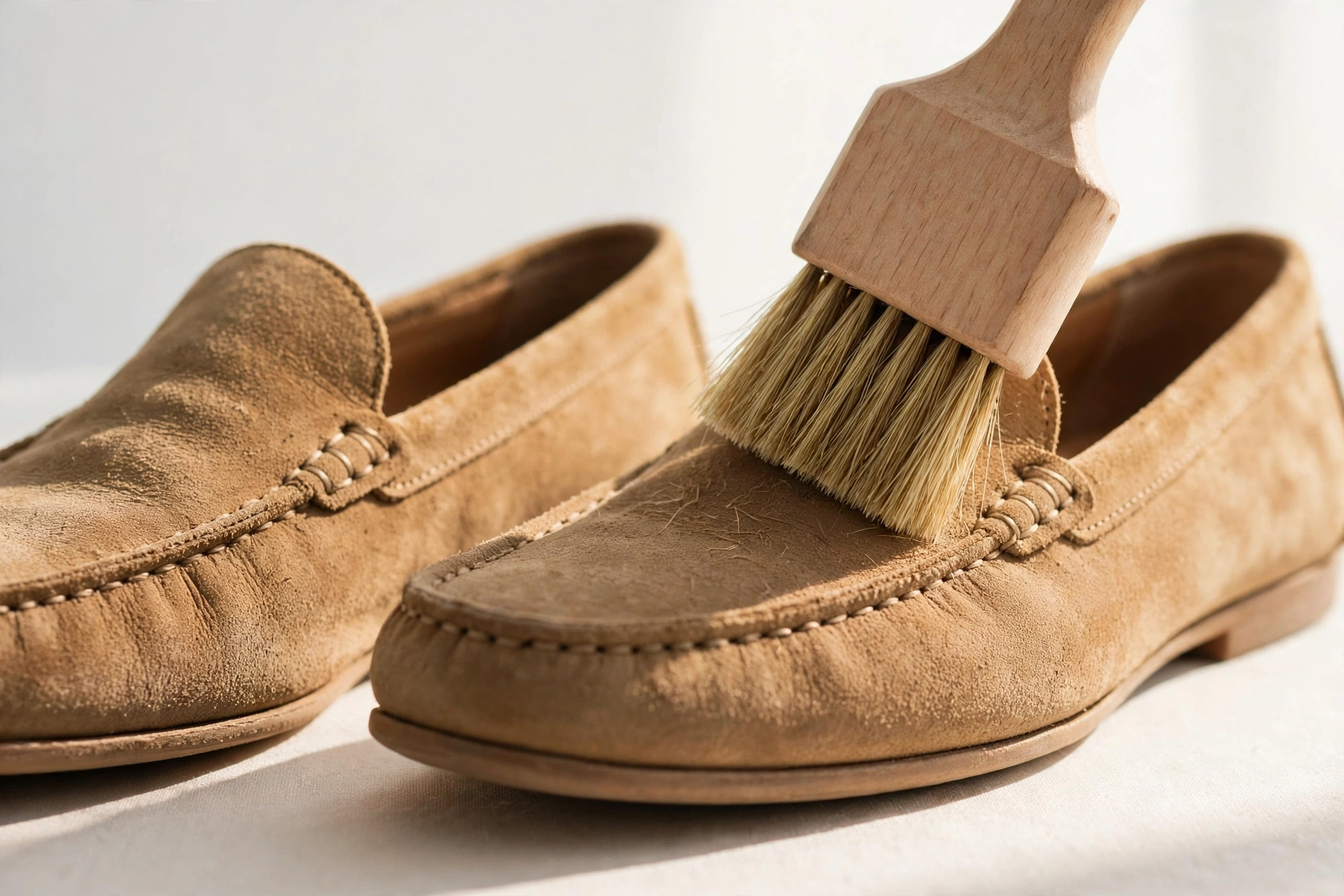
Suede shoes look soft and smart, but they mark easily. The good news is that most marks come off with dry cleaning only. You do not need water, soap, or a washing machine. You need a suede brush, a suede eraser, and a little patience.
The short answer is this. Start dry, always. Brush the nap back to life, let mud dry before you touch it, and treat each stain in its own way. Water marks, oil, and scuffs each need a different method, and the wrong method can set the mark for good. This guide works through each one in order, then covers suede vs nubuck, coloured suede, and protection.
What you need before you start (tools and products)
Suede cleaning is simple once you have the right kit. Shoe shops and supermarkets sell suede brushes and suede erasers, and high street shoe repair shops stock them too.
A suede brush is the most important tool. Most suede brushes have two sides. One side has short wire bristles for lifting dirt and restoring the nap. The other side has a rubber or crepe surface for finishing and for light marks. A suede eraser looks like a small rubber block. It lifts dry marks, scuffs, and light stains that brushing alone will not shift.
A protector spray is the third essential. It adds a light water resistant coating to the surface. Buy a spray made for suede and nubuck, not a general leather spray, and choose a colourless product unless you are matching a specific shade. You will also need a clean white cloth, an old soft toothbrush for seams, and shoe trees or scrunched newspaper to hold the shape of each shoe. For oil stains, keep talcum powder or cornflour in the cupboard. For water marks, keep a small bottle of white vinegar.
The basic clean: dry brushing and restoring the nap
The nap is the fine raised fibre surface that gives suede its soft look. When the nap lies flat, the shoe looks dull and patchy. Dry brushing lifts the fibres and brings the colour back. Do this basic clean after every few wears, and always before you treat a specific stain.
Remove the laces first. Put shoe trees inside the shoes, or stuff them firmly with newspaper, to keep the shape and give you a firm surface to brush. Work on a clean table or an old towel. Brush the whole shoe in one direction with light, even strokes, using the wire side of the brush. This lifts loose dust and dirt. Then brush against the nap to lift the fibres. You will see the colour change as the fibres stand up. Pay extra attention to the toe, heel, and sides.
Finish with the rubber side of the brush, using short strokes in one direction to even out the nap. If the shoe still looks patchy, rub the suede eraser gently over the dull area, then brush again to clear the crumbs. Repeat the brush and eraser cycle two or three times if needed.
How to remove mud and dust
Mud is the easiest stain to deal with, but only if you wait. Never try to clean wet mud. Wet mud smears into the nap and stains the fibres. Let the mud dry completely first. This may take several hours, or overnight in winter.
Once the mud is dry, knock the shoes gently together over an old newspaper to shake off the loose pieces. Then brush the mud away with the wire side of the suede brush, using short strokes. Work from the edges of the mud patch towards the centre, so you do not spread it further. For the thin layer of dust that remains, use the suede eraser, then brush the crumbs away.
Do not use water on mud stains. Water turns dry dust into a stain, and it can leave a ring when it dries. If a faint mark remains after two rounds of dry cleaning, treat it as a water mark, using the method in the next section.
How to remove water marks
Water marks appear when water dries unevenly on suede. Rain drops, puddle splashes, and snow leave pale rings or dark patches. The fix sounds odd at first. You even out the mark by lightly dampening the whole shoe, so it dries as one even surface.
Brush the whole shoe first to lift the nap and remove loose dirt. Take a clean white cloth, dampen it lightly with clean water, and dab it over the marked area. Do not soak the cloth. The suede should feel slightly damp, not wet. Now dampen the rest of the shoe in the same light way, so the damp area blends into the whole surface. If you only wet the mark, the edge of the wet patch becomes a new ring.
Brush the damp suede gently, then stuff the shoes with newspaper and leave them to dry naturally. Keep them away from radiators, direct sunlight, and hair dryers. When the shoes are fully dry, brush the nap again. In most cases the water mark has gone. If a faint ring remains, dab it with a cloth moistened with one part white vinegar and two parts water. Test this mix on a hidden spot first, such as the inside of the tongue. Let it dry fully, then brush again. Repeat only once if needed.
How to remove oil and grease stains
Oil and grease stains come from food, cooking, hand cream, and even the natural oils on your hands. Act quickly, but do not use water. Water does not lift oil, and it can spread the stain wider. Blot the stain gently with a clean white cloth or a paper towel. Press, lift, and press again. Do not rub. Rubbing pushes the oil deeper into the fibres and damages the nap.
Cover the stain generously with talcum powder or cornflour. Both absorb oil from the fibres. Leave the powder on the shoe overnight, or for at least eight hours. Brush the powder off with the suede brush, then check the stain. If it has faded but not gone, apply a fresh layer of powder and leave it for another night. Two or three rounds deal with most fresh oil stains.
Finish with the eraser and a brush. Old stains may only fade. If the mark stays, ask a shoe repair shop. Do not use washing up liquid, stain remover, or any household degreaser on suede. These products strip the colour and leave a pale patch that is worse than the original stain.
How to remove scuffs and shiny patches
Scuffs happen when suede rubs against a hard surface. The fibres flatten and the colour looks lighter or darker than the rest of the shoe. Shiny patches form in the same way, usually on the toe and the heel where the shoe bends and rubs.
Start with the suede eraser. Rub it gently over the scuff, using short strokes in one direction. The eraser lifts the flattened fibres and removes the top layer of the mark. Brush the area with the wire side of the brush, then check the result. If the scuff is still visible, brush firmly against the nap to lift the fibres, then brush with the nap to smooth them. Repeat the eraser and brush cycle two or three times. Most light scuffs disappear at this stage.
For a stubborn shiny patch, hold the shoe over steam for a few seconds. Use steam from a kettle, and keep the shoe at least 30 centimetres away from the spout. The steam softens the fibres so they can be brushed back up. Brush the area at once, while it is still slightly warm and damp. Do this only once per patch. Deep scuffs that have worn through the nap will not fully recover.
Suede vs nubuck: the care difference
Suede and nubuck look similar, but they are made in different ways. Suede is the underside of the hide. It has a soft, open nap that marks easily and absorbs water fast. Nubuck is the top grain of the hide, sanded down to a fine, velvet like finish. It feels smoother and firmer than suede, and it is a little more resistant to water and scuffs.
Nubuck has a shorter, finer nap, so it needs a softer touch. Use the rubber side of the brush or a dedicated nubuck brush, and use the wire side only very lightly. A stiff wire brush can scratch nubuck and leave visible lines. The suede eraser works on nubuck too, but use it gently and test it on a hidden area first.
Protector spray works on both materials. Spray nubuck from the same distance as suede, and let it dry fully before you wear the shoes. Water marks show on nubuck in the same way as on suede, and the same even dampening method works. Oil stains need the same powder treatment. Work in short passes and check the result often. When in doubt, treat them as nubuck and use the gentler method.
Coloured suede: what changes
Coloured suede needs the same dry cleaning routine, with a few extra checks. The dye in coloured suede can transfer, fade, or react to products that plain black suede tolerates. Test everything on a hidden spot first, such as the inside of the tongue or the back of the heel.
Light colours show marks more clearly than dark colours. Beige, pale grey, and light tan suede pick up dirt fast, and water marks stand out on them. Use a clean white cloth and a clean eraser, because a dirty cloth or a coloured cloth can leave its own mark on pale suede. Dark colours have the opposite problem. Black and navy suede can fade or go patchy if you brush too hard or use the wrong product. Use the rubber side of the brush for most of the work, and choose a colourless protector spray.
Brown suede sits in the middle. It hides dirt well, but it shows water marks and salt stains clearly in winter. For outfit ideas with brown suede, see our guide to brown ankle boots, which covers styling and care for the shade. Never use a coloured cloth, a coloured eraser, or a tinted spray on coloured suede unless you are certain it matches. Badly faded colour needs a professional dye job.
Protecting suede: sprays, storage, and seasonal care
Protection is easier than cleaning. A good protector spray, applied before the first wear and topped up through the year, keeps most stains from setting in the first place. Spray new shoes before you wear them outside. Hold the can about 15 centimetres from the shoe and spray in light, even passes. Cover the whole upper, including the seams. Let the shoes dry fully for at least an hour, then apply a second light coat. Do not wear them until they are dry.
Reapply the spray every few weeks in winter, and after any deep clean. Winter is the hardest season for suede in the UK. Salt on pavements, slush, and constant rain all leave marks. Storage matters as much as spraying. Keep suede shoes in a cool, dry place, away from direct sunlight and radiators. Use shoe trees or stuff the shoes with newspaper to hold their shape. Keep them in dust bags or their original box, and do not pile other shoes on top of them.
Rotate your shoes. Wearing the same pair every day wears the nap down and gives stains no time to dry out. If you walk a lot each day, choose comfortable walking shoes for the longest days and save suede for shorter outings. For wet days, switch to waterproof boots instead of suede. If your suede shoes are heeled and you want to wear them for longer, read our guide on how to make heels more comfortable before you head out.
What NOT to do to suede (and when to use a professional)
Some cleaning methods ruin suede for good. Never put suede shoes in a washing machine. The water, the detergent, and the tumbling action destroy the nap, shrink the leather, and can pull the shoe out of shape. Never soak suede in water, and never hold it under a running tap. A light, even dampening for water marks is the only time water touches suede on purpose, and even then the shoe should feel slightly damp, not wet.
Do not use soap, washing up liquid, laundry detergent, or household cleaners. They strip the colour and leave stiff, patchy areas. Never dry suede with direct heat. Radiators, hair dryers, and direct sunlight harden the fibres and set stains. Always dry suede naturally, stuffed with newspaper, in a cool room with good air flow. Never use leather polish, shoe cream, or coloured wax on suede. On suede they clog the nap, change the colour, and leave a greasy finish that attracts more dirt. Never scrub suede with a hard brush or a wire scourer.
Use a professional in a few cases. Take the shoes to a shoe repair shop or a suede specialist if the stain is deep and old, if salt has left white crusty marks that brushing will not shift, if the suede has cracked or gone stiff, or if the shoes were expensive and you do not want to risk them. Ask for a quote first.
Frequently asked questions
Can I wash suede shoes?
No. Do not wash suede shoes in a washing machine, and do not soak them in water. Water, detergent, and tumbling damage the nap and change the shape of the shoe. Clean suede dry, with a suede brush and a suede eraser. Use dampening only for water marks.
Can I wear suede in the rain?
You can wear protected suede in light rain, but suede is not a wet weather shoe. Spray the shoes with a protector spray before you wear them, and avoid puddles and heavy rain. If suede shoes do get wet, let them dry naturally, stuffed with newspaper, away from heat. For heavy rain, choose waterproof boots instead.
How often should I clean suede shoes?
Brush suede shoes after every few wears, and always brush off dust before you put them away. Do a full dry clean, with the brush and the eraser, once a month if you wear them often. Treat stains at once. Reapply protector spray every few weeks in winter.
How do I remove salt stains from suede shoes?
Salt stains leave white, crusty marks in winter. Brush off the loose salt once the shoes are dry. Then dab the mark with a cloth moistened with one part white vinegar and two parts water. Test the mix on a hidden spot first. Let the shoe dry naturally, then brush the nap.
Can I use a suede protector spray on nubuck?
Yes. Most protector sprays made for suede also work on nubuck. Check the label to confirm it lists nubuck. Apply it in the same way, from about 15 centimetres away, in light even passes. Let the shoes dry fully before you wear them. Test it on a hidden spot first.
How do I store suede shoes so they keep their shape?
Use shoe trees, or stuff the shoes firmly with clean newspaper. Keep them in a cool, dry place, away from sunlight and radiators. Store them in dust bags or their original box, and do not stack heavy shoes on top of them. Reapply protector spray before seasonal storage.
Conclusion
Suede shoes reward a little care. Brush them dry, let mud dry before you touch it, and treat each stain with the method that suits it. Water marks need even dampening, oil needs powder and patience, and scuffs need an eraser and a brush. Protect new shoes with spray, store them well, and keep them out of heavy rain. Most marks come off at home with the basic kit.