Charity Shop Fashion Tips UK: How to Thrift Well and Find the Good Stuff
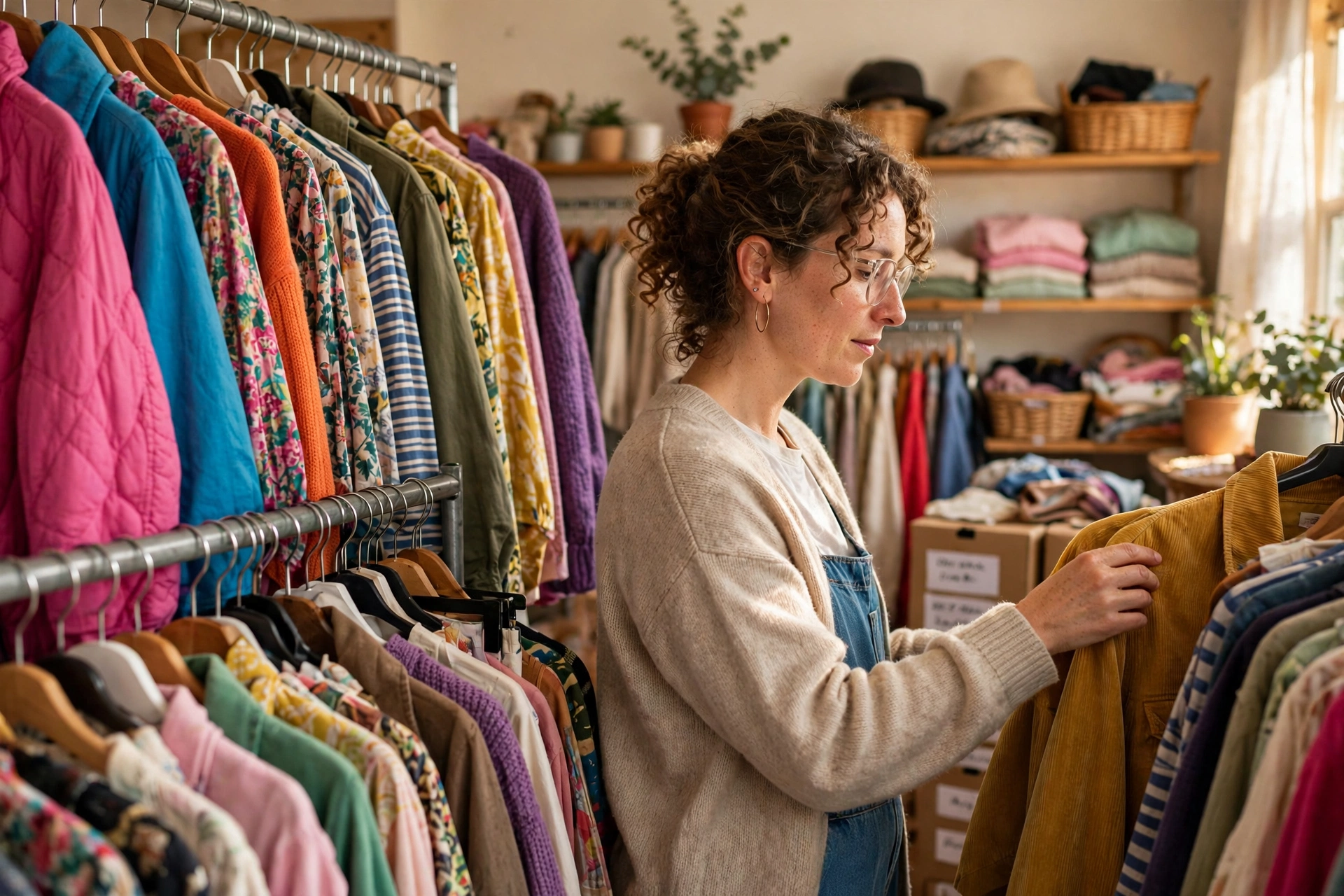
Charity shop fashion tips UK shoppers actually need are simple. Go with a short list, check the rails by fabric and fit before you look at labels, and inspect every seam, zip and label before you pay. The best finds come from regular short visits, not one long browse. This guide covers the best UK charity shops for fashion, how to search the rails, what to check before you buy, and how to make thrifted clothes fit.
Why Charity Shopping Works (and When It Does Not)
Charity shopping works because the stock turns over constantly. Donations arrive every day, so the rails change every week. A shop that had nothing for you on Monday can have three good pieces by Friday. That constant change is the main reason regular short visits beat rare long ones.
There are times when charity shopping does not work well. If you need one exact item for one exact event by tomorrow, a charity shop is a gamble. Stock is unpredictable, sizes are limited to what was donated, and you cannot order a different size. For a wedding outfit or a job interview next week, buy new or rent instead.
It also works less well for basics you wear every day. Underwear, plain white T-shirts and gym kit are rarely worth hunting for second hand. New basics are cheap, they come in your size, and they last longer when they have not already been washed fifty times. Save charity shopping for the pieces where it shines: coats, knitwear, dresses, jackets and quality fabrics.
The Best UK Charity Shops for Fashion (What Each Chain Is Good For)
Every charity chain has a different character. The shops that suit you depend on where you live, but the big national chains appear in most high streets, and each one has a general strength worth knowing.
Oxfam is often the strongest for interesting fashion. Many Oxfam shops have dedicated fashion areas, and some larger branches sort donations by style rather than by size alone. You are more likely to find vintage pieces, designer labels and unusual fabrics here than in most other chains. Oxfam also runs specialist shops in some cities, which are worth a visit if you are nearby.
Scope tends to be good for everyday wearable pieces at low prices. The rails are usually well organised, and the shops turn stock over quickly. It is a reliable stop for jumpers, shirts, skirts and jeans in the sizes most people wear. If you want a solid everyday wardrobe on a small budget, Scope is a good place to start.
British Heart Foundation is often the best chain for furniture and homeware, but its larger stores also carry a lot of clothing. The bigger branches have more space, so the clothing section can be generous, and coats and jackets are often well represented. Check the larger stores rather than the small ones if you are hunting for outerwear.
Cancer Research UK shops are common on high streets and vary a lot from branch to branch. Some are small and tightly packed, while others are large and well sorted. They are worth a regular look because the stock changes fast and the prices are usually modest. A branch near a well off area can be a surprisingly good source of quality donations.
Pre-Loved Fashion Online: Vinted, Depop, and eBay
Charity shopping is not only about the high street. The same idea works online, and the three big resale platforms each suit a different kind of buyer.
Vinted is the most like a charity shop in spirit. Prices are usually low, sellers are mostly clearing their own wardrobes, and you can find good everyday pieces for a few pounds. Search works best when you use specific terms, such as the item type, the fabric and the size. Save searches for the pieces you want, and check them regularly, because good items sell fast.
Depop suits trend led fashion. It is popular with younger sellers, and it is strong for vintage pieces, statement items and current styles. Prices are often higher than Vinted, and haggling is part of the culture. Check the seller reviews, read the measurements in the listing, and ask for extra photos before you buy.
eBay is the best option when you want one specific thing. Its search is the most powerful of the three, and you can filter by size, colour, brand and condition. It suits patient buyers who know exactly what they want, such as a particular coat style in a particular size. Watch the postage cost, and check the returns policy on each listing, because it varies by seller.
Online, always read the measurements, not just the size label, because sizes vary between brands and over time. For more ideas on where to shop online, see our guide to online shopping sites for women in the UK.
Before You Go: The 10-Minute Plan That Saves Hours
The best charity shop trips start at home. Ten minutes of planning saves an hour of aimless browsing, and it stops you buying things you do not need.
First, check your wardrobe. Look for the gaps, not the wants. A missing black cardigan is a gap. A third floral dress is not. Write down no more than five items you are actually looking for, and keep the list in your phone or your pocket.
Second, decide your budget before you leave. Charity shop prices are low, which makes it easy to overspend on lots of small things. A cash limit works well. Take the amount you are happy to spend, and leave the cards at home if you know you get carried away.
Third, pick your shops in advance. A circuit of three shops in one area beats wandering. Start with the shop that suits you best, and leave the one you know least for last. Check the opening hours, because smaller charity shops sometimes close early on Saturdays. Set a time limit of about an hour. After that, decision fatigue sets in, and you start buying things to justify the trip.
In the Shop: How to Search the Rails Like a Pro
Most charity shop rails are sorted by type and then by size, but the sorting is not always reliable. Learn to scan fast and touch everything that catches your eye. The fabric tells you more than the label does.
Start with the section that matches your list. If you want a coat, go to coats first. Do not start at the front of the shop and work through everything, because you will run out of energy before you reach the thing you actually need.
Scan by colour and fabric, not by brand. Your eye learns to spot wool, silk, linen and good cotton quickly. Run your hand along the rail and pull out anything that feels right. The best pieces often hide between dull ones, so do not skip a rail because the first five hangers look boring.
Check the new arrivals rail first if the shop has one. Many shops put fresh donations on a separate rail near the till or the door. This is where the best finds sit, and it is the first rail the regulars check. Ask a member of staff where new stock goes if you cannot see it.
What to Check Before You Buy (Seams, Zips, Labels, Fabric)
Every charity shop find needs a proper check before you pay. Charity shops do not usually offer refunds, so the check you do in the shop is your only protection. It takes two minutes, and it saves you from buying a problem.
Start with the seams. Turn the piece inside out and look at the stitching along the side seams, the shoulders and the hem. Loose threads are fine, and a good tailor can fix them. Missing stitches, frayed seams or a hem that is coming down are warning signs. Pull gently at the seam to see if it holds.
Check the zips next. Run every zip up and down twice. A zip that sticks, jumps or separates at the bottom is a repair job, and a new zip can cost more than the garment. Buttons matter too. Count them, and check that spares are not needed. A missing button on a coat is a small fix. A missing button on a blouse with no spare can be a bigger problem.
Read the label. The fabric content tells you how the piece will wash and wear. Wool, silk, linen and cotton are usually good signs. A label that says dry clean only means extra cost every time you clean it, so factor that in. If the label is missing, be cautious, because you cannot be sure what the fabric is or how to wash it.
Finally, check the fit properly. Try the piece on with the kind of top or bottom you would wear it with. Sit down in trousers, raise your arms in a jacket, and walk in shoes. A piece that looks fine on the hanger can pull, gap or pinch when you move. Smell the piece too. A musty smell usually washes out, but a strong smoke smell can be hard to remove.
Pricing: What to Expect, and What Is a Genuine Bargain
Charity shop prices vary by area, by shop and by item, but the general pattern is steady. Everyday tops, T-shirts and skirts are usually the cheapest items on the rails. Knitwear and dresses sit in the middle. Coats, jackets and leather goods are usually the most expensive, because they cost more new and last longer.
A genuine bargain is not simply a low price. It is a good piece at a low price. A well made wool coat for the price of a takeaway coffee is a bargain. A thin, worn out top for a pound is not a bargain, because you will never wear it. Judge the piece first, and the price second.
Set a personal rule for impulse buys. If a piece is not on your list, ask yourself three questions. Will I wear it this week? Does it go with at least three things I already own? Is it in good condition? If the answer to any of these is no, put it back. Remember that the money goes to a good cause, but that does not mean you should overpay.
Alterations: The Cheap Fixes That Make Thrifted Clothes Fit
Most charity shop finds are almost right, not exactly right. That is where alterations come in. A small fix can turn a piece that almost fits into a piece you wear every week, and most fixes cost far less than buying new.
Shortening is the most useful alteration. Trousers, skirts and dresses are often too long, because the previous owner was taller than you. A hem is a quick job for a tailor, and it is one of the cheapest alterations you can have done. Sleeves are the same. A jacket with sleeves that are a little long can be shortened easily.
Taking in is the next most useful fix. A dress or a skirt that is loose at the waist can be taken in at the side seams. A shirt that is too wide can be shaped. Taking in is simpler than letting out, so look for pieces that are slightly too big rather than slightly too small. A tailor cannot add fabric that is not there.
Some fixes are not worth the cost. Replacing a zip on a coat can cost more than the coat. Reshaping a lined jacket is skilled work, and it is priced accordingly. If the repair costs more than half the price of the piece, think hard about whether you love the piece enough to pay it. Usually the answer is no, and the right move is to put it back.
What Is Slow Fashion, and How Charity Shopping Fits In
Slow fashion is the opposite of fast fashion. Fast fashion means cheap clothes made quickly, worn briefly and thrown away. Slow fashion means buying fewer pieces, choosing better quality, and wearing each piece for longer. Charity shopping fits naturally into that idea.
When you buy a second hand coat, you extend its life. The resources that went into making it, the fabric, the dye, the stitching and the transport, are used for longer. The coat does not go to landfill, and no new coat needs to be made to replace it. That is the core of slow fashion: use what already exists before you buy something new.
Slow fashion does not mean never buying new. It means buying new with more care. When you do buy new, you choose pieces that fill a real gap, in fabrics that last, in styles you will still like next year. A good capsule wardrobe works on the same principle: fewer pieces, chosen well, worn often. If you want to explore the looks that suit you before you shop, our guide to fashion styles can help you work out what to look for.
Frequently Asked Questions
Can you return charity shop clothes?
Usually not. Most charity shops sell items as seen, and they do not offer refunds or exchanges. Some larger shops will exchange a faulty item if you bring it back quickly with the receipt, but this is not guaranteed. Always check the piece carefully before you pay.
How often do charity shops restock?
Most shops put new donations out every day, but the volume varies. Shops in busy areas restock more often than quiet ones. The best time to visit is often midweek, after weekend donations have been sorted, or first thing in the morning when fresh stock goes out.
Is thrifting hygienic?
Yes, if you wash what you buy. Wash every charity shop purchase before you wear it, following the care label. A hot wash works for cotton and sturdy fabrics. Delicate pieces can be hand washed or dry cleaned. Shoes should be cleaned inside and out, and insoles can be replaced cheaply.
What should you never buy second hand?
Avoid underwear, swimwear and anything worn next to the skin that cannot be washed properly. Be cautious with safety items such as crash helmets and baby car seats, because you cannot be sure of their history. Perfume and opened cosmetics are also best avoided.
Do charity shops sell fake designer items?
It happens, because donations are not always checked by experts. Larger shops with dedicated fashion areas are more likely to spot fakes, but no shop can guarantee every label. If you are buying a piece mainly because of the brand name, check the stitching, the hardware and the labels carefully.
Conclusion
Charity shop fashion works best when you treat it as a skill, not a lucky dip. Go with a short list and a budget. Learn the shops near you and visit them regularly. Check every seam, zip and label before you pay. Fix the small things, and leave the pieces that are not worth fixing. Over time, you will build a wardrobe of pieces with character and quality, for a fraction of the new price. That is the real reward of thrifting: better clothes, less waste, and money that helps a good cause.