
Sterling Silver vs Silver Plated Jewellery: How to Tell Them Apart in the UK
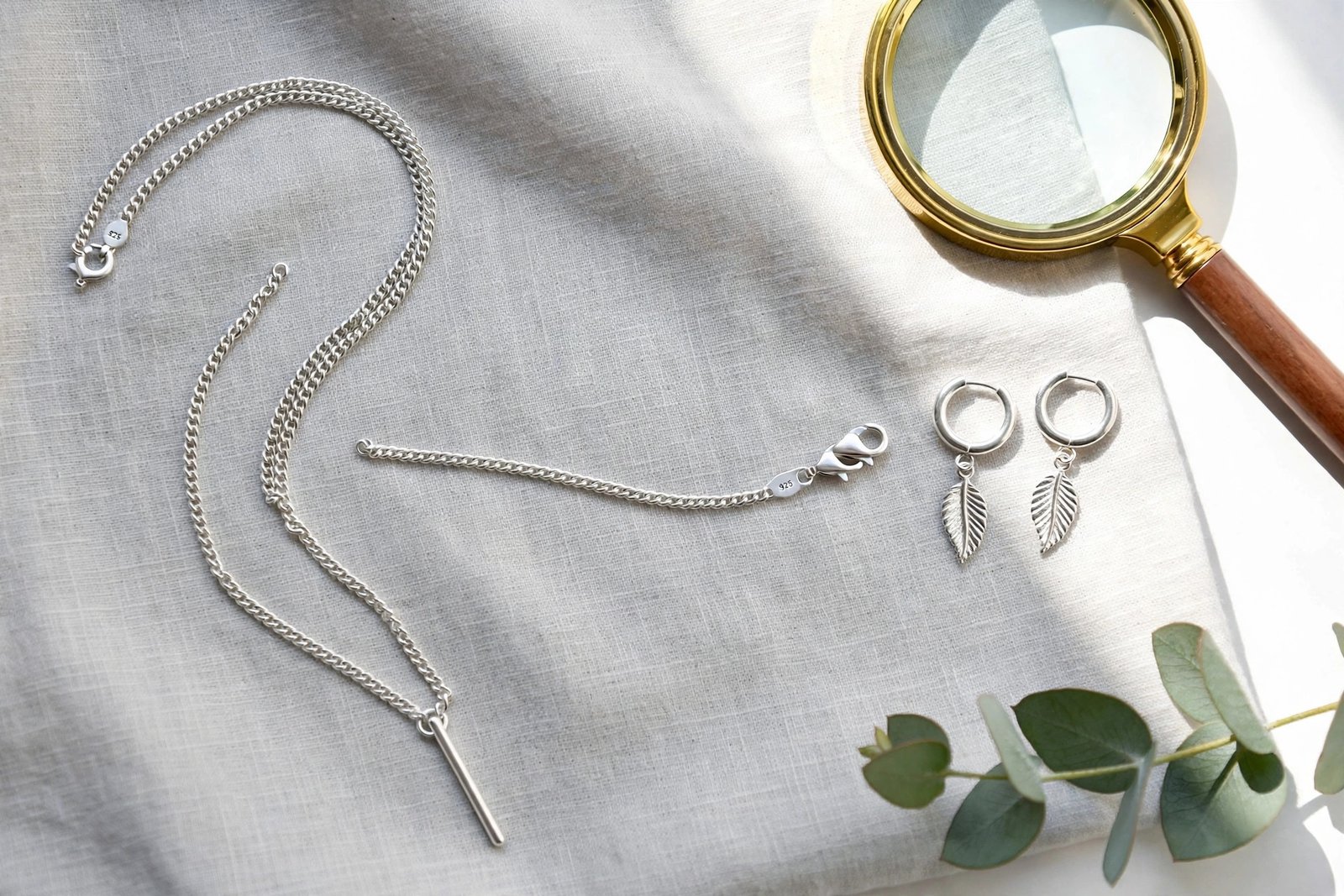
Sterling silver is solid silver alloy, made from 92.5 percent pure silver mixed with other metals. Silver plated jewellery is a thin layer of silver over a base metal such as copper or nickel silver. The quickest way to tell them apart in the UK is the hallmark: sterling silver carries a 925 mark and, usually, a UK Assay Office hallmark, while silver plated pieces are marked EPNS or EP instead.
This guide explains what each type is, how to read the marks on a piece you already own, which one to buy for everyday wear, and how to care for both so they last.
What is sterling silver?
Sterling silver is an alloy, not pure silver. Pure silver is too soft for jewellery that gets worn every day, so makers mix it with other metals, usually copper, to make it stronger. The standard is 92.5 percent silver and 7.5 percent other metals. That is where the number 925 comes from: 925 parts of silver in every 1,000 parts of alloy.
Because the silver runs all the way through a sterling silver piece, it can be polished, repaired, and reshaped. A scratch can be buffed out. A bent ring can be straightened by a jeweller. That is the main practical difference from plated jewellery, where the silver is only a surface layer.
Sterling silver tarnishes. This surprises many buyers, but it is normal. Silver reacts with sulphur compounds in the air, and the surface slowly darkens. Tarnish is not damage. It polishes off, and regular wear often slows it down because the friction keeps the surface clean.
In the UK, sterling silver is usually sold with a hallmark. A full UK hallmark has three compulsory marks: the sponsor mark, which identifies the maker or importer; the fineness mark, which shows the metal standard; and the Assay Office mark, which shows where the piece was tested. The traditional fineness mark for sterling silver is the lion passant, a small walking lion. You will also often see the number 925 stamped on the piece. UK law requires a hallmark on silver items above 7.78 grams that are sold as precious metal, so a heavier silver piece with no hallmark at all is worth questioning.
Look for the hallmark in the usual places: inside a ring band, on the clasp of a necklace or bracelet, or on the back of a pendant. You may need a magnifying glass or your phone camera zoomed in, because the marks are small.
What is silver plated jewellery?
Silver plated jewellery starts with a base metal core, then a thin layer of pure silver is bonded to the surface, usually by electroplating. The core is often copper, brass, or nickel silver. Nickel silver contains no silver at all, despite the name. It is an alloy of copper, nickel, and zinc.
The silver layer on plated jewellery is very thin, often only a few microns. That is why plated pieces cost far less than sterling silver. They look the same on day one, which is exactly the point. Plating gives you the look of silver at a fraction of the price.
The trade off is durability. The plating wears away with time, friction, and contact with water, perfume, and sweat. Once it wears through, the base metal shows underneath. A ring band often wears first on the inside, where it rubs against skin. A necklace chain wears at the clasp and at the links that move most. Unlike sterling silver, a worn plated piece cannot be polished back to silver. It can be replated by a jeweller, but that costs money and is only worth doing for a piece you love.
Silver plated pieces are usually marked EPNS, which stands for electro plated nickel silver, or EP, which stands for electro plated. These marks are not hallmarks. They tell you the item is plated, not solid silver. Some plated pieces carry no mark at all, especially cheap fashion jewellery, so the absence of a 925 mark is itself a clue.
Plated jewellery is not low quality by definition. A well made plated piece with a thicker coating can look good for a long time if it is worn gently and kept dry. The problem is that the coating thickness is rarely stated on the listing or the tag, so buyers cannot easily compare one plated piece with another.
Side-by-side comparison
| Sterling silver | Silver plated | |
|---|---|---|
| What it is | Solid alloy: 92.5 percent silver all the way through | Thin silver layer over a base metal core |
| UK marks | 925, lion passant, Assay Office hallmark | EPNS or EP, or no mark at all |
| Price | Higher, because you are buying silver by weight | Much lower, because the silver is only a coating |
| Durability | Can last for decades, can be repaired and polished | Wears through with time, especially on rings and clasps |
| Tarnish | Tarnishes, but polishes clean | Tarnishes too, and over-polishing can wear the plating away |
| Sensitive skin | Usually fine, but a small number of people react to the copper content | Can irritate skin once the plating wears and the base metal, often nickel, is exposed |
| Best for | Everyday pieces, rings, gifts, and items you want to keep | Occasional wear, trends, and trying a style before spending more |
How to tell what you already own: hallmarks, weight, and tarnish
Start with the hallmark. Check inside ring bands, on clasps, and on the back of pendants and earring posts. If you find 925 or a lion passant with an Assay Office mark, the piece is sterling silver. If you find EPNS or EP, it is silver plated. If you find nothing at all, do not assume the worst straight away, because very small or very old pieces can be unmarked, but treat the piece as plated until you have other evidence.
Next, check the weight. Sterling silver feels heavier than it looks because silver is a dense metal. A solid silver bangle has a satisfying weight in the hand. A plated piece of the same size often feels light, because the core is usually a lighter base metal. Weight alone is not proof, but it is a useful clue alongside the marks.
Then look at how the piece has aged. Sterling silver tarnishes evenly across the surface, and the tarnish polishes off to reveal bright silver underneath. Plated jewellery wears unevenly. Look for patches where the colour has changed, often a yellowish or coppery tint showing through, usually on edges, clasps, and the inside of rings. That patch is the base metal showing through worn plating, and it is the clearest sign of a plated piece.
A magnet test can help in a limited way. Silver is not magnetic, so a strong magnet will not stick to a sterling silver piece. But many base metals are not magnetic either, so a piece that does not stick to a magnet is not automatically sterling silver. Use it only to rule out steel cores, never as proof of silver.
If you are still unsure, take the piece to a jeweller or an Assay Office. A jeweller can test the metal quickly, and an Assay Office can hallmark a piece that qualifies. This is worth doing before you pay for a repair or a replate, because the right treatment depends on what the piece actually is.
Which should you buy: everyday wear vs occasional wear
For everyday wear, sterling silver is the better buy. A ring, bracelet, or necklace you wear daily needs to survive water, friction, and the odd knock. Sterling silver can take that, and it can be cleaned and repaired when it needs it. The higher price is spread over years of wear, so the cost per wear is often lower than a plated piece you replace every year.
For occasional wear, silver plated jewellery makes sense. A statement necklace for a wedding, a pair of earrings for a party, or a trend you are trying for one season does not need to last for decades. Plated pieces let you try styles cheaply, and if the piece only comes out a few times a year, the plating can last a long time.
Gifts are a middle case. For a meaningful gift, such as a birthday, graduation, or anniversary, sterling silver is usually the safer choice. It feels more substantial, and the hallmark gives the recipient confidence in what they received. For a fun, low cost gift, a plated piece is fine, but do not present it as sterling silver. Our jewellery gifts for every occasion guide has more ideas by budget and occasion.
If you have sensitive skin, sterling silver is usually the better option. The copper in the alloy can bother a small number of people, but plated jewellery is more likely to cause a reaction once the coating wears and the nickel in the base metal touches the skin. If earrings irritate your ears, sterling silver studs are a sensible first change to try.
Caring for each type
Both types need the same basic care, but the details differ. Keep both away from perfume, hairspray, and lotions. Put jewellery on last when you get dressed, and take it off before swimming, showering, or cleaning. Store pieces separately so they do not scratch each other, and keep them in a dry place. A small pouch or a lined jewellery box works well.
For sterling silver, cleaning is simple. Wash it in warm water with a drop of mild soap, rinse, and dry it fully with a soft cloth. A silver polishing cloth removes tarnish without scratching. Avoid dips and harsh cleaners unless you know the piece has no gemstones or delicate settings, because they can damage stones and leave residues. Our how to clean silver jewellery at home guide covers the full method, and our jewellery cleaning tools and kits guide explains which cloths and solutions are worth buying.
For silver plated jewellery, be gentler. Wash it the same way, with warm soapy water and a soft cloth, but do not rub hard and do not use a silver dip or an abrasive polish. These can strip the thin coating faster. Dry the piece fully before you store it, because moisture speeds up tarnish and wear. If the plating has already worn through in places, cleaning will not restore it. A jeweller can replate it, so ask for a quote before you decide whether the piece is worth saving.
Frequently asked questions
Is 925 the same as sterling silver?
Yes. The number 925 is the fineness mark for sterling silver. It means the alloy is 925 parts silver in every 1,000 parts, which is 92.5 percent pure silver.
Can silver plated jewellery be hallmarked?
No. Hallmarks apply to solid precious metal. Silver plated items are marked EPNS or EP instead, which are trade marks, not hallmarks. A piece marked EPNS is plated, not sterling silver.
Does sterling silver tarnish faster than silver plated?
Both tarnish, because the surface layer on both is silver. Sterling silver usually tarnishes more evenly, and it polishes clean. Plated jewellery can look worse as it ages, because tarnish and worn patches appear together.
Is silver plated jewellery worth buying?
Yes, for occasional wear and for trying a style on a budget. It is not a good buy for a piece you plan to wear every day, because the plating will wear through and the piece cannot be polished back to silver.
How can I tell if a piece is sterling silver without a hallmark?
Check the weight, look for even tarnish that polishes off, and look for worn patches that reveal a different metal underneath. None of these is proof on its own. For a certain answer, ask a jeweller to test the piece or contact a UK Assay Office.
Does sterling silver contain nickel?
Standard sterling silver is silver mixed with copper, and it does not normally contain nickel. Some lower grade silver alloys and many plated base metals do contain nickel, which is why plated jewellery is more likely to irritate sensitive skin.
Conclusion
Sterling silver and silver plated jewellery look alike on day one, but they are different products. Sterling silver is solid silver alloy, marked 925 and usually hallmarked by a UK Assay Office, and it can be cleaned, repaired, and worn for decades. Silver plated jewellery is a thin silver coating over base metal, marked EPNS or EP, and it is a budget way to wear a style for a season or an occasion.
Check the hallmark first, then the weight and the wear. Buy sterling silver for the pieces you wear every day and the gifts that matter. Buy plated for trends and occasional wear. For more silver jewellery advice, browse our Jewellery category.