
Smart Casual Dress Code for Women in the UK: What It Means and What to Wear
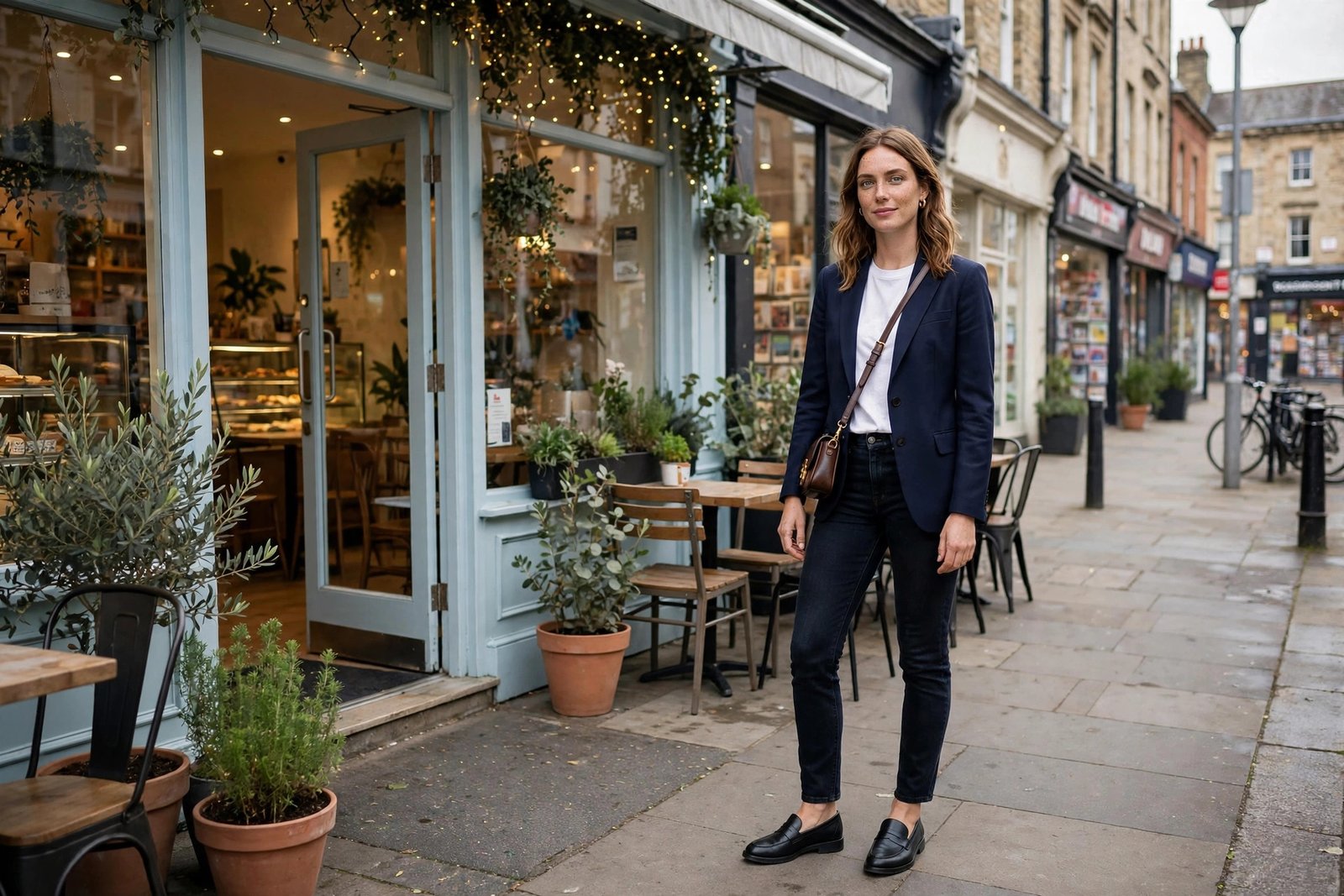
“Smart casual” shows up on wedding invitations, job descriptions, and restaurant booking pages all over the UK. It sounds simple, yet it causes more outfit panic than almost any other dress code. The reason is that smart casual is not one fixed outfit. It is a level of polish that changes with the occasion, the venue, and the season.
This guide explains exactly what smart casual means for women in the UK, shows you what to wear for work, weddings, restaurants, and dates, and tells you plainly what to avoid.
What does smart casual actually mean?
Smart casual for women in the UK means polished but relaxed dressing: tailored trousers or dark jeans with a blouse, a midi dress with loafers, or a blazer over a simple top. It sits between casual and formal. Skip gym wear, ripped denim, and anything you would wear to the beach. Rule: neat, fitted, and finished, never stiff.
In practice, smart casual is a balance. The “smart” half means your clothes look intentional: clean, well fitted, and put together. The “casual” half means you are not in formal occasion wear. A blazer with dark jeans is smart casual. A blazer with a full suit and tie is business formal. A hoodie with joggers is casual. Smart casual lives in the middle.
Three checks help you judge any outfit:
- Would it look out of place in a nice restaurant? If yes, it is probably too casual.
- Would it look overdressed at a relaxed family lunch? If yes, it is probably too formal.
- Does it look finished? Smart casual outfits look complete: shoes, bag, and accessories included, not thrown on in a rush.
Context matters more than any single item. The same dark jeans can be smart casual with a blazer and loafers, and purely casual with trainers and a slogan T-shirt. It is the whole outfit that sets the level, not one piece on its own.
Smart casual vs business casual: the real difference
People often use smart casual and business casual as if they mean the same thing. They overlap, but they are not identical. Business casual is a work dress code. Smart casual is a social dress code that also works at many workplaces. The difference is the setting and the strictness.
| Smart casual | Business casual | |
|---|---|---|
| Where you see it | Weddings, restaurants, dates, parties, relaxed offices | Offices, meetings, interviews, client-facing work |
| Jeans | Dark, well-fitted jeans are fine | Usually no jeans, or dark jeans only on dress-down days |
| Trainers | Clean, minimal trainers can pass at casual venues | Rarely acceptable |
| Blazer | Optional, used to lift an outfit | Expected more often |
| Dresses | Midi, shirt, and knit dresses all work | Knee-length or midi, more structured |
| Overall feel | Relaxed but polished | Polished and professional |
The simplest way to remember it: business casual is smart casual with the casual turned down. If an invitation says “business casual”, play it safer. If it says “smart casual”, you have more room to dress down, but keep it neat.
The smart casual formula: the pieces that always work
You do not need a new wardrobe for smart casual. Most women already own the core pieces. The formula is: one structured piece, one relaxed piece, and clean shoes.
The structured pieces: A blazer, a tailored pair of trousers, a midi dress, or a smart skirt. These give the outfit its “smart” half.
The relaxed pieces: Dark jeans, a knit jumper, a simple top, or a blouse. These give the outfit its “casual” half.
The shoes: Loafers, ankle boots, ballet flats, or block heels. Clean shoes matter more than expensive shoes. Scuffed or dirty footwear drops any outfit a level.
Five combinations that almost always work:
- Blazer, white top, dark jeans, loafers
- Midi dress, ankle boots, a simple necklace
- Tailored trousers, blouse, ballet flats
- Knit jumper, pleated midi skirt, block heels
- Shirt dress, belt, clean white trainers (for relaxed venues only)
Keep colours simple. Neutrals such as navy, black, beige, white, and grey mix easily and look expensive even when they are not. One colour accent, such as a rust scarf or a green bag, is enough.
Smart casual for work and job interviews
At work, smart casual usually means you look professional without a full suit. The safest route is to start slightly smarter than you think you need, then relax once you see what colleagues wear. A blazer over a blouse with tailored trousers is a reliable first-day choice. For more on building work outfits, see our office outfits for women guide.
For interviews, treat “smart casual” with extra care. The dress code may say smart casual, but the interviewer is still judging first impressions. Wear the smarter end of the range: tailored trousers or a midi dress, a blazer, and closed shoes. Skip jeans for interviews unless the company is openly casual. Our what to wear to a job interview guide covers this in detail.
Work smart casual rules that keep you safe:
- Avoid anything too short, too tight, or too revealing for an office.
- Keep logos and slogans off your clothes.
- Iron or steam everything. Wrinkles read as careless.
- If you are unsure, add the blazer. It is the easiest way to lift an outfit one level.
Smart casual for weddings and family events
Wedding invitations that say “smart casual” mean the couple wants a relaxed day, not a formal one. You still need to look like you made an effort. A midi dress with block heels, or tailored trousers with a silk-feel blouse, both work well. Avoid white, cream, or anything close to bridal. Avoid anything too casual, such as denim shorts or flip-flops.
For family events such as christenings, birthday lunches, and Sunday roasts, the same level applies. A knit dress with ankle boots, or dark jeans with a blazer and a nice top, fits in everywhere. If the event is outdoors, choose shoes that cope with grass or gravel, and bring a layer you can add if the weather turns. See our wedding guest outfits guide for occasion-specific ideas.
Smart casual for restaurants, dates, and evenings out
Restaurants and dates are where smart casual is most forgiving, but the venue still sets the level. A smart restaurant calls for the smarter end: a midi dress or tailored trousers with heels. A relaxed bistro or pub allows dark jeans with a blouse and ankle boots.
For a first date, comfort matters as much as polish. Wear something you have worn before so you are not adjusting it all evening. A shirt dress with block heels, or dark jeans with a blazer and loafers, both look effortless. For more date ideas, see our date night outfits guide.
For evenings out with friends, you can lean more casual: a knit top with a midi skirt, or a jumpsuit with ankle boots. If the night may end somewhere smarter, add the blazer. See our night out outfits guide for evening-specific combinations.
Smart casual by season: summer, winter, and in-between weather
UK weather changes the smart casual equation. The code stays the same, but the fabrics and layers change.
Summer: Choose breathable fabrics such as cotton, linen, and light knits. A linen midi dress with sandals, or cropped tailored trousers with a short-sleeve blouse, both work. Keep hemlines and fits comfortable in the heat. A light blazer or a linen jacket handles air-conditioned restaurants and cooler evenings.
Winter: Layering does the work. A roll-neck jumper under a blazer, with tailored trousers and ankle boots, is smart casual and warm. A wool midi dress with tights and boots is another reliable option. Dark colours and heavier fabrics look right in winter. Avoid bulky coats over delicate outfits; a structured wool coat keeps the outfit looking intentional.
In-between weather: Spring and autumn are the hardest seasons because the temperature changes during the day. Build outfits in layers you can remove: a blazer over a top, or a trench over a dress. Ankle boots handle wet pavements better than ballet flats. Keep a compact umbrella in your bag rather than wearing a rain jacket over a smart outfit.
What not to wear: the mistakes that break the dress code
Most smart casual failures come from a small list of mistakes. Avoid these and you will rarely get it wrong.
- Gym wear: Leggings, sports bras, gym tops, and running shoes are not smart casual, however expensive they are.
- Ripped or faded denim: Light-wash, ripped, or baggy jeans read as casual. Dark, clean, well-fitted jeans are the only safe denim.
- Beachwear: Flip-flops, shorts, strappy beach dresses, and straw hats belong on holiday.
- Loungewear: Joggers, hoodies, and pyjama-style sets are not smart casual, even with heels.
- Anything wrinkled, stained, or worn out: Condition matters more than price. A clean high-street outfit beats a creased designer one.
- Too much of one thing: All black can look chic, but all sequins, all leather, or all logos looks like a costume.
- Ignoring the venue: Trainers may pass at a relaxed pub but not at a smart restaurant. Always dress for the smartest part of your day.
If you are ever unsure, ask yourself: would I feel comfortable if the host, my manager, or my partner’s parents saw me in this? If the answer is no, change one item up a level.
Building a smart casual wardrobe on a budget
You do not need to spend much to dress smart casual well. A small set of versatile pieces covers most occasions. Start with these, in neutral colours:
- One blazer (navy or black)
- One pair of tailored trousers (black or navy)
- One pair of dark jeans
- Two simple tops (white and one colour)
- One midi dress
- One pair of loafers or ankle boots
- One clean, structured bag
Shop UK high-street retailers such as M&S, H&M, and ASOS for these staples, and watch for sales at the end of each season. Buying one good blazer that fits well is worth more than three cheap ones that do not. Check charity shops too; blazers and tailored trousers are among the best charity-shop finds because they are often barely worn.
The budget rule that saves the most money: buy for the outfits you actually wear. A smart casual wardrobe is built from pieces that mix with each other, not from one-off statement items that only work with one outfit. If a new piece does not work with at least three things you already own, leave it on the rail.
Cocktail and black tie: the codes above smart casual
Smart casual sits below two stricter codes. Knowing them helps you judge where smart casual ends.
Cocktail dress code means party-ready and polished: a cocktail dress, a jumpsuit, or a smart co-ord set, with heels and finished hair and makeup. It is a step above smart casual. Dark jeans and trainers do not belong here.
Black tie is formal: a floor-length gown or a very formal cocktail dress, with heels and evening accessories. If an invitation says black tie, smart casual is far too relaxed.
The codes, from most relaxed to most formal, run: casual, smart casual, business casual (in work settings), cocktail, black tie. When an invitation is unclear, it is safer to dress one level up than one level down.
Frequently asked questions
Can I wear jeans to a smart casual event?
Yes, if they are dark, clean, and well fitted, and the rest of the outfit is smart. Pair dark jeans with a blazer or a blouse and loafers or ankle boots. Avoid light-wash, ripped, baggy, or faded jeans.
Are trainers allowed in smart casual?
Sometimes. Clean, minimal, plain trainers in white, black, or navy can pass at relaxed venues such as a pub lunch or a casual office. They do not work at weddings, smart restaurants, or interviews. When in doubt, wear loafers or ankle boots instead.
Is a hoodie smart casual?
No. A hoodie is casual, even an expensive one. If you want the same comfort, wear a knit jumper or a soft blazer instead.
Can I wear boots with smart casual?
Yes. Ankle boots are one of the most useful smart casual shoes. Clean leather or suede ankle boots work for work, weddings, dates, and evenings. Avoid muddy, scuffed, or heavy-duty boots.
Can I wear a maxi dress for smart casual?
Yes, if the fabric and fit are right. A simple jersey or cotton maxi dress with flat sandals can read as casual, while a structured maxi dress with a blazer and ankle boots reads as smart casual. Keep the accessories simple so the dress does the work.
What if I turn up and everyone is dressed more formally?
Add the smartest layer you have. A blazer, a structured bag, and neat hair lift an outfit quickly. If you are still underdressed, own it calmly; being comfortable and polite matters more than one outfit choice.
Conclusion
Smart casual is not a mystery code. It means neat, fitted, and finished, with room to be comfortable. Build outfits from one structured piece, one relaxed piece, and clean shoes, then adjust for the venue and the season. When in doubt, dress one level up, keep it simple, and let fit and condition do the work.
For more outfit ideas by occasion, browse our Fashion category.