
How to Clean Suede Trainers at Home UK
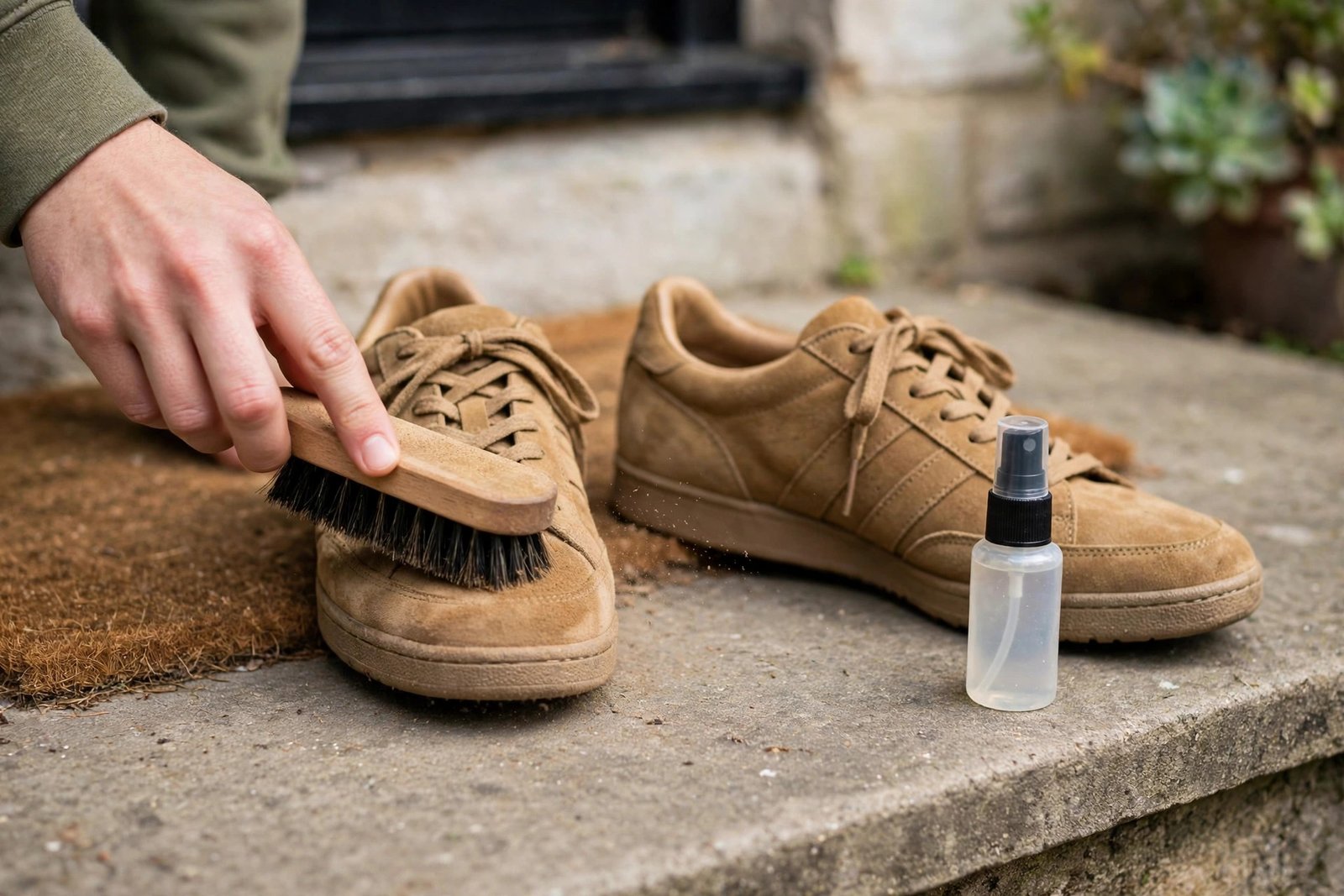
Suede trainers are a UK wardrobe staple. They look smart with jeans, they go with almost everything, and they cost less than leather trainers. The problem is that suede trainers get dirty fast, especially in British weather. Mud, rain, salt from gritted pavements, and everyday scuffs all show up on suede, and suede cannot just be wiped clean like leather.
The good news is that you can clean suede trainers at home, with a few cheap tools and no specialist skills. This guide covers the trainer specific parts that other guides miss: soles and midsoles, laces and insoles, the machine wash question, salt stains from winter roads, and how to dry trainers properly. For deep general suede care, our how to clean suede shoes guide covers the full method in detail.
What you need before you start
You do not need expensive products. A basic suede cleaning kit costs under £15 and lasts for years. Here is what to buy.
A suede brush is the most important tool. It has stiff bristles on one side for brushing off dry dirt, and a rubber crepe side for lifting marks. Buy a proper suede brush, not a wire brush, which will damage the nap. A suede eraser, which looks like a small rubber block, is useful for scuffs and dry marks.
A suede protector spray is worth buying too. Spray your trainers before you first wear them, and again every few weeks in winter. It does not make suede waterproof, but it slows down water and stains, which makes cleaning much easier later.
Other useful items: white vinegar for water marks, cornflour for oil stains, a clean white cloth, an old toothbrush for soles and seams, and newspaper for stuffing trainers while they dry. Keep a pair of old dark towels nearby for wiping, and work on a surface you do not mind getting dusty, because suede brushing makes a mess.
Check the care label inside your trainers before you start. Most suede trainers say not to machine wash them. If the label says dry clean only, or if the trainers are expensive, think about taking them to a professional instead of cleaning them at home.
The basic clean: dry first, always
Suede should always be cleaned dry first. Never start with water, and never start with a wet cloth. Water on dirty suede pushes the dirt deeper into the fibres and can leave water marks.
Let muddy trainers dry completely before you touch them. This feels wrong, because you want to clean them straight away, but wet mud on suede just spreads. Leave the trainers somewhere warm and dry for a few hours, or overnight, until the mud is fully dry and crumbly.
Once the trainers are dry, brush them with the suede brush. Brush in one direction first, to lift the dirt, then brush back the other way to raise the nap. Work over the whole trainer, not just the dirty patch, so the nap looks even. Tap the brush clean as you go, so you are not brushing dirt back onto the suede.
For scuffs and dry marks, rub the suede eraser gently over the mark. Use short strokes, and brush the area afterwards to raise the nap again. If the mark does not lift, do not press harder. Move on to the stain by stain table below instead.
Brush your suede trainers after every few wears, even when they do not look dirty. A quick brush takes two minutes and stops dirt building up. It is the single best habit for keeping suede trainers looking good.
Stain by stain: mud, salt, oil, and water marks
Different stains need different treatments. The table below is the quick reference for suede trainers. Work on the stain only, and always brush the nap afterwards so the area blends in.
| Stain | What it looks like | How to treat it at home | What never to do |
|---|---|---|---|
| Mud | Dried brown patches, usually on the toe and sides | Let it dry fully, brush off with a suede brush, use the eraser on what is left | Never wipe wet mud, and never use water first |
| Salt (winter roads) | White crusty lines, usually around the sole edge | Dab with a cloth dampened in a little white vinegar and water, then brush when dry | Never soak the suede, and never use hot water |
| Oil and grease | Dark patch that feels slightly greasy | Cover with cornflour, leave overnight, brush off, repeat if needed | Never use water on an oil stain, and never use soap |
| Water marks | Dark rings or patches after rain | Lightly dampen the whole panel with a cloth, then brush when dry so the nap is even | Never spot clean with water, because it leaves a new ring |
| Scuffs | Shiny or flattened patches, usually on the toe | Rub gently with a suede eraser, then brush to raise the nap | Never use a wire brush, and never press hard |
| General dirt | Dull, grey looking suede all over | Brush thoroughly in both directions, then use the eraser on stubborn spots | Never use a washing machine as a first resort |
Mud: the most common trainer stain
Mud is the most common stain on suede trainers in the UK, and the easiest to deal with if you are patient. Let the mud dry completely, then brush it off with the suede brush. Work from the outside of the patch towards the middle, so you do not spread it. If a faint mark is left, rub it gently with the suede eraser, then brush again. Most mud comes off with brushing alone, and you should not need water at all.
Salt stains from winter roads
Salt stains are a winter problem. Gritted pavements leave white crusty lines on suede trainers, usually around the sole edge where the suede meets the rubber. Brush off any loose salt first, then dab the stain with a cloth dampened in a little white vinegar mixed with water. Dab, do not rub, and do not soak the suede. Let the trainers dry naturally, then brush the nap to blend the area. Salt stains are easier to prevent than to remove, so spray your trainers with protector before winter and brush them after every wet walk.
Oil and grease: cornflour is your friend
Oil and grease stains need a dry treatment, not water. Cover the stain with cornflour, or talcum powder if you do not have cornflour, and leave it overnight. The powder absorbs the oil. Brush it off in the morning, and repeat if the stain is still visible. Do not use water or soap on an oil stain, because water will spread the oil and soap can leave a mark of its own. If the stain does not lift after two or three treatments, take the trainers to a professional.
Water marks and the flat nap
Water marks appear as dark rings after rain. The fix is counterintuitive: lightly dampen the whole suede panel with a clean cloth, so the whole panel dries evenly, then brush it when dry. Spot cleaning with water just makes a new ring. If the nap has gone flat and shiny, usually on the toe from scuffing, rub the area gently with a suede eraser, then brush it firmly in both directions to raise the nap again. A flat nap is not damage, it is just pressed down fibres, and brushing will usually bring it back.
Soles, midsoles, laces, and insoles
Trainers are not just suede. The soles, laces, and insoles need cleaning too, and they need different methods from the suede upper.
Rubber soles and midsoles can be cleaned with an old toothbrush and a little washing up liquid in warm water. Scrub the soles, wipe them with a damp cloth, and dry them with a towel. White midsoles can be whitened with a little bicarbonate of soda made into a paste, left for ten minutes, then scrubbed off. Do not let soapy water run onto the suede upper while you clean the soles. Hold the trainer upside down, or wipe the soles with a damp cloth rather than running them under a tap.
Laces come out and wash separately. Take them out, soak them in warm water with a little washing up liquid, rinse them, and hang them to dry. White laces can be soaked in a little oxygen based stain remover if they have gone grey. Do not put laces in the washing machine with the trainers, because they can tangle and pull.
Insoles come out too, if they are removable. Shake off loose dirt, wipe them with a damp cloth, and let them air dry fully before you put them back. If insoles smell, sprinkle them with bicarbonate of soda, leave them overnight, and shake the powder off in the morning. Do not wash insoles in the machine unless the label says you can.
For general trainer cleaning, including leather, mesh, and canvas trainers, see our how to clean trainers guide, which covers each material in detail.
Can you put suede trainers in the washing machine?
Short answer: no, not usually. Most suede trainers are not made to be machine washed. The washing machine can damage the suede, shrink the trainers, and ruin the glue that holds the soles on. Check the care label first. If it says do not machine wash, do not machine wash them.
A cold, gentle machine wash sometimes works on cheap canvas trainers, but suede is different. Water, heat, and tumbling all damage suede, and a machine wash combines all three. The nap can go flat and matted, the colour can fade or go patchy, and the trainers can come out a different shape from the ones that went in.
If your suede trainers are very dirty and brushing has not worked, try the stain by stain methods above first. If that does not work, take them to a professional cleaner who works with suede. A professional clean costs less than a new pair of trainers, and it is safer than a machine wash.
The only exception is if the manufacturer specifically says the trainers are machine washable. Some brands make washable suede trainers, and the care label will say so. Follow the label exactly: cold wash, gentle cycle, no detergent with bleach, and air dry only. If the label does not say machine washable, assume they are not.
Drying suede trainers properly
How you dry suede trainers matters as much as how you clean them. Never use direct heat. Do not put trainers on a radiator, near a fire, or in a tumble dryer. Heat can shrink suede, crack the leather underneath, and set any stain that is still there.
Stuff the trainers with newspaper, or with clean white paper towels, to hold their shape while they dry. Change the paper after a few hours if it is damp. Newspaper is fine for dark trainers, but use white paper for light coloured suede, because newspaper ink can transfer.
Leave the trainers somewhere warm and dry, with good air flow, and let them dry naturally. This can take a day, or longer in winter. Do not rush it. Once they are fully dry, brush the nap to bring it back, and spray them with protector before you wear them again.
If the trainers got soaked in rain, the same rules apply. Stuff them, leave them to dry naturally, and brush them when they are dry. Do not try to dry them with a hairdryer, because the heat can damage the suede and set water marks.
Protecting suede trainers: sprays, storage, and seasonal care
Prevention is easier than cleaning. A suede protector spray, applied before you first wear new trainers and topped up every few weeks, is the best protection you can buy. Spray the trainers evenly from about fifteen centimetres away, in a well ventilated place, and let them dry for at least an hour before you wear them. Do not wear them until the spray is fully dry.
In winter, protect your trainers more often. Salt, slush, and rain are hardest on suede in winter, so spray them every two weeks and brush them after every wet walk. In summer, a monthly spray is usually enough.
Store suede trainers somewhere dry, away from direct sunlight, which can fade the colour. Keep them in their box, or on a shelf, not in a damp hallway or a cold garage. Stuff them with paper when you store them, so they keep their shape. Do not store them in a plastic bag, because suede needs air.
Rotate your trainers if you can. Wearing the same pair every day wears them out faster and gives them no time to dry out between wears. Two pairs, worn on alternate days, will last much longer than one pair worn every day.
What never to do to suede trainers
Some common mistakes ruin suede trainers. Avoid these, and your trainers will last much longer.
Never use water as a first step. Always brush dry first, and only use water in the small amounts described in the stain table. Never soak suede trainers, and never run them under a tap.
Never use a washing machine unless the care label specifically says the trainers are machine washable. A machine wash can shrink suede, flatten the nap, and damage the glue.
Never use a tumble dryer, a radiator, or a hairdryer to dry suede trainers. Heat shrinks suede and sets stains. Always air dry them, stuffed with paper, away from direct heat.
Never use a wire brush, a hard brush, or a scouring pad on suede. Use a proper suede brush and a suede eraser only. Hard tools tear the nap and leave permanent marks.
Never use soap, washing up liquid, or household cleaners directly on suede. These can leave marks and change the colour. The only liquids that should touch suede are the small amounts of vinegar solution and water described in the stain table, and a proper suede cleaner if you buy one.
Frequently asked questions
Can you clean suede trainers with water?
Only in very small amounts, and only after dry brushing. Water is the enemy of suede if used wrongly, but a lightly dampened cloth can help with salt stains and water marks. Never soak suede trainers, never run them under a tap, and never use a wet cloth as a first step. Always brush dry first.
How do I get mud off suede trainers?
Let the mud dry completely, then brush it off with a suede brush. Work from the outside of the patch towards the middle. If a faint mark is left, rub it gently with a suede eraser, then brush again. Most mud comes off with brushing alone, and you should not need water at all.
Can suede trainers go in the washing machine?
Usually no. Most suede trainers are not made to be machine washed, and a machine wash can shrink the suede, flatten the nap, and damage the glue. Check the care label. If it does not specifically say machine washable, do not machine wash them. Clean them by hand instead, or take them to a professional.
How do I fix flat suede on trainers?
Rub the flat area gently with a suede eraser, then brush it firmly in both directions with a suede brush. A flat nap is usually just pressed down fibres, and brushing will raise them again. If the nap stays flat after brushing, the suede may be worn, and a professional cleaner may be able to help.
What is the best suede protector spray in the UK?
Any protector spray sold specifically for suede will work. Look for one from a shoe care brand in a shoe shop or a supermarket, and check that it says suitable for suede on the label. Spray new trainers before you first wear them, and top up every few weeks in winter.
How do I stop suede trainers smelling?
Take the insoles out and let the trainers air dry fully between wears. Sprinkle bicarbonate of soda inside the trainers, leave it overnight, and shake it out in the morning. Rotating two pairs of trainers also helps, because it gives each pair time to dry out.
Conclusion
Suede trainers need a little more care than leather or canvas trainers, but they are not hard to look after. Brush them dry first, treat stains one by one, clean the soles and laces separately, and never use a washing machine or direct heat. A suede brush, a suede eraser, and a protector spray are all you need, and they cost less than a new pair of trainers.
Start with the basics: let mud dry before you brush it, use cornflour for oil, vinegar water for salt, and a damp cloth for water marks. Spray your trainers before winter, brush them after every wet walk, and store them somewhere dry. With a little regular care, your suede trainers will stay looking good for years.