
Best Budget Raincoat UK Women
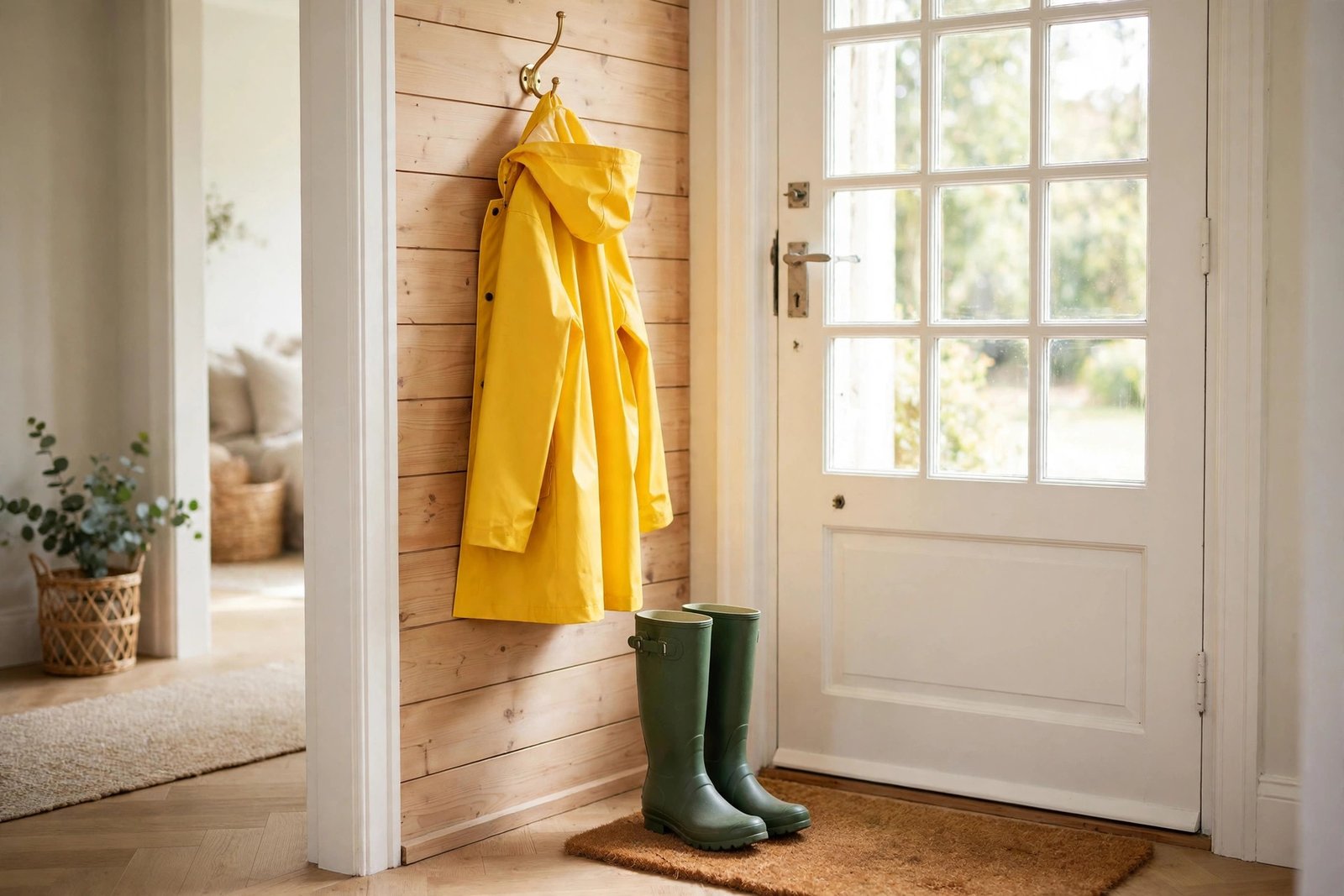
A raincoat is not the same as a waterproof jacket, and it is not the same as a trench coat. They look similar on a rail, but they do different jobs, and buying the wrong one is the most common mistake in UK rainwear. A raincoat is light, packable, and made for sudden showers. A waterproof jacket is tougher, warmer, and made for proper rain. A trench coat is smart, stylish, and only shower proof at best.
This guide explains the difference, then helps you choose the best budget raincoat under £40. It covers the three-way choice, what to look for at this price, petite and tall fit notes, and how to look after a cheap raincoat so it lasts more than one season.
Raincoat vs waterproof jacket vs trench: the difference
The three coats are often confused, because shops use the words loosely. Here is what each one really means.
A raincoat is a light, waterproof coat made for rain. It is usually made from coated nylon or polyester, it has a hood, and it packs down small. A raincoat is best for sudden showers, for keeping in your bag, and for walking in light to moderate rain. It is not warm, and it is not made for cold weather on its own. You wear a raincoat over a jumper or a fleece when it is cold.
A waterproof jacket is a tougher, more technical coat. It has a waterproof rating, sealed seams, and often a breathable membrane. A waterproof jacket is best for proper rain, for long walks, and for wet commutes. It costs more than a raincoat, and it is heavier. For more on waterproof ratings and what the mm numbers mean, see our best budget waterproof jacket guide, which explains the decoder in plain English.
A trench coat is a smart, belted coat, usually made from cotton gabardine or a cotton blend. It looks wonderful, and it is the smartest of the three, but it is not fully waterproof. A trench coat will cope with a light shower, but it will soak through in proper rain. Buy a trench coat for style and for dry days, not for a wet commute.
| Coat | Best for | Rain protection | Warmth | Budget |
|---|---|---|---|---|
| Raincoat | Sudden showers, bag carry, light rain | Good, fully waterproof | Low, layer underneath | Under £40 easily |
| Waterproof jacket | Proper rain, long walks, wet commutes | Best, rated and sealed | Medium, often lined | Under £60 |
| Trench coat | Smart days, light showers, style | Poor, shower proof only | Medium, with lining | Over £40 usually |
If you need one coat for UK rain, buy a raincoat first. It is the cheapest, the lightest, and the most useful for everyday showers. If you walk a long way in the rain, add a waterproof jacket later. If you want a smart coat for dry days, buy a trench coat as a second coat, not as your only rain protection.
What to look for in a budget raincoat under £40
A raincoat under £40 can be very good, if you check five things before you buy.
First, check the hood. A good raincoat has a hood that adjusts, so it stays up in the wind, and a peak that keeps rain off your face. A hood that blows off is useless. Try the hood on in the shop, and check that you can still see properly when it is up.
Second, check the zip and the storm flap. Rain gets in through zips, so a good raincoat has a flap of fabric over the zip, or a waterproof zip. Open and close the zip a few times. It should move smoothly, even with wet hands.
Third, check the seams. The cheapest raincoats have open seams, which let water in. Better raincoats have taped or sealed seams. Turn the coat inside out in the shop and look at the seams. If you can see tape over the stitching, the coat will keep you drier.
Fourth, check the length. A raincoat that ends at the hip will leave your legs wet in a shower. A raincoat that ends at the knee, or just below, will keep much more of you dry. For most UK rain, a knee length raincoat is the best choice, unless you need to drive a lot, in which case a hip length coat is easier.
Fifth, check the packability. A good budget raincoat folds into its own pocket, or into a small pouch, so you can keep it in your bag. This is what makes a raincoat useful: it is there when the rain starts, not hanging at home. Test the fold in the shop before you buy.
The best budget raincoat types under £40
Four types of raincoat are easy to find under £40 on the UK high street and online. Here is how they compare.
A packable raincoat is the lightest and cheapest. It folds into a pouch, it weighs almost nothing, and it is perfect for keeping in your bag. It is not warm, and it is not the toughest, but it is the most useful raincoat you can own. Look for one with a hood and a storm flap, even at this price.
A parka style raincoat is longer, warmer, and more practical for everyday wear. It has big pockets, a longer length, and often a drawstring waist. It is heavier than a packable raincoat, but it keeps more of you dry. It is the best choice if you walk a lot in the rain.
A poncho style raincoat covers you and your bag, which is useful if you carry a lot. It is not the smartest option, and it can be awkward in the wind, but it is very effective in heavy rain. It is also the cheapest type, often under £20.
A transparent raincoat, or a clear raincoat, is a fashion choice. It lets your outfit show through, and it looks good in photos. It is not the most practical choice, because it can feel clammy and it shows every mark, but it is fun for festivals and for light rain.
For most women, a packable raincoat plus a parka style raincoat covers every situation. Keep the packable one in your bag, and wear the parka style one on wet days. Together, they cost less than £40 each, and they will keep you dry all year.
Petite and tall fit notes
Fit is the difference between a raincoat that keeps you dry and a raincoat that hangs in the wardrobe. Raincoats are often cut for an average height, so petite and tall women need to check the fit carefully.
Petite women should look for raincoats with a shorter body length, sleeves that do not cover the hands, and a hood that does not fall over the eyes. A knee length raincoat on an average height woman can be ankle length on a petite woman, which is awkward to walk in. Look for petite ranges online, which often have shorter bodies and sleeves. A raincoat with a drawstring waist will give you shape and stop the coat looking like a tent.
Tall women should look for raincoats with long sleeves and a long body. A raincoat that is too short will leave your wrists and your thighs wet. Check the sleeve length with your arms stretched out, and check the body length by sitting down in the coat. Some high street shops sell tall ranges, and online shops usually have a wider choice of tall sizes.
Everyone should try a raincoat on over a jumper, with the hood up, and walk around the shop in it. Check that you can move your arms freely, that the zip does not pull, and that the hood stays up when you turn your head. A raincoat that feels tight in the shop will feel worse in the rain.
How to look after a budget raincoat
A cheap raincoat can last two or three years if you look after it. A neglected raincoat will lose its waterproofing in one season.
Do not wash a raincoat after every wear. Washing strips the waterproof coating. Brush off mud when it is dry, and wipe the coat with a damp cloth. Wash it only when it is really dirty, on a cold gentle cycle, with no fabric softener. Fabric softener ruins waterproof coatings.
Reproof your raincoat when water stops beading on the surface. If water soaks in instead of beading up, the coating has worn off. Wash the coat, then spray it with a reproofer, or wash it with a wash in reproofer. Let it dry fully before you wear it again. Reproofing once a year is usually enough.
Dry your raincoat properly. Hang it up after every wet walk, and let it dry fully before you fold it away. Do not leave a wet raincoat screwed up in a bag, because it will smell and the coating will suffer. Do not put a raincoat in a tumble dryer unless the label says you can.
Store your raincoat somewhere dry, away from direct sunlight. Sunlight fades the colour and weakens the coating. Keep the raincoat in your bag during the week, so it is there when you need it, but take it out and hang it up at the weekend to air it.
Raincoat colours and style: what works in the UK
Raincoats come in every colour, from black to bright yellow. The colour you choose affects how useful the coat is, not just how it looks.
A bright raincoat, in yellow, red, or orange, is the most practical choice. It makes you visible to drivers in the rain, which matters on dark winter mornings. A bright raincoat also lifts your mood on a grey day, and it is easy to find in a crowd.
A dark raincoat, in navy, black, or dark green, is the smartest choice. It goes with everything, it hides dirt, and it looks better for work. A dark raincoat is the best choice if you only buy one, because it will work for the office and for the weekend.
A clear raincoat is a fashion choice, not a practical one. It shows your outfit, but it also shows every mark, and it can feel sticky in warm rain. Buy a clear raincoat as a second coat, not as your only rain protection.
Whatever colour you choose, make sure the raincoat has reflective details if you walk or cycle in the dark. A reflective strip on the back or the sleeves makes a real difference to your safety, and many budget raincoats now include them.
What never to do when buying a raincoat
Some common mistakes waste money and leave you wet. Avoid these, and your £40 will go much further.
Never buy a raincoat without checking the hood. A raincoat without a good hood is not a raincoat, it is a jacket. The hood is the most important part of a raincoat, and it is the part most often done badly on cheap coats.
Never buy a raincoat just because it is cheap. A £15 raincoat with open seams and no storm flap will let water in, and you will be wet within minutes. A £35 raincoat with taped seams and a storm flap will keep you dry for hours. The extra £20 is worth it.
Never confuse a trench coat with a raincoat. A trench coat looks wonderful, but it is not fully waterproof. If you buy a trench coat expecting it to keep you dry in proper rain, you will be disappointed and wet.
Never use fabric softener on a raincoat. Fabric softener coats the fibres and stops the waterproofing working. Wash a raincoat with a gentle detergent, no softener, and reproof it when water stops beading.
Never leave a wet raincoat screwed up in a bag. Hang it up to dry after every wet walk, and let it dry fully before you fold it away. A raincoat left wet will smell, and the coating will wear out faster.
Frequently asked questions
What is the difference between a raincoat and a waterproof jacket?
A raincoat is light, packable, and made for sudden showers and light to moderate rain. A waterproof jacket is tougher, with a waterproof rating and sealed seams, and it is made for proper rain and long walks. A raincoat is cheaper and lighter. A waterproof jacket is warmer and more durable. Most women need a raincoat first, and a waterproof jacket later if they walk a long way in the rain.
Are budget raincoats under £40 any good?
Yes, if you check the hood, the zip and storm flap, the seams, and the length before you buy. A raincoat under £40 with taped seams and a good hood will keep you dry in normal UK rain. A very cheap raincoat with open seams will not. Spend the full £40 on a good raincoat rather than £15 on a poor one.
How do I keep a raincoat waterproof?
Do not wash it after every wear, and never use fabric softener. Brush off mud when it is dry, and wash it only when it is really dirty, on a cold gentle cycle. When water stops beading on the surface, reproof the coat with a spray or a wash in reproofer, and let it dry fully before you wear it again.
What length raincoat should I buy?
For most UK rain, a knee length raincoat is the best choice, because it keeps your legs drier than a hip length coat. If you drive a lot, a hip length coat is easier to sit in. Petite women should check the length carefully, because a knee length coat on an average height woman can be much longer on a petite frame.
Can I wear a raincoat in winter?
Yes, if you layer underneath it. A raincoat on its own is not warm, so wear it over a jumper, a fleece, or a thermal base layer in winter. In very cold weather, a waterproof jacket or a winter coat is warmer, but a raincoat over warm layers will keep you dry and warm enough for most UK winter days.
Should I buy a trench coat instead of a raincoat?
Only if you want a smart coat for dry days. A trench coat is stylish, but it is not fully waterproof, and it will soak through in proper rain. Buy a raincoat first for wet weather, and a trench coat later as a second coat for smart, dry days.
Conclusion
The best budget raincoat is not the cheapest one, and it is not the most technical one. It is the raincoat that fits your life: light enough to keep in your bag, long enough to keep you dry, and with a hood that stays up in the wind. Choose a raincoat first, a waterproof jacket second, and a trench coat for smart dry days.
Set a strict budget of £40, check the hood, the zip, the seams, and the length before you buy, and look after the coat by washing it rarely and reproofing it when water stops beading. For more on dressing for changeable weather, see our how to dress for unpredictable UK weather guide, which covers layering and what to keep in your bag.