
Ear Piercing Jewellery Guide: Conch, Daith, Tragus & More
Understanding Ear Piercing Placements
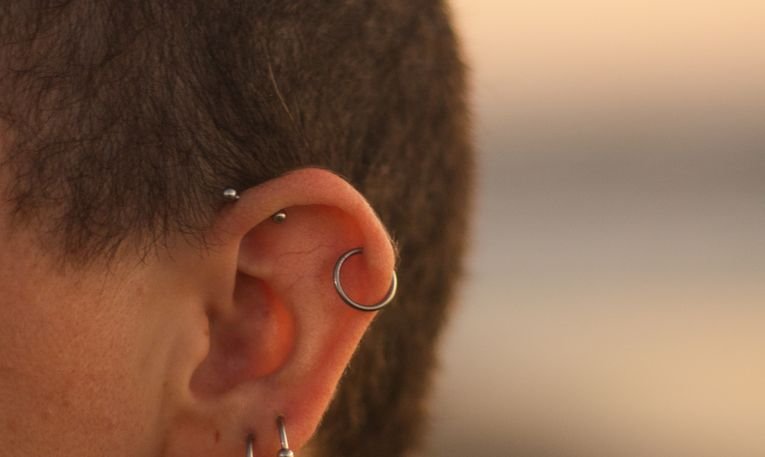
Ear piercings fall into two broad groups: lobe piercings and cartilage piercings. Lobe piercings, the most common and fastest to heal, sit in the soft lower part of the ear. Cartilage piercings, which include conch, tragus, daith, rook and helix, pass through firmer tissue, heal more slowly, and generally call for specific jewellery shapes and metals to avoid irritation. Knowing which placement you are choosing, or already have, is the first step in picking the right piece of jewellery for it.
Conch Piercing Jewellery
The conch sits in the shell-shaped centre of the ear and can be pierced as either an inner or outer conch. Inner conch piercings typically take a stud or a small hoop, while outer conch piercings often use a larger hoop that follows the curve of the ear. Conch jewellery needs to sit flush enough to avoid catching on hair or clothing, so a well-fitted piece matters more here than in most other cartilage placements.
Daith Piercing Jewellery
The daith runs through the small fold of cartilage just above the ear canal. Because of its curved, tucked-away position, daith jewellery is almost always a hoop or a curved barbell rather than a straight stud, since a flat back would not sit properly against the fold. Daith piercings have a reputation for being trickier to heal than other cartilage placements, so choosing hypoallergenic jewellery from the start is worth the extra consideration.
Tragus Piercing Jewellery
The tragus is the small, firm flap of cartilage that partially covers the ear canal. Tragus jewellery is usually a small stud or a delicate hoop, chosen in a size that avoids pressing into the ear canal or catching on earphones. This is one of the more popular cartilage placements because of its visibility and range of styling options.
Rook Piercing Jewellery
The rook sits on the ridge of cartilage just above the daith. It is considered one of the more painful cartilage piercings to get, due to the thickness of tissue in that area, and typically takes a curved barbell rather than a straight one, following the natural angle of the ridge.
Helix and Forward Helix Piercing Jewellery
The helix refers to the upper outer rim of the ear, while the forward helix sits just above the tragus at the front. Both are common starter cartilage piercings alongside the lobe, and both work well with small studs, hoops, or a mix of both for a curated, multi-piercing look along the ear’s edge.
Septum and Nose Piercing Jewellery
While not an ear piercing, septum and nose piercings are frequently chosen alongside ear piercings as part of a wider jewellery look. Septum jewellery is typically a captive bead ring or a circular barbell that can be flipped up and hidden inside the nose when needed. Nose piercing jewellery ranges from a simple stud to a small hoop, with gold nose ring jewellery a popular choice for a subtle, warm-toned finish.
Choosing the Right Metal for Piercing Jewellery
| Metal | Best For | Notes |
|---|---|---|
| Titanium | New or sensitive piercings | Highly hypoallergenic, lightweight, ideal for healing piercings |
| Surgical steel | Healed piercings, everyday wear | Durable and affordable, though a small number of people react to trace nickel content |
| Gold (14k or 18k) | Healed piercings, special occasions | Hypoallergenic at higher karats, but a higher-cost option |
| Sterling silver | Not generally recommended for piercings | Can tarnish inside a healing piercing and is more likely to cause irritation |
For fresh or sensitive piercings, titanium jewellery is generally considered the safest starting point across every placement listed above.
Piercing Sizing and Gauge Basics
Piercing jewellery is measured by gauge, referring to the thickness of the post or ring, and by internal diameter or post length for fit. A piece that is too small can embed into swollen tissue, while one too large can rotate or catch. It is worth confirming your specific gauge and size with the piercer or a specialist retailer before buying replacement jewellery, since sizing varies by studio and by individual anatomy.
Building a Curated Ear Look
Many women now build up an ear look gradually across multiple placements rather than choosing just one piercing. A common approach is to combine two or three lobe piercings with one or two cartilage points, such as a helix and a tragus, using a mix of small hoops and studs in the same metal tone for a cohesive finish. Building slowly, allowing each piercing to heal before adding jewellery elsewhere, keeps the process manageable and reduces the risk of irritation.
Caring for New Piercing Jewellery
- Avoid touching new piercings with unwashed hands, since bacteria transfer is one of the most common causes of irritation.
- Clean with a saline solution rather than alcohol or strong antiseptics, which can dry out and irritate healing skin.
- Avoid changing jewellery too early; cartilage piercings can take anywhere from six months to a year to fully heal.
- Keep hair and clothing away from healing piercings where possible, particularly for conch and helix placements.
Frequently Asked Questions
Which ear piercing hurts the least?
Lobe piercings are generally considered the least painful, since the tissue is soft and has fewer nerve endings than cartilage. Among cartilage placements, the rook and daith tend to be reported as more uncomfortable due to thicker tissue.
Can I wear gold jewellery in a new piercing?
Higher-karat gold, 14k or 18k, is generally safe for new piercings, but titanium is usually recommended first for a fresh piercing since it carries the lowest risk of reaction while healing.
How long does cartilage piercing jewellery need to stay in before changing?
Most cartilage piercings need at least six months, and often up to a year, before the initial jewellery should be changed, compared to around six to eight weeks for a standard lobe piercing.
What is the difference between a helix and a forward helix piercing?
The helix sits along the upper outer rim of the ear, while the forward helix sits at the front of the ear, just above the tragus. Both use similar small stud or hoop jewellery.
Is titanium or surgical steel better for everyday piercing jewellery?
Titanium is the safer choice for anyone with sensitive skin or a history of reactions, since it is essentially hypoallergenic. Surgical steel is a durable, budget-friendly option for healed piercings in most people without known sensitivities.
Final Thoughts
Choosing the right ear piercing jewellery comes down to matching the piece to the placement, whether that is a hoop for the daith, a curved barbell for the rook, or a flush stud for the conch, and picking a hypoallergenic metal while the piercing heals. Building an ear look gradually, placement by placement, gives the best long-term results.
Written by the CheapTomsSale editorial team, covering affordable jewellery guides and buying advice for UK shoppers.